Most quit-smoking advice treats food as an afterthought, or worse, as the enemy: something to ration so you do not gain weight. That gets it backwards. In the first few weeks after your last cigarette, what is on your plate is one of the most powerful and most overlooked craving tools you have. The right foods steady the exact blood-sugar swings that masquerade as nicotine cravings, keep your restless hands and mouth busy, and, in a quirk backed by real research, can even make a cigarette taste worse. Used deliberately, eating stops being the reason you gain weight and becomes part of the reason you stay smoke-free.
Why Food Suddenly Matters So Much
Quitting flips several switches at once, and almost all of them run through your appetite. Nicotine is an appetite suppressant and a mild metabolic stimulant, so when it clears, your natural hunger returns and your metabolism eases back toward its real baseline. At the same time, taste and smell recover within days, so food is more vivid and tempting than it has been in years. Add the hand-to-mouth ritual that a cigarette used to occupy, and it is no surprise that so many people feel ravenously hungry after quitting.
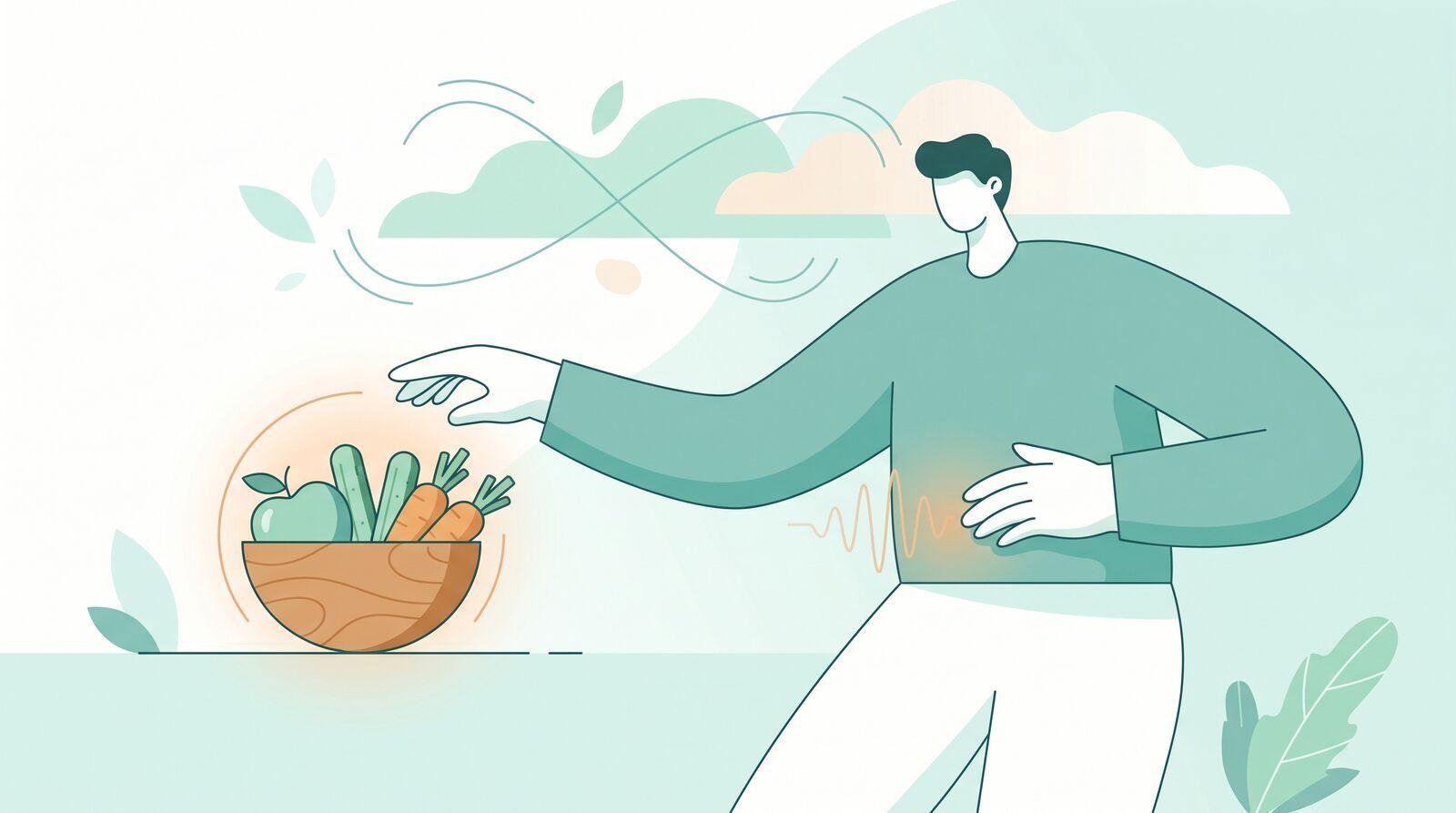
Here is the part most people miss: a lot of what feels like a nicotine craving is actually a blood-sugar dip. Nicotine causes your body to release stored glucose, so smokers grow used to a certain blood-sugar rhythm. Take the nicotine away and that rhythm falls apart, producing a shaky, irritable, urgent "I need something right now" feeling that is almost indistinguishable from a drug craving. Eat in a way that keeps blood sugar level and you defuse a large share of your cravings before they ever fully form.
The Foundation: Foods That Steady Your Blood Sugar
The single most effective eating strategy when you quit is to avoid the spike-and-crash cycle. Every crash feels like a craving and sends you hunting for relief, often a cigarette. You flatten those swings with three things: protein, fiber, and slow complex carbohydrates.
- Protein keeps you full for hours and blunts blood-sugar spikes. Eggs, Greek yogurt, cottage cheese, beans, lentils, chicken, fish, tofu, and nuts are all reliable anchors for a meal or snack.
- Fiber slows digestion so glucose enters your bloodstream gradually. Vegetables, whole fruit, oats, beans, and whole grains do this well, and fiber also helps with the temporary constipation some people notice early on.
- Slow carbohydrates such as oats, whole-grain bread, brown rice, and sweet potatoes give steady energy instead of the jolt-then-drop of white bread, pastries, and candy.
Just as important as what you eat is when. Skipping meals and then crashing is a setup for a craving. Eat on a regular schedule, roughly every three to four hours, and keep a protein-and-fiber snack within reach for the moments a dip sneaks up on you.
Crunchy, Hands-Busy Foods for the Ritual
A cigarette was never only about nicotine. It was a thing to hold, a thing to bring to your mouth, a small repeated ritual stitched into your day. When the nicotine is gone, that hand-to-mouth loop still wants to run, which is why so many quitters find themselves snacking mindlessly.
The fix is to feed the ritual with foods that cost you almost nothing:
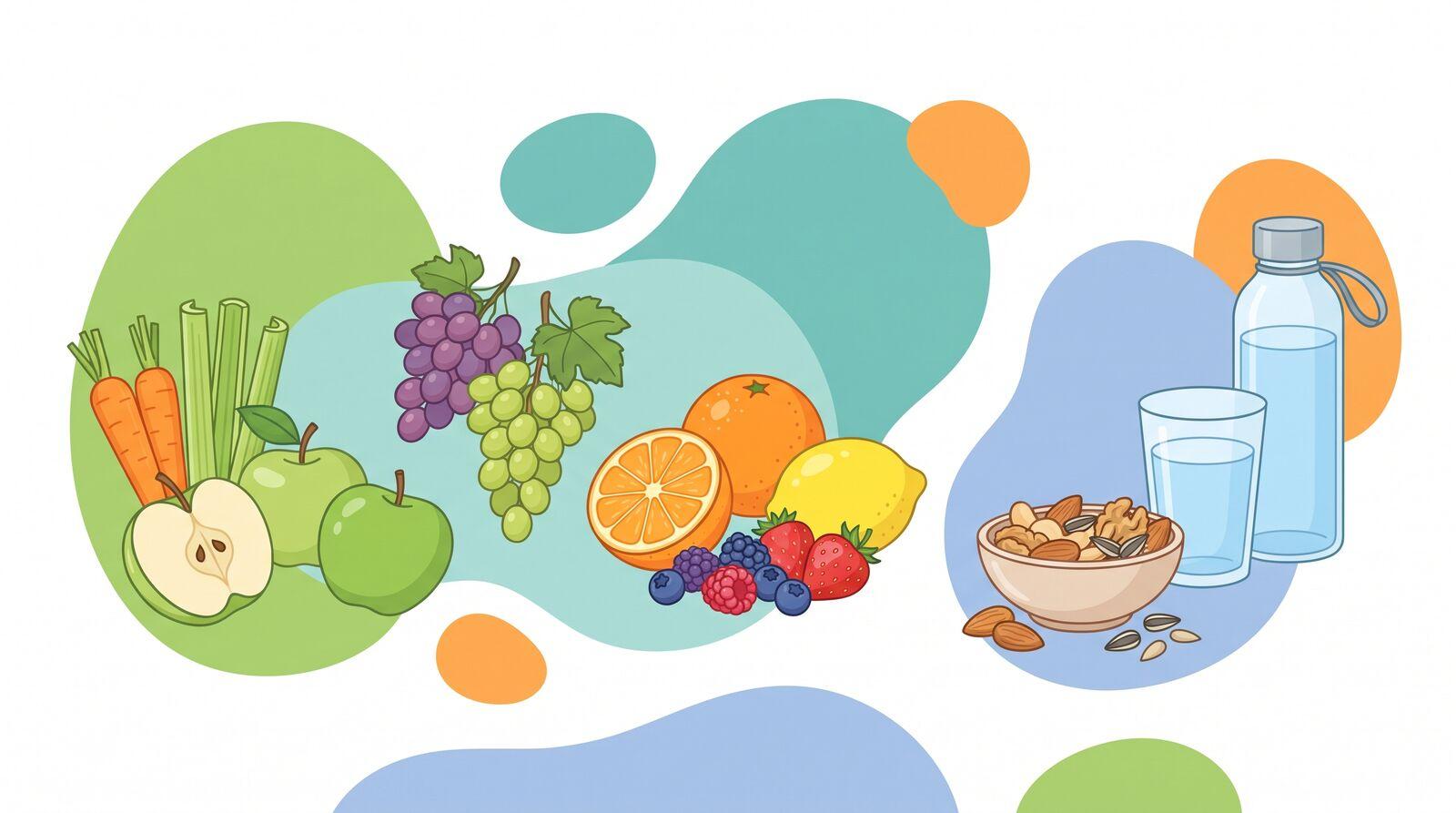
- Crunchy vegetables: carrot sticks, celery, bell pepper strips, cucumber, snap peas.
- Crunchy fruit: apple slices, pear, grapes you can eat one at a time.
- Things you fiddle with: sunflower seeds in the shell, pistachios you have to crack, a few almonds.
- Sugar-free gum, mints, or a cinnamon stick to keep your mouth occupied with zero calories.
The crunch and the hand motion matter as much as the food itself. Chewing something with real texture scratches the same itch a cigarette did, and because these options are low in calories you can lean on them without watching the scale creep.
The Taste Trick: Make Cigarettes Taste Worse
This one is genuinely underused. Researchers at Duke University found that certain foods reliably change how a cigarette tastes. Smokers consistently rated cigarettes as tasting worse after eating fruit, vegetables, and dairy, and better after meat, coffee, and alcohol.
You can put that to work. During the first weeks, tilt your plate toward produce and dairy and go a little lighter on meat-heavy meals, coffee, and alcohol. A cigarette that tastes stale and unpleasant is a cigarette that is easier to refuse. It is a small lever on its own, but quitting is won by stacking small levers, and this one runs quietly in the background every time you eat an orange instead of a steak.
Refill What Smoking Drained
Smoking depletes several nutrients, and vitamin C is the headline. Smokers carry meaningfully lower vitamin C levels than non-smokers because the oxidative stress of smoke burns through it. Rebuilding those stores supports the recovery already underway in your lungs, skin, and immune system.
Reach for foods rich in vitamin C and antioxidants: citrus fruits, strawberries and other berries, kiwi, bell peppers, broccoli, and leafy greens. These do double duty, since most of them are also the crunchy, produce-forward foods that steady blood sugar and make cigarettes taste worse. You rarely need to think about individual nutrients if your plate is colorful and mostly whole foods, which is also why food beats pills for most people. If you are curious about where targeted supplementation actually helps and where it is overhyped, the supplements guide sorts the evidence from the marketing.
Do not underestimate plain water, either. Thirst is often misread as hunger or as a craving, and staying well hydrated helps flush nicotine from your system and eases headaches during withdrawal.
What to Ease Off (Not Ban)
A few foods and drinks work against you in the early weeks. The goal is not lifelong prohibition, just a lighter touch while your defenses are down:
- Alcohol. It lowers your resolve, and, per the research above, it makes cigarettes taste better. It is one of the strongest relapse triggers, which is why it has its own guide.
- Excess caffeine. Quitting changes how your body clears caffeine, so the same coffee now hits harder and can stoke jitters that feel exactly like cravings. You do not have to quit coffee, but consider easing the dose.
- Sugary snacks and refined carbs. They spike your blood sugar and then drop it, and that drop mimics a nicotine craving, creating the exact cycle you are trying to escape.
A Craving Is Not Always Hunger
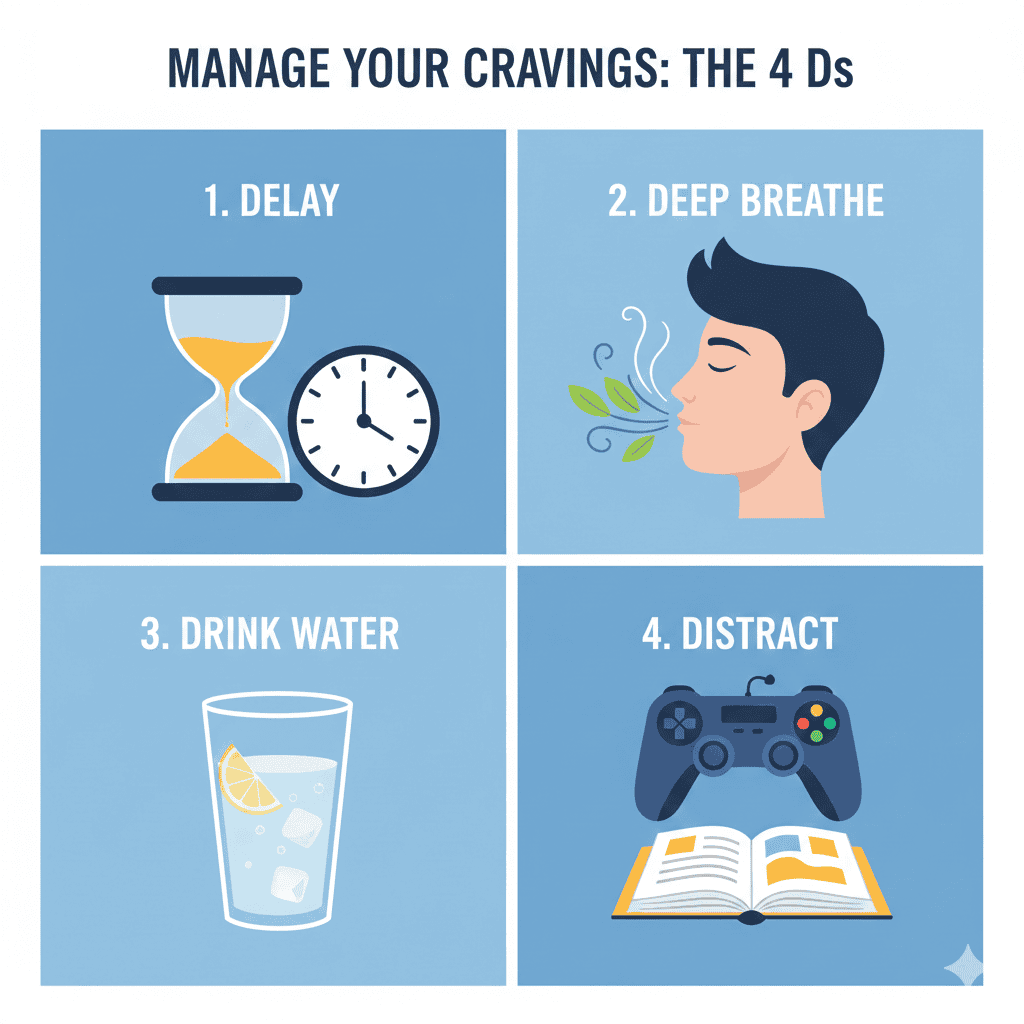
Because early cravings and hunger and even thirst all feel so similar, a simple pause helps. When an urge hits, run a quick check: have you eaten in the last few hours, and have you had water? If not, a protein-and-fiber snack or a glass of water often settles it. If you genuinely are not hungry, the urge is more likely a nicotine craving or a stress spike, and a food response will not fix it. That is the moment to reach for a non-food tool instead, like a brisk walk or a round of paced breathing. Our companion app Flow Breath is built for exactly these 90-second resets, giving your hands and lungs a job while the urge crests and passes. Matching the right tool to the real trigger keeps you from eating on autopilot every time something feels off.
Don't Crash-Diet While You Quit
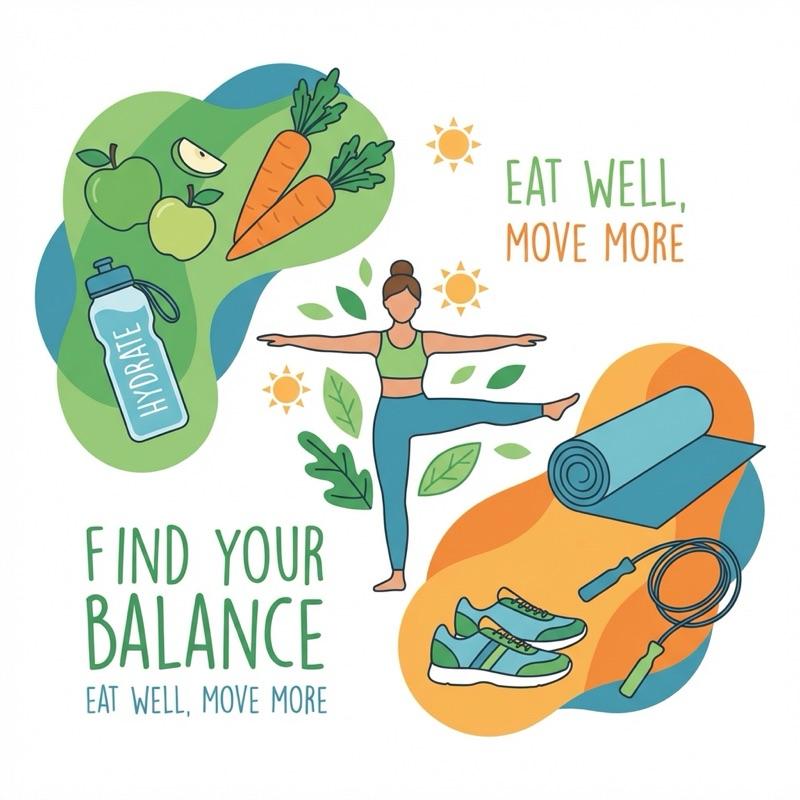
It is tempting to fix everything at once and pair the quit with a strict diet. Resist that. Quitting smoking is already a demanding project, and stacking aggressive calorie restriction on top of it means fighting two hard battles at the same time, which raises the odds of losing both. Some weight change is common and mostly temporary, and it is a far smaller health risk than smoking. Get the quit rock-solid first, eat well enough to blunt the worst of the gain, and refine your diet once you are no longer white-knuckling every craving. Pairing good eating with regular movement handles the weight question better than any restriction ever could.
How Can Smoke Tracker Help?
Good eating and staying smoke-free are the same project, and Smoke Tracker helps you see them working together.
- Craving Log: Logging each craving builds a record you can actually read, and patterns jump out fast. If your urges cluster before lunch or late afternoon, that is your blood sugar talking, and a well-timed snack becomes an obvious fix.
- Health Timeline: As your smoke-free days add up, the recovery milestones in your taste, lungs, and circulation tick over as live markers, a reminder that the produce on your plate is feeding a body that is actively repairing.
- Money Saved: The cash you are no longer burning on cigarettes is more than enough to cover better groceries, which turns the money you save into fuel for the habit that replaces smoking.
- Streak Counter: Watching the days stack up keeps the long game in view on the afternoons when a snack and a short walk are all that stand between you and a slip.
What you eat in the first few weeks after quitting is not a side issue, it is a craving tool hiding in plain sight. Steady your blood sugar with protein and fiber, keep your hands busy with crunchy low-calorie foods, lean on produce and dairy to make cigarettes taste worse, and go easy on alcohol, excess caffeine, and sugar. Do that, and the plate that used to feel like a threat to your waistline becomes one of the quietest, most dependable allies your quit has.
Sources
- McClernon, F. J., et al. (2007). "The effects of foods, beverages, and other factors on cigarette palatability." Nicotine & Tobacco Research. pubmed.ncbi.nlm.nih.gov
- Spring, B., et al. (2003). "Reward value of cigarette smoking for comparably heavy smoking schizophrenic, depressed, and nonpatient smokers." American Journal of Psychiatry. pubmed.ncbi.nlm.nih.gov
- Northrop-Clewes, C. A., & Thurnham, D. I. (2007). "Monitoring micronutrients in cigarette smokers." Clinica Chimica Acta. pubmed.ncbi.nlm.nih.gov
- Aubin, H. J., et al. (2012). "Weight gain in smokers after quitting cigarettes: meta-analysis." BMJ. pubmed.ncbi.nlm.nih.gov
- Benowitz, N. L. (2010). "Nicotine addiction." New England Journal of Medicine. pubmed.ncbi.nlm.nih.gov
- National Health Service (NHS). (2022). "Stop smoking without putting on weight." nhs.uk
Common questions
- What foods help stop nicotine cravings?
- The most reliable helpers are foods that keep blood sugar stable, since a blood-sugar dip produces the same shaky, edgy feeling as a nicotine craving and is easy to confuse with one. Protein and fiber slow digestion and flatten those swings, so eggs, Greek yogurt, beans, lentils, nuts, oats, and whole fruit are all good choices. Crunchy vegetables like carrots and celery add a second benefit: they keep your hands and mouth busy in the exact hand-to-mouth ritual a cigarette used to fill. There is also a taste effect worth exploiting: fruit, vegetables, and dairy tend to make cigarettes taste worse, so a produce-heavy diet quietly works against the urge. Water and unsweetened drinks help too, because thirst is often misread as a craving.
- Do certain foods make cigarettes taste bad?
- Yes, and it is one of the more useful and underused quitting tricks. Research from Duke University found that smokers consistently rate the taste of a cigarette as worse after eating fruit, vegetables, and dairy products, and better after meat, coffee, and alcohol. The exact mechanism is not fully settled, but the practical takeaway is clear: leaning your diet toward produce and dairy while easing off meat-heavy meals, coffee, and alcohol during the first weeks makes the cigarette itself less rewarding at the same time you are trying to walk away from it. It will not carry a quit on its own, but stacked with everything else it tilts the odds in your favor.
- Why am I so hungry after quitting smoking?
- Two things happen at once. First, nicotine is an appetite suppressant and a mild metabolic stimulant, so when it leaves your system your natural appetite returns and your metabolism slows slightly back to normal, which genuinely increases hunger. Second, taste and smell recover within days of quitting, so food is suddenly more vivid and appealing than it has been in years. On top of that, many people reach for food to replace the hand-to-mouth ritual of smoking. The hunger is real and normal, but it is manageable: eating protein and fiber at regular intervals keeps you full, and choosing low-calorie crunchy snacks satisfies the ritual without the calories. Our full guide on increased appetite after quitting covers the timeline in detail.
- What should I avoid eating when I quit smoking?
- Go easy on the classic craving triggers rather than banning anything outright. Alcohol is the big one: it lowers your resolve and, in studies, makes cigarettes taste better, so it is strongly linked to relapse. Excess caffeine is worth watching because quitting changes how your body processes it, so the same coffee can hit harder and fuel jitters that feel like cravings. Sugary snacks and refined carbs cause a quick blood-sugar spike followed by a crash, and that crash mimics a nicotine craving, setting up a frustrating cycle. None of these need to be permanent bans; the point is to lighten up on them during the first few weeks when your defenses are lowest, then reintroduce what you enjoy once your quit is solid.
- Will eating healthy stop me from gaining weight after quitting?
- It gives you a large head start, though the honest answer is that some weight change is common and mostly temporary. The average post-quit weight gain is modest, and it comes from a mix of a returning appetite, a metabolism settling back to its natural rate, and food replacing the smoking ritual. Eating protein and fiber to stay full, choosing low-calorie crunchy snacks for the hand-to-mouth habit, staying hydrated, and moving daily addresses every one of those drivers at once. The most important thing is not to crash-diet while quitting: fighting two hard battles at the same time raises the odds of losing both. Get the quit solid first, eat well enough to blunt the worst of the gain, and refine from there.
This article is for informational purposes only and does not constitute medical advice. Health information is based on published research from organizations such as the CDC, WHO, and American Lung Association. Always consult a healthcare professional for personalized guidance on smoking cessation.