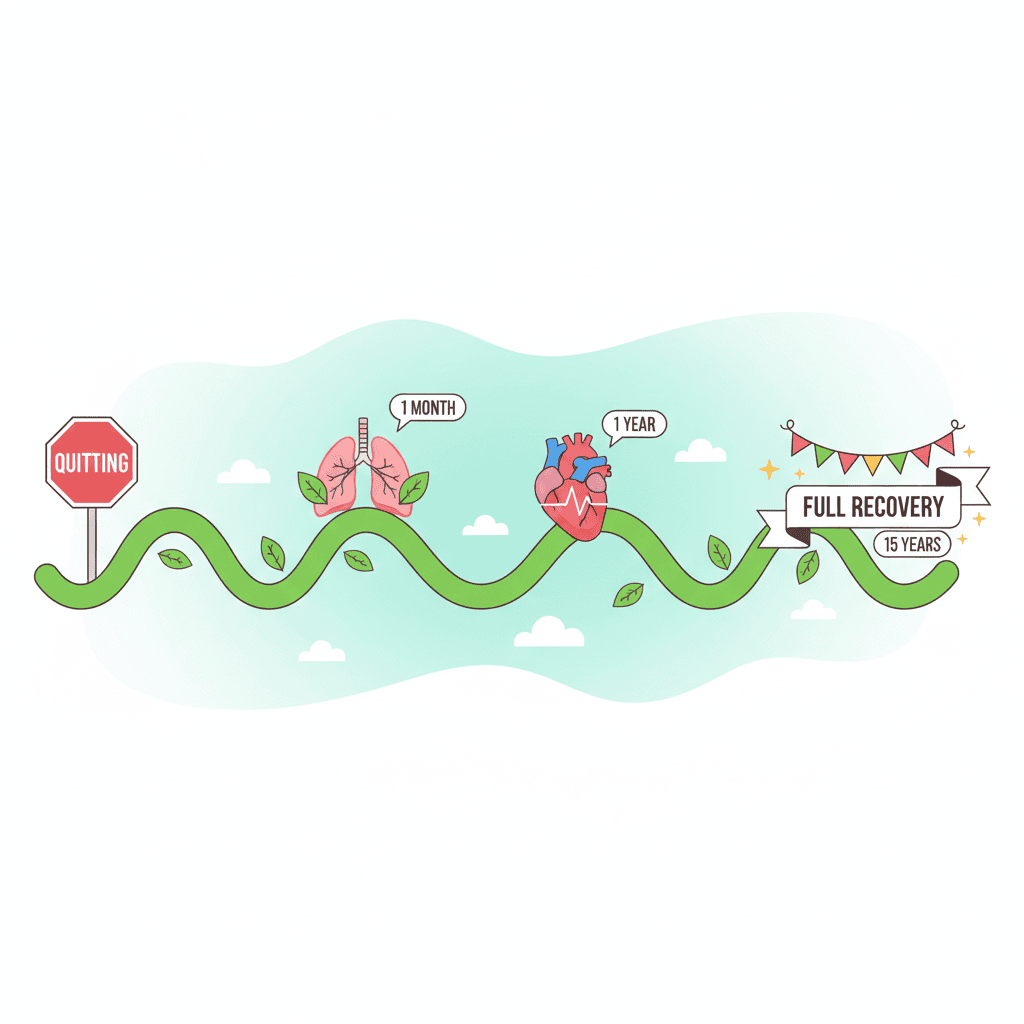
The first time it happens is unforgettable. You take a bite of something familiar, an apple, a piece of bread, your usual coffee, and suddenly it tastes like a sharper, brighter version of itself. Smells you walked past for years, fresh laundry, a stranger's perfume, rain hitting hot pavement, suddenly hit you with detail you never knew was there. For most former smokers, the return of taste and smell is one of the most surprising and emotionally charged parts of quitting. It is also one of the most predictable, biologically. Here is exactly what happens to your senses after your last cigarette, when each milestone arrives, and what you can do to accelerate the recovery.
What Does Smoking Actually Do to Taste and Smell?
Smoking damages your senses through several distinct mechanisms, which is why recovery happens in stages rather than all at once.
Olfactory neurons get blunted. The smell-receiving neurons in the upper part of your nasal cavity are some of the only neurons in the human body that regenerate throughout life. Tobacco smoke chronically damages them, reduces their density, and disrupts the molecular machinery they use to bind odor molecules. In smokers, olfactory function is measurably worse on standardized smell tests than in non-smokers, and the effect is dose-dependent: the heavier the smoking, the worse the deficit.
Taste buds get coated. Your tongue is covered in fungiform papillae, the tiny pink bumps that house your taste receptors. Smoking deposits tar, nicotine residue, and other particulates on the tongue's surface, which physically blocks taste buds from reaching the food in your mouth. Worse, chronic smoking flattens the papillae themselves and reduces their vascularization, so even when food reaches them, the signal is weaker.
Flavor depends on smell, not just taste. Most of what we call "taste" is actually retronasal olfaction, the odor molecules from food traveling up the back of your throat to your olfactory neurons. Sweet, sour, salty, bitter, and umami are all you get from the tongue alone. Everything else, the wine, the coffee, the strawberry, the herbs, comes from smell. This is why smokers often describe food as "flat" or "muted" without being able to name what is missing. The smell component, which carries most of the flavor, is the part that took the worst hit.
Mucus and inflammation block the signal. Smokers tend to have chronically inflamed nasal passages and excess mucus production, which physically muffles odor molecules before they can reach the olfactory neurons. This is why the very first days after quitting often feel like nothing has changed yet, and why the early improvements can sometimes be dramatic once the inflammation starts dropping.
When Does Taste Come Back After Quitting?
Taste recovers faster than smell, and the timeline is remarkably consistent across most quitters.
At 48 hours: Nerve endings on the tongue begin regenerating from the moment your bloodstream is free of nicotine and CO. Many quitters report noticeable improvement in taste within just 48 to 72 hours. Salty, sweet, and bitter signals sharpen first.
At 1 to 2 weeks: Your tongue starts shedding the residual coating from years of smoking. Fungiform papillae rehydrate and become more responsive. Foods you knew well start to surprise you: a plain potato can taste sweet, water can taste different in different glasses, and the salt on chips can suddenly seem aggressive.
At 1 month: Taste sensitivity is approaching baseline non-smoker levels for most quitters. This is the milestone where many people overhaul their food preferences and discover they can taste vegetables, herbs, and subtle sauces in ways they never could as smokers. For more on the body-wide changes at this mark, see our guide on what to expect at 30 days smoke-free.
At 3 months and beyond: The remaining slow improvements happen gradually. Studies measuring taste sensitivity in former smokers show that fine discrimination, especially for bitter and umami compounds, continues improving for several months after the initial bounce-back.
When Does Smell Come Back After Quitting?
Smell recovery takes longer because olfactory neurons have to physically regenerate, and they do so on a slower clock than the surface of your tongue.
At 48 to 72 hours: Inflammation in your nasal passages drops as your body stops being assaulted by 7,000-plus chemicals every day. Many quitters notice that smells they had stopped detecting years ago, like coffee being brewed in another room or an open jar of peanut butter, suddenly cut through. This early improvement is mostly about reduced congestion and inflammation, not new neuron growth.
At 2 weeks: New olfactory neurons that started regenerating right after you quit are reaching the cribriform plate and connecting to the brain. Smell sensitivity climbs noticeably. Coffee, cooking, gasoline, and floral scents tend to come back first, in that approximate order.
At 1 to 3 months: Olfactory receptor density continues climbing toward non-smoker levels. By the three-month mark, most former smokers score significantly higher on standardized smell tests than they did at the time of quitting, and many score in the normal range for non-smokers.
At 6 to 12 months: Full smell recovery for most people. The lingering subtle losses from heavy smoking, especially the ability to discriminate between very similar odors, can take up to a year to fully resolve.
The variation is large. Light smokers often see near-complete recovery within a few weeks, while heavy long-term smokers may take a full year for the deepest layers of olfactory function to return. Age also matters: younger quitters typically recover faster because their olfactory neurogenesis is more vigorous.
Why Do Some Foods Suddenly Taste Wrong?
This is one of the strangest parts of the early recovery, and almost nobody warns you about it. As your senses return, your favorite foods can taste off, weirdly intense, or even unpleasant for a few weeks.
Coffee is a common offender. Smokers tend to drink stronger, more bitter coffee because their muted taste buds need more stimulation. When taste comes back, that same coffee can taste harsh, burnt, or unbearable. Many former smokers temporarily switch to lighter roasts, drink less, or add more milk for a few weeks until their tongue adjusts.
Alcohol also tastes different after quitting. Beer can taste skunkier, wine can taste sweeter or more acidic, and spirits can taste sharper and more medicinal. This is partly because alcohol's flavor profile leans heavily on aroma, and your nose is now picking up notes that smoking had been masking.
Sweetness gets amplified. As taste buds recover, sugar tastes sweeter than it used to. Desserts, sodas, and sweetened coffee drinks can become almost cloying. Some former smokers find themselves naturally cutting back on sugar without trying, simply because the same dose now feels like too much.
Hyperosmia, or heightened smell, can be uncomfortable. A subset of quitters develop a temporary period where smells, especially strong ones like garbage, perfume, body odor, or food aromas in restaurants, feel overwhelming. This is your olfactory system overshooting in the recalibration process. It typically resolves within one to three months as your brain learns to filter incoming odor information at a non-smoker's baseline.
Can Returning Taste and Smell Cause Weight Gain?
Yes, and this is the part that often catches people off guard.
When food starts tasting genuinely good again, eating becomes more rewarding. Combined with the metabolic shift that happens after quitting, this is one of the main reasons many former smokers gain a few pounds in the first months. Researchers sometimes call this "flavor flooding": foods deliver more pleasure per bite, so the brain's natural stop signal arrives later, after more total calories.
The good news is that this effect is real but manageable. Eating slowly, savoring rather than scarfing, and choosing foods whose new vivid flavors are genuinely satisfying tend to bring intake back into balance within a few weeks. Our guide on quit smoking and weight gain breaks down the full picture, including which strategies actually work for the average former smoker.
How Can You Speed Up Taste and Smell Recovery?
Most of the recovery happens on its own, but several specific habits accelerate the timeline measurably.
Practice scent training. The most evidence-backed technique for olfactory recovery, originally developed for post-viral smell loss but useful for ex-smokers too, is daily scent training. Pick four strong, distinct scents (typically rose, lemon, eucalyptus, and clove) and smell each one deliberately for about 20 seconds, twice a day. Studies on smell loss show that this kind of structured exposure speeds up olfactory recovery by stimulating new neurons to form proper connections. Eight to twelve weeks of consistent practice produces the clearest gains.
Clean your tongue. A coated, smoke-aged tongue can keep blocking taste buds for weeks. Use a tongue scraper twice a day for the first month after quitting. The improvement in taste sensitivity is often noticeable within days.
Stay hydrated. Mucus thins, papillae rehydrate, and odor molecules travel more efficiently in a well-hydrated nose and mouth. Aim for 2 liters of water a day during the first month of quitting, more if you exercise.
Use a saline nasal rinse. A simple isotonic saline rinse, used once a day for the first one to two weeks, helps flush residual mucus and inflammation out of your nasal passages and gives new olfactory neurons a cleaner environment to grow into.
Get enough zinc. Zinc deficiency directly impairs taste and smell, and smokers run lower on zinc on average than non-smokers. Sources like pumpkin seeds, oysters, beef, and chickpeas help. A standard 15 mg zinc supplement is reasonable for the first month if your diet is light on zinc-rich foods, though most people do not need to supplement long-term.
Maintain oral hygiene. Brush twice a day, floss daily, and consider an antibacterial mouthwash for the first few weeks. Smoking favors certain bacterial populations on the tongue and gums, and replacing them with a healthier microbiome speeds up taste recovery and clears the lingering smoker's breath that can hang around for weeks.
When Should You Worry?
Most taste and smell recovery is on a clear trajectory by the end of the first month. If you are six months past your last cigarette and your senses still feel completely flat, that is worth bringing up with a doctor. Persistent loss of smell at that point is rare in former smokers and may point to something separate, like sinus disease, nasal polyps, or a post-viral cause. Sudden distortions, where everything smells like smoke, chemicals, or something rotten, are also worth flagging, especially if they appear after months of normal recovery.
For the overwhelming majority of quitters, though, the trajectory is clean and rewarding. Within the first year, most former smokers describe their senses as being in a different league from where they started.
How Can Smoke Tracker Help You Notice Sensory Recovery?
The frustrating thing about taste and smell recovery is that it happens gradually, and you can miss the milestones if you are not paying attention. The tracker helps make the invisible improvements concrete.
- Health Timeline: See exactly which sensory recovery milestones you have already hit, from 48-hour taste bud regeneration to 3-month olfactory neuron rebuilding. Watching the science unfold in real time keeps motivation high during the harder weeks.
- Streak Counter: Each day of cleaner air and zero smoke is another day of new neurons forming. The number on the screen is a literal count of recovery days.
- Craving Log: Note when food, drink, or scent triggers cravings versus when they start triggering pleasure instead. The transition usually happens between weeks two and four, and seeing it written down is one of the strongest reinforcements for staying quit.
- Money Saved: Use your savings on better food. Quality coffee, fresh herbs, good olive oil, ripe fruit, whatever lets you taste the world you have been missing. Eating well is one of the most rewarding ways to spend cigarette money you no longer need.
A working sense of taste and smell is one of the simplest, most underrated joys of being human, and you have been operating on a dimmer switch for as long as you have been smoking. Within days of quitting, the lights start coming back up. Within months, the room is bright again.
Your senses are not lost. They are just waiting for you to stop turning them off.
Sources
- Centers for Disease Control and Prevention. "Smoking and Tobacco Use: Health Effects." cdc.gov
- American Lung Association. "Benefits of Quitting Smoking." lung.org
- Chemical Senses (Oxford Academic). "Effects of Smoking on Olfactory Function." academic.oup.com/chemse
- Mayo Clinic. "Smell and Taste Disorders." mayoclinic.org
- National Institute on Deafness and Other Communication Disorders. "Smell Disorders." nidcd.nih.gov
- American Cancer Society. "Health Benefits of Quitting Smoking Over Time." cancer.org
This article is for informational purposes only and does not constitute medical advice. Health information is based on published research from organizations such as the CDC, WHO, and American Lung Association. Always consult a healthcare professional for personalized guidance on smoking cessation.