You have probably heard the warnings a thousand times: smoking destroys your lungs. But here is something most people never hear: your lungs are astonishingly good at fixing themselves.
Even if you have smoked for decades, measurable healing begins within hours of your last cigarette. The lungs are one of the few organs in the human body with a remarkable capacity for regeneration, and the moment you stop flooding them with toxic smoke, they get straight to work. The timeline of that recovery is both fascinating and motivating.
Here is exactly what happens inside your chest, stage by stage, from your final puff to years down the road.
How Much Damage Does Smoking Actually Do to Your Lungs?
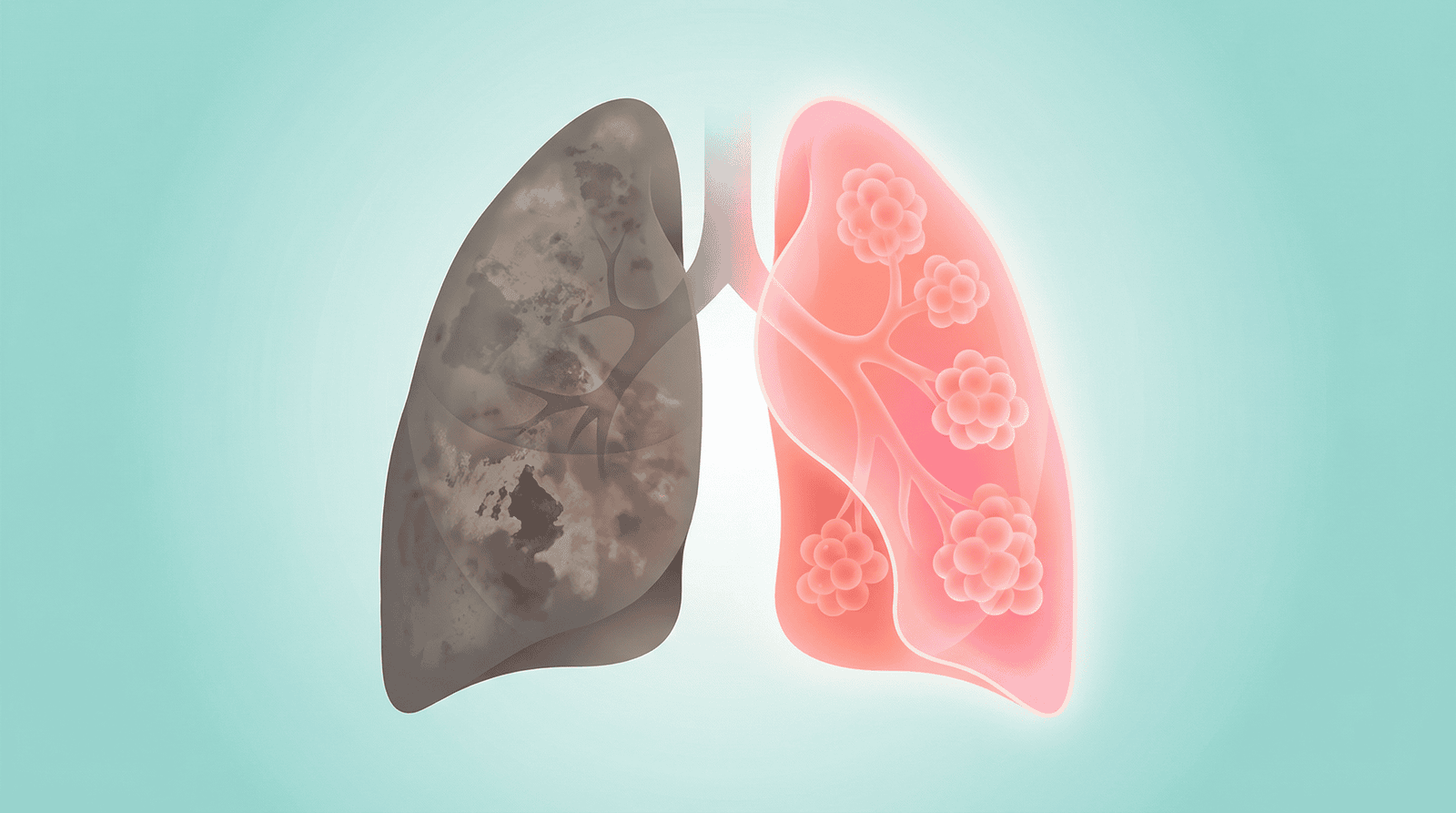
Before we trace the healing, it helps to understand what smoking breaks. Cigarette smoke contains over 7,000 chemicals, including formaldehyde, hydrogen cyanide, ammonia, and carbon monoxide. These compounds attack the lungs on multiple fronts simultaneously.
First, they paralyze and destroy the cilia, tiny hair-like structures lining the airways. Cilia are the lungs' built-in cleaning crew: they sweep mucus, bacteria, and debris upward and out of the respiratory tract. In active smokers, cilia are matted flat and unable to function. Without them, mucus pools in the airways, creating a breeding ground for infections and that familiar "smoker's cough."
Second, smoke triggers chronic inflammation in the bronchial tubes, causing them to swell and narrow. This reduces airflow and makes every breath require more effort. Over time, the inflammation damages the walls of the alveoli, the 300 million tiny air sacs where oxygen enters the bloodstream. Once alveolar walls are destroyed, they do not grow back. This is the mechanism behind emphysema.
Third, carbon monoxide from each cigarette binds to hemoglobin in the blood roughly 200 times more readily than oxygen does, effectively stealing oxygen-carrying capacity from every red blood cell it touches.
The good news: most of this damage, except advanced alveolar destruction, is reversible.
What Happens to Your Lungs in the First 72 Hours?
The earliest changes are surprisingly fast.
20 Minutes
Your heart rate and blood pressure drop to near-normal levels. Blood flow to your extremities begins to improve.
8 Hours
Carbon monoxide levels in your blood drop by half, and oxygen levels return to normal. Your blood can now carry a full load of oxygen again. Tissues that have been subtly starved, including lung tissue itself, start receiving better nourishment.
24 Hours
Your lungs begin clearing out mucus and debris that accumulated while your cilia were disabled. This is when many people notice an increase in coughing, which can feel alarming but is actually a sign of recovery. Your body is finally able to expel what it could not before.
48 to 72 Hours
Nerve endings in the airways begin to regenerate. Your sense of smell and taste start sharpening as the receptors in your nose and mouth recover from constant chemical bombardment. Bronchial tubes begin to relax, and you may notice that breathing feels slightly easier. Lung capacity starts to measurably improve.
How Do Your Lungs Heal in the First Month?
The first month is when the most dramatic internal reconstruction happens, even if you cannot see it from the outside.
Cilia Regrowth (Weeks 1 to 4)
Within the first one to two weeks, cilia begin regrowing and resuming their sweeping motion. This is a critical milestone: once functional cilia return, the lungs can actively clear mucus, tar residue, and trapped particles. The "smoker's cough" often intensifies during weeks two and three before gradually subsiding. This is entirely normal and reflects the cleaning process accelerating.
Inflammation Reduction
Chronic bronchial inflammation starts subsiding as the constant irritant, cigarette smoke, is removed. Swollen airways begin to open up. Pulmonary function tests typically show measurable improvement in FEV1 (forced expiratory volume in one second) within the first two to four weeks of cessation.
Infection Risk Drops
With cilia functioning again and inflammation decreasing, your lungs become significantly better at fighting off respiratory infections. Former smokers often notice they catch fewer colds during their first smoke-free winter compared to prior years.
What Changes Between Months 1 and 9?
This is the phase where you start to feel the difference in daily life, not just on a spirometer reading.
Month 3
Lung function improves by up to 30% compared to when you were smoking. Activities that left you winded, like climbing stairs or carrying groceries, become noticeably easier. The persistent cough and shortness of breath continue to decrease.
Months 3 to 6
The lungs' self-cleaning system is now fully operational. Cilia are dense and active, efficiently sweeping the respiratory tract clean. Mucus production normalizes. The risk of lung infections such as bronchitis and pneumonia drops substantially.
Month 9
Most smoking-related coughing, wheezing, and breathing problems have resolved. Sinus congestion typically clears. Energy levels improve as oxygen delivery becomes more efficient throughout the body. Many former smokers report that this is the point where they stop thinking of themselves as "a smoker who quit" and start identifying as "a non-smoker."
When Do Your Lungs Fully Recover?
Full recovery depends on how long and how heavily you smoked, but the milestones are encouraging at every stage.
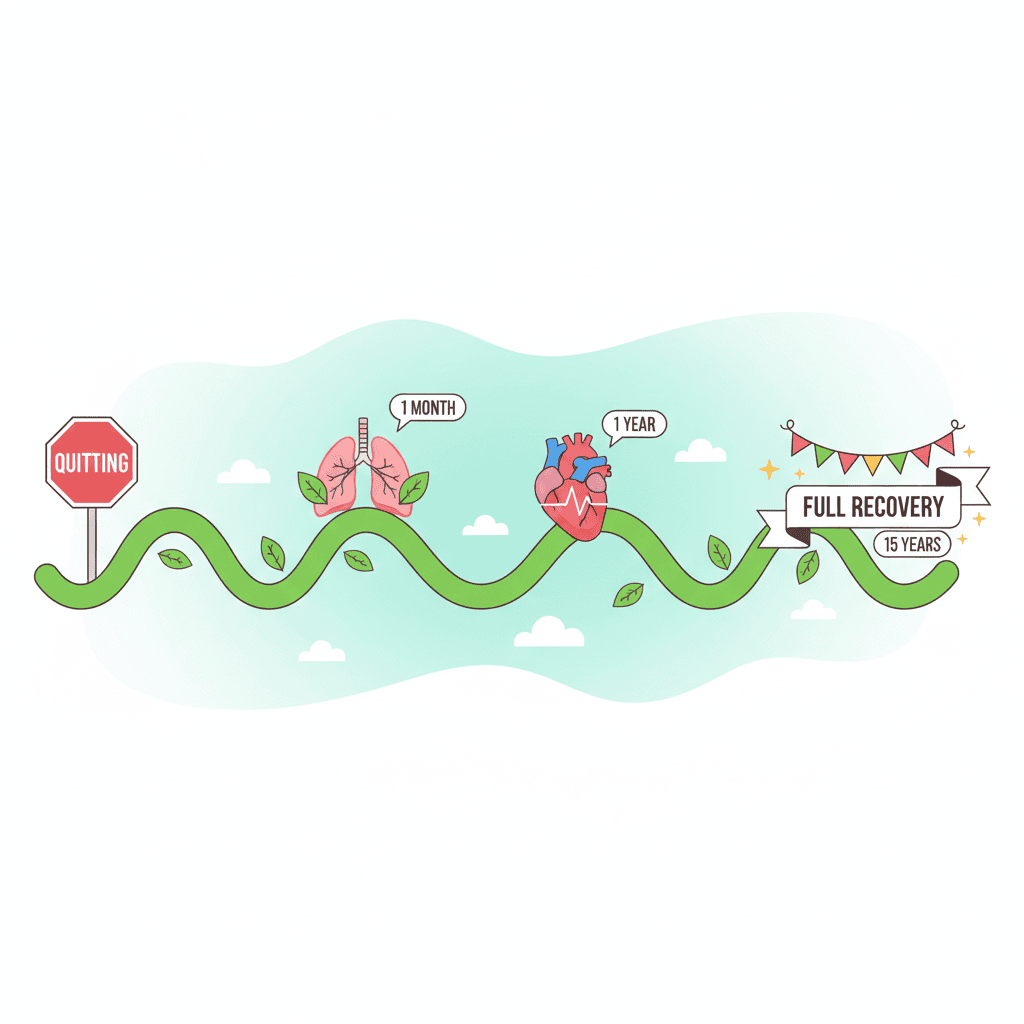
1 Year
The excess risk of coronary heart disease drops to roughly half that of a current smoker. While this is primarily a cardiovascular milestone, improved blood flow benefits lung tissue repair as well.
5 Years
The risk of cancers of the mouth, throat, esophagus, and bladder is cut in half. Lung cancer risk begins its long decline.
10 Years
The risk of dying from lung cancer drops to roughly half that of a continuing smoker. Precancerous cells in the airways are replaced by healthy tissue. Recent research has revealed that even in long-term smokers, a substantial population of airway cells with near-normal DNA exists and can repopulate the lung lining once smoking stops. This finding overturned the long-held assumption that decades of smoking cause irreversible genetic damage to all lung cells.
15 Years
Lung cancer risk approaches that of someone who never smoked. Coronary heart disease risk is equivalent to a lifelong non-smoker.
The key insight: it is never too late. Whether you smoked for five years or fifty, quitting triggers the same healing cascade. The degree of recovery may vary, but the direction is always positive.
Can You Speed Up Lung Recovery?
You cannot rush biology, but you can create the optimal conditions for it.
1. Stay Hydrated
Water thins mucus in the airways, making it easier for recovering cilia to sweep debris out. Aim for at least 2 liters per day. Warm liquids like herbal tea can be especially soothing for irritated bronchial passages.
2. Practice Deep Breathing Exercises
Diaphragmatic breathing and pursed-lip breathing expand the lungs fully and help reopen collapsed alveoli. A simple daily practice: inhale slowly through your nose for 4 seconds, hold for 4 seconds, exhale through pursed lips for 6 seconds. Repeat for 5 minutes. This exercise also activates the parasympathetic nervous system, reducing the stress response that often accompanies early cessation.
3. Move Your Body
Aerobic exercise increases respiratory demand, which trains your recovering lungs to work more efficiently. Start with brisk walking if you are deconditioned, and gradually build up. Research consistently shows that regular physical activity accelerates improvements in lung function after smoking cessation. Even 30 minutes of moderate exercise three to four times per week makes a meaningful difference.
4. Avoid Secondhand Smoke and Pollutants
Your healing lungs are especially vulnerable during recovery. Avoid smoky environments, strong chemical fumes, and heavy air pollution when possible. If you live in an area with poor air quality, a HEPA filter for your bedroom can reduce nighttime particulate exposure.
5. Eat Anti-Inflammatory Foods
A diet rich in fruits, vegetables, and omega-3 fatty acids supports the anti-inflammatory processes your lungs are running. Research has found that higher apple and tomato consumption was associated with slower decline in lung function among former smokers, suggesting these foods may actively support pulmonary repair.
How Can You Track Your Breathing Improvements?
One of the most motivating aspects of lung recovery is that you can feel it happening. But subjective impressions fade quickly, and on a tough day, it is easy to forget how far you have come.
Smoke Tracker lets you log daily breathing quality alongside your smoke-free streak. Over weeks and months, you can see the upward trend mapped out in your own data: fewer moments of breathlessness, easier workouts, deeper sleep. Pairing your health timeline with real self-reported breathing scores turns abstract biology into personal, visible progress.
Many users find that reviewing their tracked improvements during a craving provides the concrete reminder they need: your lungs are healing right now, and every smoke-free hour moves the timeline forward.
Your lungs are already rebuilding. Give them the time they are asking for.
Sources
- National Institute on Drug Abuse. "Tobacco, Nicotine, and E-Cigarettes." drugabuse.gov
- Centers for Disease Control and Prevention. "Benefits of Quitting Smoking Over Time." cdc.gov
- American Lung Association. "Benefits of Quitting." lung.org
- World Health Organization. "Tobacco: Key Facts." who.int
- Mayo Clinic. "Nicotine Dependence." mayoclinic.org
- American Cancer Society. "Health Benefits of Quitting Smoking Over Time." cancer.org
This article is for informational purposes only and does not constitute medical advice. Health information is based on published research from organizations such as the CDC, WHO, and American Lung Association. Always consult a healthcare professional for personalized guidance on smoking cessation.