Décider d'arrêter est la partie que la plupart des fumeurs tournent et retournent pendant des années avant de s'y engager, donc si vous lisez ceci avec une réelle intention de stopper, vous avez déjà passé le portail le plus difficile. Ce qui tourne mal ensuite n'est généralement pas un manque de volonté. C'est d'arrêter sans plan : pas de date d'arrêt, pas de méthode choisie, aucune idée de ce que sera le manque, et aucune réponse prête pour la première envie difficile. Cette version de l'arrêt échoue pour presque tout le monde, ce qui explique pourquoi tant de gens concluent qu'ils « ne peuvent pas » arrêter alors qu'en réalité ils ont juste improvisé. Voici un plan étape par étape construit autour de ce qui prédit vraiment un arrêt durable, de ce à quoi s'attendre du manque, et de comment tenir les deux semaines qui comptent le plus.
Pourquoi la seule volonté échoue souvent
Fumer, ce sont deux habitudes entrelacées, et la plupart des tentatives ratées n'en abordent qu'une seule.
La première est la dépendance chimique. La nicotine reprogramme le système de récompense de votre cerveau pour qu'il s'attende à une dose régulière, et quand elle cesse d'arriver, vous subissez le manque : irritabilité, agitation, difficulté à se concentrer, humeur basse, et l'envie elle-même. Cette partie relève de la biologie réelle, pas de la faiblesse, et c'est exactement ce que les substituts nicotiniques et les médicaments d'aide à l'arrêt sont conçus pour adoucir.
La seconde est le comportement conditionné. Après des milliers de cigarettes, fumer se soude à des signaux précis : votre café du matin, la première pause au travail, le trajet du retour, un verre entre amis, un moment stressant. Ces signaux déclenchent une envie à eux seuls, indépendamment du besoin chimique, ce qui explique pourquoi des personnes qui ont vaincu le manque physique rechutent quand même des semaines plus tard autour d'un café ou d'une bière.
Un plan qui repose uniquement sur le fait de serrer les dents ignore ces deux moitiés. Il laisse le manque chimique à pleine puissance et il n'a aucune réponse aux déclencheurs. Les étapes ci-dessous traitent chacun délibérément, et c'est ce qui double vos chances.
Étape 1 : Choisir une date d'arrêt et la préparer
Choisissez un jour précis dans les deux prochaines semaines. Assez proche pour garder votre élan, assez lointain pour pouvoir vous préparer correctement. Évitez de tomber sur un jour que vous savez déjà très stressant, mais n'attendez pas une semaine parfaitement calme, car cette semaine n'arrive jamais.
Puis préparez-vous concrètement au lieu de simplement espérer :
- Décidez votre méthode maintenant, arrêt brutal ou réduction progressive (abordée à l'étape suivante), pour que le jour un ne soit pas une décision prise en pleine envie.
- Débarrassez votre environnement la veille au soir. Jetez chaque cigarette, briquet et cendrier de votre maison, de votre voiture et de votre lieu de travail. Une cigarette accessible en dix secondes est le plus grand prédicteur de rechute.
- Prévenez quelques personnes. Un arrêt silencieux est facile à abandonner parce que personne ne le remarque. Une ou deux personnes qui connaissent votre date d'arrêt ajoutent juste assez de responsabilisation.
- Constituez vos substituts à l'avance, pas pendant la première envie : gomme sans sucre, une bouteille d'eau, des graines de tournesol, quelque chose pour vos mains, et le substitut nicotinique ou le médicament que vous comptez utiliser.
Étape 2 : Choisir l'arrêt brutal ou la réduction progressive
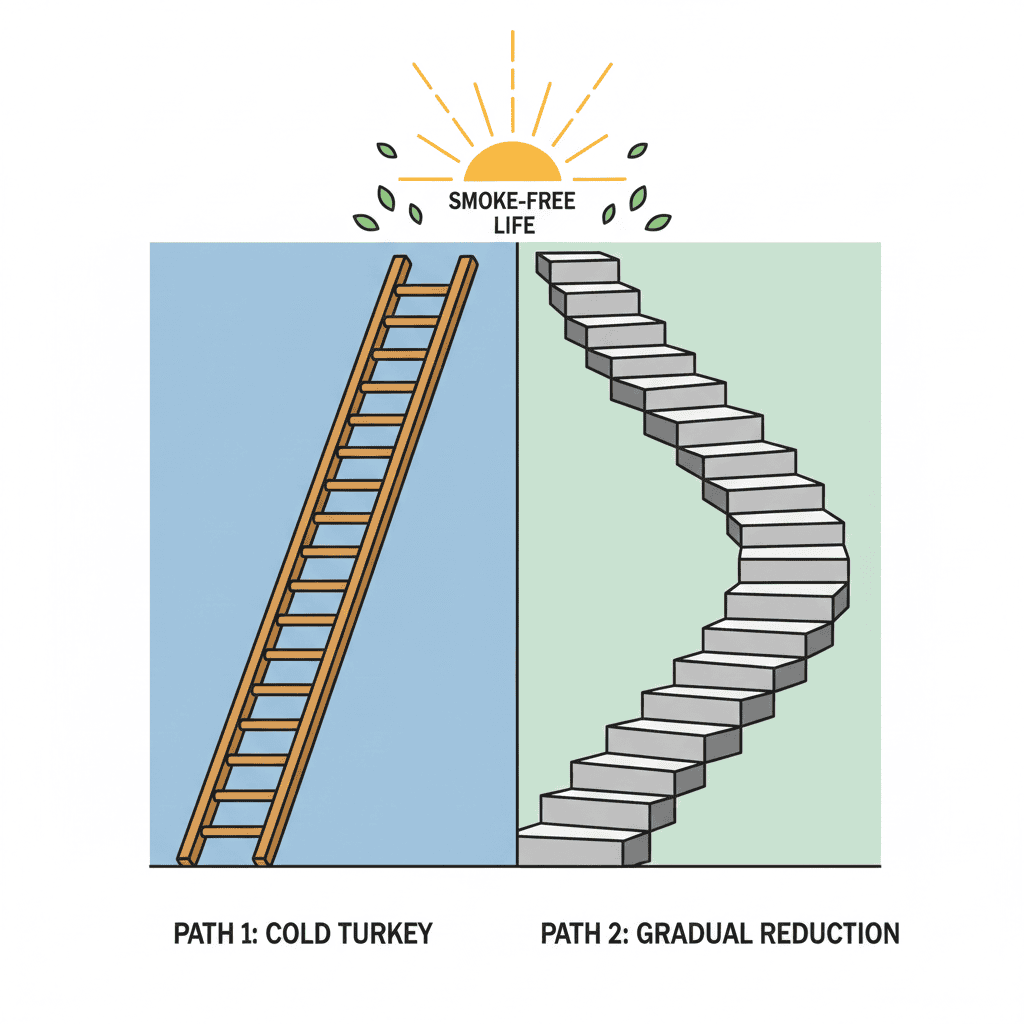
Les deux voies mènent au même endroit, et de vastes revues d'études trouvent des taux de réussite à long terme similaires pour chacune. Choisissez celle qui correspond à votre véritable fonctionnement.
L'arrêt brutal signifie stopper complètement le jour de votre date d'arrêt. Le manque se concentre dans une seule fenêtre intense qui culmine en quelques jours et est presque terminée en deux semaines. Il convient aux personnes qui constatent que « juste une de moins » se transforme en négociation sans fin, car pour elles le tout ou rien est vraiment plus facile à tenir qu'une cible mouvante.
La réduction progressive signifie diminuer votre nombre quotidien de cigarettes sur quelques semaines avant de stopper. Elle convient aux personnes pour qui un arrêt brutal est accablant. La seule règle qui fait son succès ou son échec : chaque réduction a besoin d'une échéance fixe. Une diminution sans dates cale simplement au nombre qui semble confortable. Écrivez le calendrier avant de commencer.
Notre décryptage complet de l'arrêt brutal contre l'arrêt progressif passe en revue le tempérament auquel chaque méthode convient et comment mener une réduction qui ne cale pas.
Étape 3 : Utiliser un substitut nicotinique ou un médicament pour aplatir la courbe
C'est le changement le plus efficace que vous puissiez faire, surtout si vos tentatives précédentes se sont effondrées dès la première semaine.
La thérapie de remplacement nicotinique (TRN) fonctionne mieux en combinaison : un patch à action prolongée plus un produit à action rapide. Le patch délivre une base régulière à travers la peau qui relève le plancher de votre manque, donc les creux sont moins brutaux. La gomme ou la pastille gère les envies de percée, les pics intenses que le patch seul ne couvre pas. Adaptez la force du patch à votre consommation : plus de dix cigarettes par jour signifie généralement commencer à la dose de patch la plus élevée, puis diminuer sur huit à douze semaines. Le sous-dosage est la raison la plus courante pour laquelle les gens décident que « la TRN n'a pas marché pour moi », donc une conversation de deux minutes avec un pharmacien en vaut la peine.
Le médicament sur ordonnance est l'autre option solide. La varénicline réduit à la fois les envies et la satisfaction de fumer et fait aussi bien ou mieux que la TRN dans les essais comparatifs. Le bupropion est une alternative qui aide aussi sur l'humeur. Les deux nécessitent une ordonnance et un bref échange avec un médecin sur leur pertinence.
Des gens arrêtent d'un coup sans rien de tout cela chaque jour, et les compléments ou aides naturelles attirent certains, même si les preuves pour ceux-ci sont bien plus faibles (notre coup d'œil sur les compléments pour arrêter trie ce qui a du soutien de ce qui n'en a pas). Mais si la seule volonté vous a déjà fait défaut, une TRN ou un médicament correctement dosé est le changement le plus susceptible de renverser le résultat.
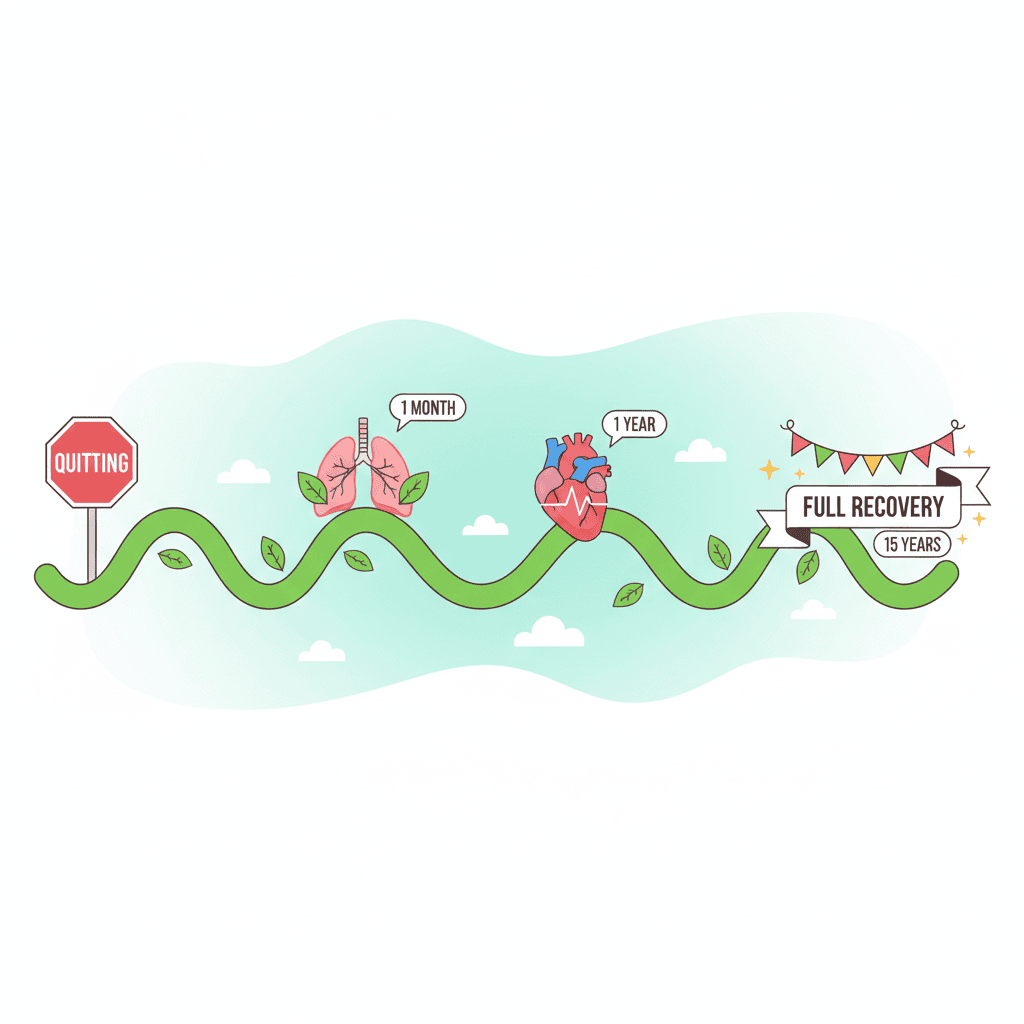
À quoi ressemble la chronologie de l'arrêt du tabac
Connaître la forme de la courbe à l'avance empêche les pires journées de vous surprendre jusqu'à la rechute.
Heures 4 à 24. La nicotine s'élimine. Les premiers signes sont l'agitation, l'irritabilité, et le geste réflexe vers une cigarette qui n'est plus là.
Jours 1 à 3. Le pic. Les envies, l'irritabilité, la difficulté à se concentrer et l'humeur basse sont à leur pire. C'est la période autour de laquelle prévoir l'emploi du temps le plus léger possible.
Jours 3 à 14. Le déclin. Le manque aigu s'atténue, le sommeil et la concentration commencent à récupérer, et l'envie constante devient intermittente, se regroupant autour de déclencheurs précis plutôt que de durer toute la journée.
Semaines 2 à 4. La plupart du manque physique se résorbe. Ce qui reste est surtout l'habitude conditionnée.
Semaines 4 à 12. Les envies situationnelles continuent de s'estomper. Chaque déclencheur que vous traversez sans fumer affaiblit l'association.
Pendant ce temps, votre corps commence à se réparer presque immédiatement : la fréquence cardiaque et la tension artérielle chutent en vingt minutes, le monoxyde de carbone s'élimine en une journée, et la circulation et la fonction pulmonaire s'améliorent au cours des semaines suivantes. La séquence complète heure par heure et année par année est cartographiée dans notre chronologie de l'arrêt du tabac, et la première semaine en particulier a droit à son propre décryptage détaillé.
Étape 4 : Identifier et désamorcer vos déclencheurs
Une fois que le manque chimique s'estompe, ce sont les déclencheurs conditionnés qui provoquent la rechute. Le travail ici consiste à cartographier vos principaux signaux et à décider à l'avance une réponse pour chacun, avant d'en avoir un devant vous.
- Le café du matin. Pour beaucoup de fumeurs, c'est l'association la plus soudée de toutes. Changez le contexte : buvez-le ailleurs, changez de main, ou associez-le à autre chose. Notre article sur le café et les envies de fumer explique pourquoi les deux sont si étroitement liés et comment les dissocier.
- L'alcool. Boire démantèle la résolution plus vite que presque tout le reste, et les deux habitudes se renforcent directement l'une l'autre. Lever le pied sur l'alcool pendant les deux premières semaines supprime l'une des configurations de rechute les plus courantes ; plus sur l'alcool et les envies de cigarette.
- Le stress. C'est le déclencheur que les gens craignent le plus de perdre, mais le soulagement qu'une cigarette procurait venait surtout de la nicotine mettant fin à son propre manque, et non de la résolution du stress. Un exercice de respiration cadencée de 90 secondes fait le vrai travail sur le système nerveux dont la cigarette tirait le crédit. Notre application compagnon Flow Breath est conçue précisément pour ces moments courts et situationnels et s'accorde bien avec les deux premières semaines, lorsque les envies et le stress montent ensemble.
- L'ennui et les transitions. Les intervalles entre les tâches étaient des moments de cigarette par excellence. Ayez une action par défaut prête : de l'eau, une courte marche, un étirement, n'importe quoi qui remplisse la pause.
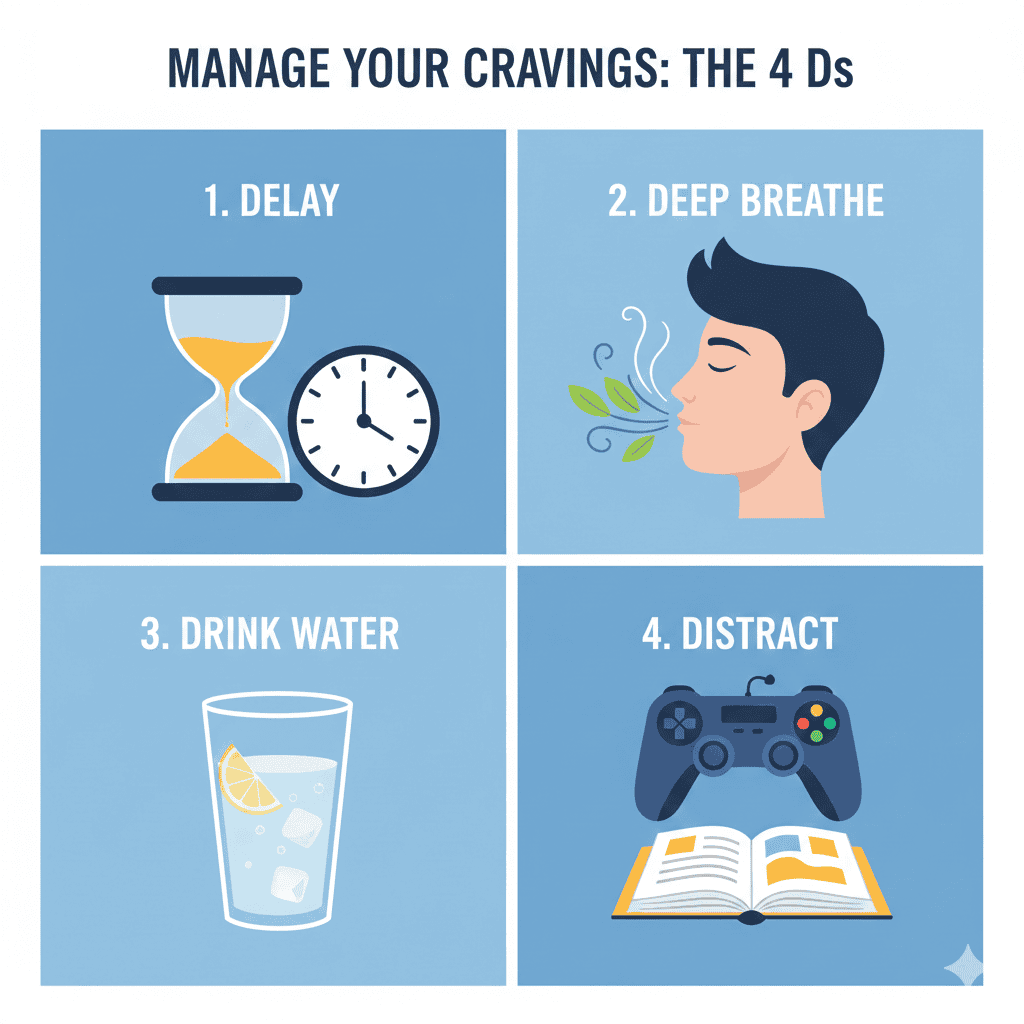
La boîte à outils plus large contre les envies s'applique à chaque déclencheur. Notre guide pour gérer les envies de nicotine détaille la méthode reporter-distraire-décider et la technique de surfer sur l'envie, toutes deux fondées sur le fait qu'une envie culmine et passe en quelques minutes, que vous cédiez ou non.
Étape 5 : Protéger les deux premières semaines
La fenêtre du pic est courte, donc le but est simplement de la traverser avec le moins d'excuses possible pour rechuter.
- Abaissez la barre délibérément. Traitez les jours 1 à 5 comme la convalescence d'une petite maladie. Évitez les situations optionnelles à risque pendant une semaine plutôt que de tester votre volonté dedans.
- Bougez chaque jour. Vingt minutes de marche émoussent les envies sur le moment, relèvent l'humeur plate à faible dopamine du début du manque, et améliorent le sommeil. Plus sur l'exercice et l'arrêt du tabac.
- Attendez-vous à ce que le système de récompense semble plat. Le début de l'arrêt abaisse la dopamine avant qu'elle ne se rééquilibre, c'est pourquoi rien ne semble tout à fait aussi gratifiant pendant une semaine ou deux. Notre article sur la détox de dopamine de l'arrêt explique pourquoi c'est temporaire et un signe de récupération, pas un problème.
- Gardez vos raisons visibles. L'argent que vous économisez et les bénéfices pour la santé déjà acquis restent abstraits jusqu'à ce que vous les rendiez concrets. Les voir s'accumuler est un motivateur stabilisant les jours difficiles.
Étape 6 : Gérer les faux pas sans abandonner l'arrêt
La plupart des personnes qui réussissent à arrêter font plus d'une tentative, et beaucoup ont un faux pas en chemin. Un faux pas ne devient une rechute que si vous le laissez réécrire tout le plan.
Si une cigarette arrive, elle n'efface pas vos progrès et ne réinitialise pas la récupération de votre corps de façon notable. Notez le déclencheur qui y a mené, prévoyez une parade pour cette faille précise, et continuez à partir de la même date d'arrêt. Ce qui met vraiment fin aux arrêts, ce n'est pas la cigarette ; c'est le discours qui dit « j'ai déjà échoué, alors à quoi bon ». Notre guide sur quoi faire en cas de rechute explique comment se remettre d'un faux pas plus important et le transformer en information utile pour la suite.
Comment Smoke Tracker peut-il vous aider à arrêter de fumer ?
Le plus dur dans l'arrêt, c'est que l'inconfort est immédiat alors que les récompenses semblent lointaines et invisibles. Smoke Tracker existe pour inverser cela, en rendant vos progrès concrets pendant que passe la pire fenêtre.
- Compteur de série : Les jours 1 à 3, quand le manque culmine, sont exactement le moment où regarder le compteur de jours tenir fait le plus de travail. Il transforme une intention abstraite en un nombre que vous ne voulez pas remettre à zéro.
- Chronologie de santé : Voir votre fréquence cardiaque, votre taux d'oxygène et votre circulation déjà en récupération alors que vous ressentez encore l'envie recadre l'inconfort comme le prix qui se rembourse, et non comme un signe que quelque chose ne va pas.
- Journal des envies : Consigner chaque envie et relire les entrées une semaine plus tard est l'un des moyens les plus rapides de voir votre véritable schéma de déclencheurs et de prévoir une parade.
- Argent économisé : Regarder le total courant grimper rend le coût de l'habitude concret, souvent pour la première fois, et rediriger cet argent vers quelque chose que vous voulez est un motivateur limpide.
Arrêter de fumer est plus difficile que ne le pensent ceux qui n'ont jamais fumé et plus réalisable que ne le laisse croire le pire jour. Les fumeurs qui réussissent ne sont pas ceux qui ont le plus de volonté ; ce sont ceux qui ont un plan couvrant à la fois la chimie et l'habitude. Choisissez une date, débarrassez votre environnement, couvrez le plancher du manque, et tenez plus longtemps que les déclencheurs un à un.
Le manque culmine en quelques jours, pas en semaines, et a largement disparu à la fin du premier mois. L'habitude prend un peu plus de temps, mais chaque déclencheur que vous traversez sans cigarette est un qui se tait pour de bon. Continuez.
Sources
- Centers for Disease Control and Prevention. "How to Quit Smoking" et "7 Common Withdrawal Symptoms." cdc.gov
- National Cancer Institute (smokefree.gov). "Using Nicotine Replacement Therapy" et "Managing Withdrawal." smokefree.gov
- American Cancer Society. "Nicotine Replacement Therapy to Help You Quit Tobacco." cancer.org
- Hartmann-Boyce, J., et al. "Nicotine replacement therapy versus control for smoking cessation." Cochrane Database of Systematic Reviews. pubmed.ncbi.nlm.nih.gov
- Lindson, N., et al. "Different doses, durations and modes of delivery of nicotine replacement therapy for smoking cessation." Cochrane Database of Systematic Reviews. pubmed.ncbi.nlm.nih.gov
- Benowitz, N. L. (2010). "Nicotine addiction." New England Journal of Medicine. pubmed.ncbi.nlm.nih.gov
- U.S. Food and Drug Administration. "Want to Quit Smoking? FDA-Approved and FDA-Cleared Cessation Products Can Help." fda.gov
Questions fréquentes
- Quelle est la façon la plus efficace d'arrêter de fumer ?
- L'approche la plus efficace consiste à associer un médicament d'aide à l'arrêt à un plan comportemental. La thérapie de remplacement nicotinique avec deux produits à la fois, un patch à action prolongée plus une gomme ou une pastille à action rapide, double environ les taux de réussite par rapport à la seule volonté, et la varénicline sur ordonnance fait aussi bien ou mieux. Ajouter cela à une date d'arrêt ferme, un environnement débarrassé et une réponse préparée à vos principaux déclencheurs, voilà ce qui transforme régulièrement une tentative en arrêt durable. Aucun outil ne suffit à lui seul ; c'est la combinaison qui fonctionne.
- Vaut-il mieux arrêter de fumer d'un coup ou progressivement ?
- Les deux fonctionnent, et la meilleure méthode est celle que vous suivrez vraiment. L'arrêt brutal concentre le manque dans une seule fenêtre intense qui culmine en quelques jours et est presque terminée en deux semaines, ce qui convient aux personnes qui ont du mal à tenir les demi-mesures. La réduction progressive diminue votre nombre de cigarettes sur quelques semaines et convient aux personnes pour qui un arrêt brutal est accablant, mais elle ne marche que si chaque réduction a une échéance fixe. De vastes revues d'études trouvent des taux de réussite à long terme similaires pour les deux, donc le facteur décisif est votre tempérament, pas la méthode elle-même.
- Combien de temps faut-il pour arrêter de fumer définitivement ?
- Le manque physique de nicotine culmine entre le 1er et le 3e jour et a largement disparu à la 4e semaine. L'habitude psychologique prend plus de temps : les envies situationnelles liées au café, au stress ou à la conduite continuent de surgir pendant un à trois mois et s'estompent chaque fois que vous les laissez passer. La plupart des gens ont franchi le plus dur du travail comportemental au bout de trois mois. Arrêter est rarement une seule tentative nette pourtant ; beaucoup font plusieurs essais avant qu'un tienne, et chaque tentative vous apprend quel déclencheur a mis fin à la précédente.
- Que puis-je utiliser à la place des cigarettes pour gérer les envies ?
- Pour l'envie chimique, le remplacement nicotinique (patch plus gomme ou pastille) ou un médicament sur ordonnance émousse directement l'envie. Pour l'envie comportementale, ayez des substituts prêts avant d'en avoir besoin : gomme sans sucre, une bouteille d'eau, des graines de tournesol, un objet à manipuler pour vos mains, et un exercice de respiration cadencée de 90 secondes pour les pics de stress. Les envies les plus fortes passent en trois à cinq minutes, que vous fumiez ou non, donc le but est simplement de tenir plus longtemps que chacune en occupant vos mains, votre bouche ou votre attention par autre chose.
- Que dois-je faire si je craque et fume une cigarette ?
- Traitez-le comme une simple donnée, pas comme la fin de votre arrêt. Une cigarette n'efface pas vos progrès et ne réinitialise pas la récupération de votre corps de façon notable. Ce qui met vraiment fin aux arrêts, c'est le discours qui dit « j'ai déjà tout gâché, autant reprendre ». Notez le déclencheur qui a mené à l'écart, prévoyez une parade, et continuez à partir de la même date d'arrêt. Un faux pas est une information sur une faille dans votre plan ; une rechute est la décision d'arrêter d'essayer, et ce sont deux choses très différentes.
Cet article est fourni à titre informatif uniquement et ne constitue pas un avis médical. Les informations de santé sont basées sur des recherches publiées par des organisations telles que le CDC, l'WHO et l'American Lung Association. Consultez toujours un professionnel de santé pour des conseils personnalisés sur le sevrage tabagique.