When you quit smoking, your body begins healing almost immediately. The recovery process is remarkably well-documented by medical research, and the speed at which your cardiovascular, respiratory, and immune systems bounce back may surprise you. Smoking introduces over 7,000 chemicals into your body with each cigarette, at least 70 of which are known carcinogens. When you stop that chemical assault, your body's natural repair mechanisms kick into high gear. Whether you smoked for two years or twenty, the timeline of healing follows a predictable pattern backed by decades of clinical studies. Here is what happens at each milestone in your smoke-free journey, why your body responds the way it does, and what you can expect to feel along the way.
What Happens to Your Body in the First Hour After Quitting?
Within just 20 minutes of your last cigarette, your heart rate and blood pressure begin to drop back toward normal levels. Nicotine stimulates the release of adrenaline and norepinephrine, hormones that constrict blood vessels and force your heart to work harder. Once that chemical stimulation stops, your cardiovascular system starts to recalibrate. By the one-hour mark, you may notice that your hands and feet feel warmer as peripheral blood flow improves. The nicotine in your bloodstream has already begun to decline, with a half-life of roughly two hours. Some people feel a faint sense of restlessness during this window, which is the earliest sign of nicotine withdrawal. A useful tip: drink a glass of cold water and take a short walk. Physical movement supports the circulatory improvements already underway and gives your hands something to do besides reaching for a pack.
What Changes Occur in the First 24 Hours?
The first full day is one of the most transformative periods in your recovery. At the eight-hour mark, carbon monoxide levels in your blood drop by half. Carbon monoxide binds to hemoglobin roughly 200 times more effectively than oxygen, so even moderate smoking significantly reduces the oxygen-carrying capacity of your blood. By twelve hours, carbon monoxide is essentially eliminated, and your blood oxygen levels return to normal. You may notice you can breathe a bit more deeply and feel slightly more alert. Your muscles and organs are receiving more oxygen than they have in months or years. At the 24-hour mark, your risk of a heart attack already begins to decrease. The toxic burden on your coronary arteries is lifting, and your blood pressure is stabilizing. Withdrawal symptoms like irritability, anxiety, and increased appetite typically intensify during this window, but they are signs that your body is recalibrating its chemistry. Try to keep healthy snacks nearby and remind yourself that the discomfort is temporary.
What Happens During the First 48 to 72 Hours?
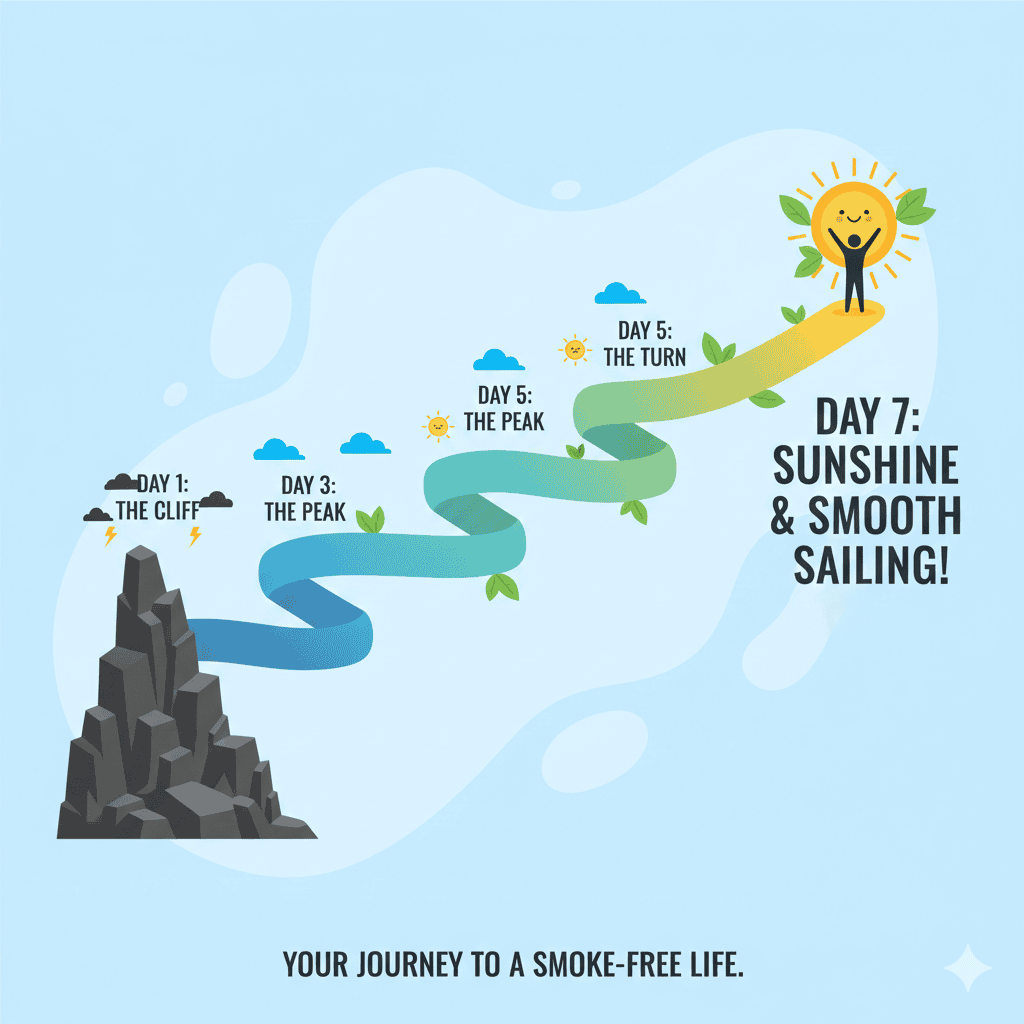
The two-to-three-day window is both a significant breakthrough and a genuine challenge. By 48 hours, damaged nerve endings begin to regrow, and your senses of taste and smell start to sharpen noticeably. Foods you thought you knew well may taste richer and more complex than you remembered. This happens because smoking dulls olfactory receptors and taste buds, and without the constant onslaught of toxins, these sensory cells regenerate rapidly. At 72 hours, your bronchial tubes begin to relax and open up, making breathing measurably easier. Lung capacity starts to increase, and many former smokers report a noticeable boost in energy. However, this period often brings the most intense nicotine cravings. Nicotine is almost entirely cleared from your body by day three, meaning the physical addiction is peaking before it breaks. Deep breathing exercises and short bursts of physical activity can help manage these cravings. Each craving typically lasts only three to five minutes.
What Improves During the First Two Weeks to One Month?
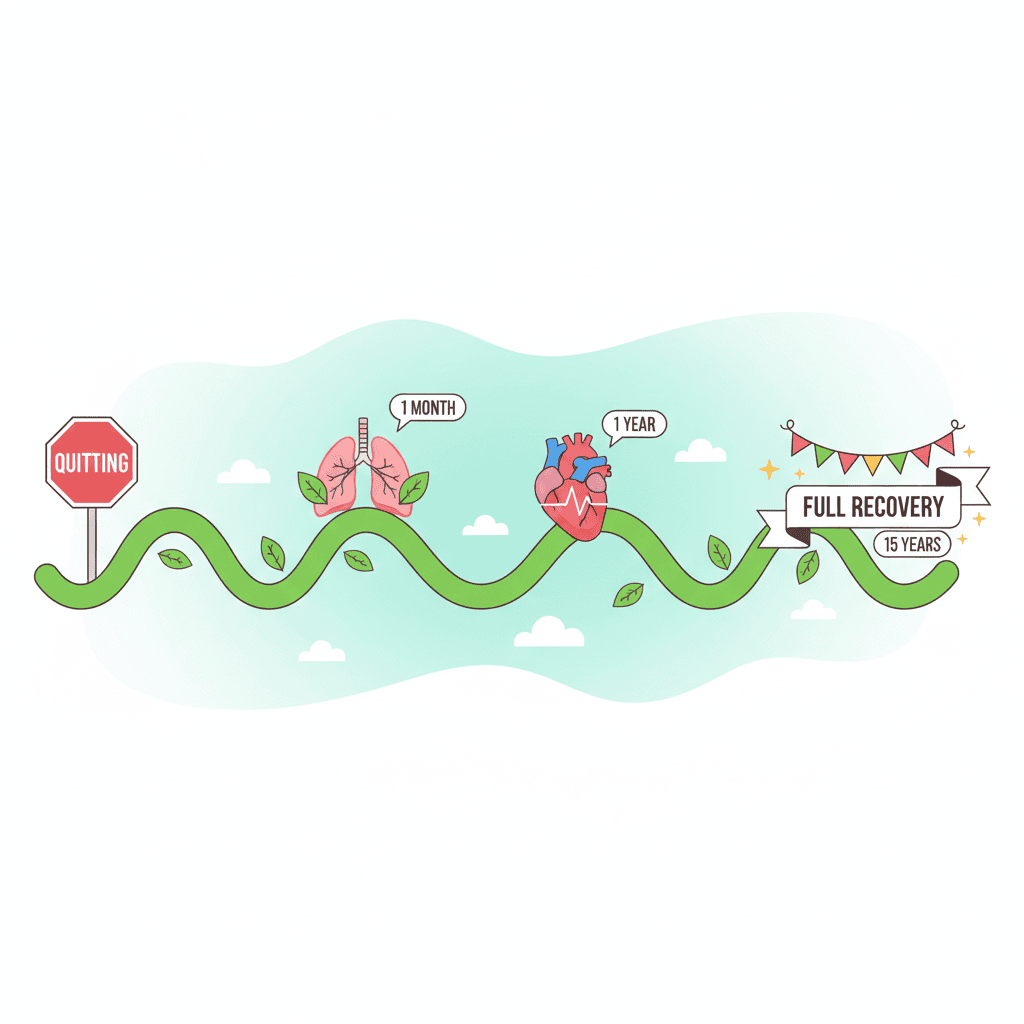
Between two weeks and one month, the cumulative improvements become substantial and increasingly harder to ignore. Circulation continues to strengthen throughout your body, making everyday activities like walking, climbing stairs, and light exercise noticeably easier. Lung function can increase by up to 30 percent during this period. One of the most important developments happens inside your airways: the cilia, tiny hair-like structures lining your lungs and bronchial passages, begin to regenerate. These structures are your respiratory system's built-in cleaning mechanism, sweeping mucus, bacteria, and debris out of your lungs. Smoking paralyzes and destroys cilia, leaving your airways vulnerable to infection. As they regrow, you may actually cough more temporarily, which is sometimes called "smoker's flu." This is a positive sign: your lungs are actively clearing accumulated tar and mucus. Shortness of breath decreases, and your immune function improves as your body devotes fewer resources to fighting constant inflammation.
What Does Recovery Look Like at Three to Nine Months?
By the three-month mark, the cardiovascular improvements become significant. Your blood vessels have regained much of their elasticity, and your overall circulation has substantially improved. Physical activities that once left you winded now feel more manageable. For many former smokers, this is when exercise starts to feel rewarding rather than punishing. Your skin may also look healthier, as improved blood flow delivers more oxygen and nutrients to skin cells. Between six and nine months, the respiratory benefits are dramatic. Coughing, sinus congestion, fatigue, and shortness of breath all continue to decrease as your lungs heal. The cilia are now fully functional in most former smokers, meaning your natural defense against respiratory infections is restored. Studies show that ex-smokers experience significantly fewer episodes of bronchitis, pneumonia, and upper respiratory infections during this window. Your overall energy levels are markedly higher, and many people report sleeping better. The acute withdrawal symptoms have long since passed, though occasional cravings may still surface in response to specific triggers, such as stress or social situations involving alcohol.
What Is the One-Year Milestone and Why Does It Matter?
Reaching one full year smoke-free is a landmark achievement, and the medical data powerfully reflects it. Your excess risk of coronary heart disease is now approximately half that of a person who continues to smoke. This is one of the most frequently cited and celebrated statistics in all of smoking cessation research, and it underscores just how quickly the cardiovascular system recovers. The coronary arteries, which were subjected to chronic inflammation and plaque buildup accelerated by smoking, have had twelve months of healing. Blood flow to the heart muscle has improved, and the risk of dangerous blood clots has dropped significantly. Beyond the heart, your lungs have undergone a remarkable transformation. While some damage from long-term smoking may be permanent, the functional improvements at one year are substantial. Many former smokers report that they feel like a completely different person in terms of stamina and energy. Celebrate this milestone: research shows that acknowledging progress reinforces the behavioral changes that got you here.
What Are the Long-Term Benefits After Five Years?
Five years without smoking brings your stroke risk down to that of someone who has never smoked. This is a truly remarkable recovery, considering that active smoking roughly doubles the risk of stroke by contributing to the buildup of fatty deposits in arteries and increasing the likelihood of dangerous blood clots. Your risk of cancers of the mouth, throat, esophagus, and bladder is also cut in half compared to when you were smoking. The cells lining these organs have had years to regenerate and replace the damaged tissue caused by carcinogenic chemicals in cigarette smoke. For women, the risk of cervical cancer falls to that of a non-smoker. Blood vessels throughout your body have continued to heal, and the chronic inflammatory state caused by smoking has largely resolved. At the five-year mark, the compounding nature of recovery becomes clear: each year builds on the last, and the gap between your health profile and that of someone who still smokes widens considerably.
What Happens at Ten and Fifteen Years Smoke-Free?
At the ten-year milestone, your risk of dying from lung cancer is about half that of a person who continues to smoke. Considering that lung cancer remains the leading cause of cancer death worldwide, accounting for roughly 1.8 million deaths annually, this reduction is profoundly significant. Your risk of pancreatic cancer and laryngeal cancer also decreases substantially. The precancerous cells that accumulated during your smoking years have been gradually replaced by healthy tissue. By fifteen years, your risk of coronary heart disease is essentially the same as that of someone who has never smoked. This is arguably the most powerful long-term statistic in smoking cessation research: complete cardiovascular recovery. Your body has, for all practical purposes, fully undone the cardiac damage that was caused by years of smoking. While some lung damage from heavy long-term smoking may never fully reverse, the overall picture at fifteen years is one of dramatic recovery. The health gap between you and a lifelong non-smoker has narrowed to almost nothing for most conditions.
Why Does Your Body Recover So Quickly?
The speed of recovery after quitting smoking often surprises both current smokers and non-smokers alike. The fundamental reason lies in the body's extraordinary, built-in capacity for cellular repair and regeneration. Human tissue is constantly turning over: the endothelial cells lining your blood vessels replace themselves every few years, lung epithelial cells regenerate within weeks to months, and your bone marrow produces millions of fresh blood cells every single day. When you smoke, you are essentially overwhelming these repair mechanisms with a constant influx of toxins. The moment that influx stops, the repair systems can finally outpace the damage. Inflammation, a key driver of smoking-related disease, begins to subside almost immediately. Your liver ramps up the clearance of residual toxins, and your immune system redirects its resources from fighting chronic irritation to performing its normal surveillance functions. Additionally, the epigenetic changes caused by smoking, which are alterations to how your genes are expressed without changes to the DNA sequence itself, begin to reverse over time. Research has shown that many smoking-related changes in gene expression return to non-smoker levels within five years.
How Can You Track Your Recovery Progress?
Tracking your recovery can be a powerful motivational tool, turning abstract health improvements into concrete, visible progress. Many former smokers find that seeing the milestones laid out in real time reinforces their commitment during difficult moments. Research consistently shows that self-monitoring improves outcomes in behavior change programs. Start by noting your quit date and marking the key recovery milestones: 20 minutes, 24 hours, 48 hours, one week, one month, three months, and one year. Record how you feel physically at each stage: changes in breathing, energy levels, taste, and sleep quality. Journaling withdrawal symptoms can also help you recognize that discomfort is temporary and that each wave of craving is shorter and less intense than the last. An app like Smoke Tracker can automate much of this process, showing you real-time health recovery indicators, money saved, and cigarettes avoided, all tied to your personal quit date. Visualizing your progress, whether through an app, a journal, or a simple calendar, helps bridge the gap between the short-term discomfort of quitting and the long-term rewards that medical research so clearly documents.
Sources
- Centers for Disease Control and Prevention. "Benefits of Quitting Smoking Over Time." cdc.gov
- American Heart Association. "Why Quit Smoking?" heart.org
- American Lung Association. "Benefits of Quitting." lung.org
- World Health Organization. "Tobacco: Key Facts." who.int
- NHS. "What Happens When You Quit Smoking." nhs.uk
- American Cancer Society. "Health Benefits of Quitting Smoking Over Time." cancer.org
Common questions
- What happens 20 minutes after quitting smoking?
- Within 20 minutes of the last cigarette, resting heart rate and blood pressure begin to drop toward normal levels. The reduction in pulse rate is measurable on a heart monitor. The vascular system, which had been chronically constricted by nicotine, starts to relax. The earliest health benefit of quitting begins faster than most people realize.
- When do the lungs heal after quitting smoking?
- Lungs begin healing within 12 to 24 hours as carbon monoxide clears and cilia restart. Cilia regeneration over weeks 2 to 4 produces a temporary increase in coughing. Lung capacity improves around 10 percent over 9 months. Age-adjusted decline normalizes by year 5. Pre-existing emphysema damage is permanent, but healthy tissue progresses on schedule.
- At what point is the heart attack risk halved after quitting smoking?
- Heart attack risk falls by roughly 50 percent within 1 year of the last cigarette. Stroke risk drops to the level of someone who never smoked within 5 years. Coronary heart disease risk equals a never-smoker by year 15. The first year delivers the biggest single cardiovascular gain.
- When does smoking-related risk return to never-smoker levels?
- Different organs follow different timelines. Cardiovascular risk equals a never-smoker by year 15. Lung cancer risk halves by year 10 and approaches but never quite reaches never-smoker levels by year 15 to 20. Mouth and throat cancer risk halves by year 5. Some markers (carbon monoxide, blood pressure) normalize within hours to days.
This article is for informational purposes only and does not constitute medical advice. Health information is based on published research from organizations such as the CDC, WHO, and American Lung Association. Always consult a healthcare professional for personalized guidance on smoking cessation.