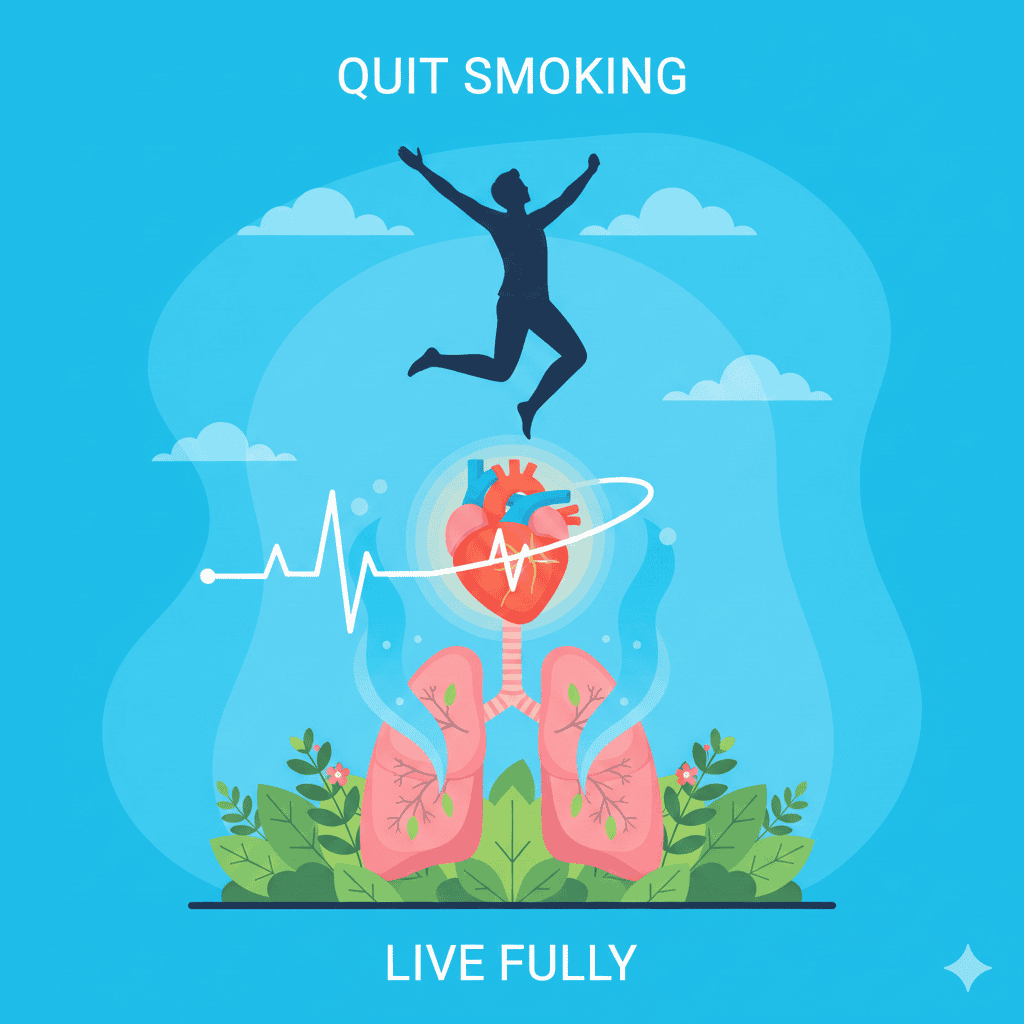
Quitting smoking is one of the best decisions you can make for your health. The human body has a remarkable ability to repair itself, and the moment you stop inhaling cigarette smoke, a cascade of healing processes begins. These are not vague promises: they are measurable, well-documented changes supported by decades of clinical research. Whether you smoked for five years or fifty, the benefits of quitting start sooner than most people realize and continue compounding for the rest of your life. Below are 10 science-backed benefits, each explained with the physiological mechanisms, timelines, and research data behind them.
1. How Does Quitting Smoking Improve Your Heart Health?
Cigarette smoke introduces over 7,000 chemicals into your bloodstream, many of which damage the lining of your arteries and promote plaque buildup. Nicotine raises your heart rate and blood pressure by triggering the release of adrenaline, forcing your cardiovascular system to work harder with every beat. Within just 20 minutes of your last cigarette, your heart rate and blood pressure begin dropping toward normal levels. After 12 months of being smoke-free, your risk of coronary heart disease falls to roughly half that of a continuing smoker. By the 15-year mark, your coronary heart disease risk is nearly identical to someone who never smoked at all. Smokers face a two-to-four-times greater risk of heart disease compared to non-smokers, so the reduction is substantial. The mechanism behind this recovery involves the restoration of endothelial function in blood vessel walls, a decrease in chronic inflammation markers, and a gradual reversal of atherosclerotic narrowing. Your blood also becomes less sticky and less prone to dangerous clot formation, lowering the chance of both heart attacks and strokes.
2. How Do Your Lungs Recover After You Stop Smoking?
Your lungs contain millions of tiny hair-like structures called cilia that sweep mucus and debris out of the airways. Smoking paralyzes and eventually destroys these cilia, leaving your lungs vulnerable to infection and congestion. Within 72 hours of quitting, the bronchial tubes begin to relax and cilia start regenerating. Over the next one to nine months, former smokers typically experience a significant reduction in coughing, wheezing, and shortness of breath. Pulmonary function tests show that lung capacity can improve by up to 30% within this period. The rate of lung function decline, which is accelerated in smokers, slows to match that of a non-smoker after sustained abstinence. While some structural damage, such as the destruction of alveoli seen in emphysema, may be irreversible, the overall trajectory shifts dramatically in favor of healing. Research journal Nature found that even heavily damaged lungs contain a reserve of cells that can repopulate the airway lining with healthy tissue after smoking stops. This discovery underscored that it is never too late to benefit from quitting.
3. How Does Blood Circulation Improve When You Quit?
Smoking constricts blood vessels and raises levels of carbon monoxide in the blood, reducing the oxygen available to tissues throughout your body. Peripheral circulation, the blood flow to your extremities, is especially compromised. Within two to twelve weeks of quitting, measurable improvements in circulation begin. Former smokers often notice that their hands and feet feel warmer, wounds heal faster, and physical activities like walking or climbing stairs become noticeably easier. The improvement occurs because nitric oxide availability in the vascular endothelium rebounds once the toxic burden of cigarette smoke is removed. Nitric oxide is a key signaling molecule that relaxes blood vessels and improves flow. For smokers with peripheral artery disease, quitting can slow or halt the progression of the condition and reduce the risk of amputation. Studies show that smokers who quit experience a 36% reduction in all-cause cardiovascular mortality compared to those who continue. Better circulation also benefits brain function, muscle recovery after exercise, and sexual health, making this one of the most broadly impactful benefits of becoming smoke-free.
4. How Much Does Quitting Smoking Lower Your Cancer Risk?
Tobacco smoke contains at least 70 known carcinogens that damage DNA and interfere with the cellular repair mechanisms meant to prevent tumor growth. Quitting smoking lowers the risk of cancers of the lung, mouth, throat, esophagus, bladder, kidney, pancreas, stomach, and cervix. Lung cancer risk drops by approximately 50% after 10 years of abstinence compared to someone who continues smoking, and it continues declining with each additional smoke-free year. The risk of mouth and throat cancers is halved within five years. Mechanistically, quitting allows your body's DNA repair enzymes to function without constant interference from carcinogens like benzo[a]pyrene and nitrosamines. Research has shown that former smokers develop new, mutation-free cell populations in their airway tissue that gradually replace damaged cells. The risk never fully reaches zero for someone who has smoked extensively, but the reduction is dramatic enough that oncologists consider smoking cessation the single most effective cancer prevention strategy available to current smokers.
5. How Does Quitting Smoking Strengthen Your Immune System?
Cigarette smoke suppresses immune function at multiple levels. It impairs the activity of natural killer cells, reduces antibody production, and increases systemic inflammation, all of which leave smokers more vulnerable to respiratory infections, wound infections, and autoimmune flare-ups. Smokers are roughly twice as likely as non-smokers to develop pneumonia and have higher rates of influenza complications. After quitting, white blood cell counts, which are chronically elevated in smokers due to constant irritation, begin normalizing within weeks. Levels of C-reactive protein, an inflammatory marker, decline measurably within the first three months. Over time, the mucosal immune defenses in the lungs and upper airways rebuild, reducing susceptibility to colds, bronchitis, and sinus infections. A 2023 study in the Lancet Respiratory Medicine found that former smokers regained near-normal immune cell profiles within one year of quitting. Vaccination efficacy also improves, meaning your body responds more robustly to flu shots and other immunizations once you are no longer smoking.
6. How Does Quitting Smoking Improve Your Skin and Appearance?
Smoking damages skin through two pathways: it restricts blood flow to the skin's surface, depriving it of oxygen and nutrients, and it degrades collagen and elastin, the proteins responsible for skin firmness and elasticity. Smokers develop wrinkles 10 to 20 years earlier than non-smokers, particularly around the mouth and eyes. After quitting, increased blood flow begins delivering more oxygen and vitamin C to the skin within weeks, promoting collagen synthesis and cell renewal. Many former smokers notice improvements in skin tone and texture within three to six months. Teeth stop accumulating new tobacco stains, and fingernails lose the yellowish discoloration caused by tar. The "smoker's pallor," a grayish complexion caused by chronic oxygen deprivation, gradually gives way to a healthier appearance. Research published in the Archives of Dermatological Research confirmed that former smokers who had been abstinent for more than nine months showed measurable improvements in skin elasticity and hydration compared to their baseline measurements while still smoking. Hair growth can also benefit, as improved scalp circulation supports healthier follicle function over time.
7. How Quickly Do Taste and Smell Return After Quitting?
Smoking flattens the taste buds on your tongue and damages the olfactory nerve endings in your nasal passages, dulling two of your most important senses. The toxic compounds in cigarette smoke physically coat the receptors responsible for detecting flavor and aroma, creating a numbing effect that many long-term smokers do not even notice until it reverses. Within 48 hours of your last cigarette, nerve endings begin regenerating and taste receptor cells start to recover. Most former smokers report noticeable improvements in both taste and smell within one to two weeks. Foods that once seemed bland suddenly reveal complex flavors, and pleasant scents like coffee, flowers, or freshly baked bread become vivid again. A 2022 study in Chemical Senses found that former smokers reached near-normal olfactory scores within six months. This recovery has a meaningful secondary effect: when food tastes better, many people find it easier to choose nutritious meals over heavily salted or sweetened options they relied on while their senses were impaired. The return of these senses is one of the earliest and most personally rewarding milestones in the quitting journey.
8. Why Do You Have More Energy After You Stop Smoking?
Carbon monoxide in cigarette smoke binds to hemoglobin in red blood cells roughly 200 times more readily than oxygen does. In active smokers, up to 15% of hemoglobin may be bound to carbon monoxide instead of oxygen, effectively reducing the blood's carrying capacity. This means your muscles, brain, and organs operate in a state of mild oxygen deprivation throughout the day. Within 24 hours of quitting, carbon monoxide levels in the blood drop sharply and oxygen saturation climbs back to normal. Over the following weeks, mitochondrial function in muscle cells improves as consistent oxygen delivery is restored. Most former smokers report feeling significantly more energetic within two to four weeks. The improvement extends to exercise tolerance: a study in the journal Chest found that aerobic capacity increased by an average of 10% within three months of quitting in previously sedentary smokers. Better sleep quality also contributes to higher energy, since nicotine withdrawal during nighttime hours frequently disrupts smokers' sleep architecture. Without those overnight dips and spikes, former smokers tend to sleep more deeply and wake feeling more rested.
9. How Does Quitting Smoking Benefit Your Mental Health?
Many smokers believe that cigarettes reduce stress and anxiety, but research consistently shows the opposite long-term effect. Nicotine creates a cycle of temporary relief followed by withdrawal-induced irritability, which smokers then relieve with the next cigarette. A large meta-analysis published in the BMJ examined 26 studies and concluded that quitting smoking was associated with reductions in depression, anxiety, and stress, with effect sizes equal to or larger than those of antidepressant medications. Former smokers also reported higher positive mood and improved quality of life compared to those who continued smoking. The neurobiological mechanism involves the gradual rebalancing of dopamine and serotonin pathways that nicotine artificially disrupts. Most quitters experience peak withdrawal symptoms during the first one to two weeks, with anxiety and mood disturbances resolving substantially by four to six weeks. After three months, the majority of former smokers report that their baseline mood is better than it was while smoking. People with pre-existing mental health conditions also benefit: studies confirm that cessation does not worsen psychiatric symptoms and, in many cases, leads to measurable improvement.
10. How Much Money Do You Save by Quitting Smoking?
The financial burden of smoking extends well beyond the price of cigarettes, though that cost alone is substantial. At an average price of $8 to $10 per pack in the United States, a pack-a-day smoker spends between $2,920 and $3,650 annually. In cities like New York, where a pack can cost $13 or more, the yearly total exceeds $4,700. Beyond retail costs, smokers pay higher health insurance premiums, often 15% to 20% more than non-smokers. Smokers also face higher out-of-pocket medical expenses for smoking-related conditions, increased spending on dental care due to gum disease and tooth decay, and the cost of replacing clothing and upholstery damaged by smoke odor and burns. Over a decade, a pack-a-day habit at the national average cost totals more than $35,000 in cigarette purchases alone, not counting the medical and incidental expenses. Redirecting this money toward savings, travel, education, or debt repayment can have a transformative effect on financial well-being. Many quitters find that setting up a visible savings counter or tracker provides powerful motivation during the difficult early weeks of cessation, turning an abstract future benefit into a tangible daily reward.
The Bottom Line
Every cigarette you do not smoke is a victory for your health. These benefits are not theoretical: they are backed by decades of scientific research involving millions of participants across hundreds of clinical studies. Whether your goal is a healthier heart, clearer lungs, better skin, or a bigger savings account, the evidence is unambiguous. The sooner you quit, the sooner your body begins its remarkable process of repair.
Start tracking your progress today and watch these benefits unfold in your own life!
Sources
- Centers for Disease Control and Prevention. "Benefits of Quitting Smoking Over Time." cdc.gov
- American Heart Association. "Why Quit Smoking?" heart.org
- American Lung Association. "Benefits of Quitting." lung.org
- World Health Organization. "Tobacco: Key Facts." who.int
- American Cancer Society. "Health Benefits of Quitting Smoking Over Time." cancer.org
- National Cancer Institute. "Harms of Smoking and Benefits of Quitting." cancer.gov
This article is for informational purposes only and does not constitute medical advice. Health information is based on published research from organizations such as the CDC, WHO, and American Lung Association. Always consult a healthcare professional for personalized guidance on smoking cessation.