The first week of quitting smoking is often described as the toughest part of the journey. Most relapses occur within the first two weeks of a quit attempt, making these early days critical to long-term success. Understanding what happens to your body and mind during this period, day by day, can help you prepare for the challenges ahead and dramatically improve your chances of staying smoke-free.
How Can You Prepare for Your First Smoke-Free Week?
Preparation is one of the strongest predictors of quitting success. Setting a quit date and using the days leading up to it to build a personalized plan is one of the most effective approaches. Start by identifying your personal smoking triggers: the situations, emotions, and routines most closely linked to lighting up. Write them down and brainstorm at least one alternative response for each trigger.
Stock your environment with oral substitutes like sugar-free gum, hard candies, carrot sticks, or toothpicks. Remove all cigarettes, lighters, and ashtrays from your home, car, and workspace. Tell your friends and family about your quit date so they can offer support and accountability. Consider downloading a tracking app like Smoke Tracker to monitor your progress, savings, and health improvements in real time. Combining behavioral strategies with a support system can double your chances of quitting for good. If possible, talk to your doctor before your quit date about whether nicotine replacement therapy or prescription medications might be appropriate for you. The more thoroughly you prepare, the less likely you are to be caught off guard by withdrawal symptoms.
What Should You Expect on Day 1 Without Smoking?
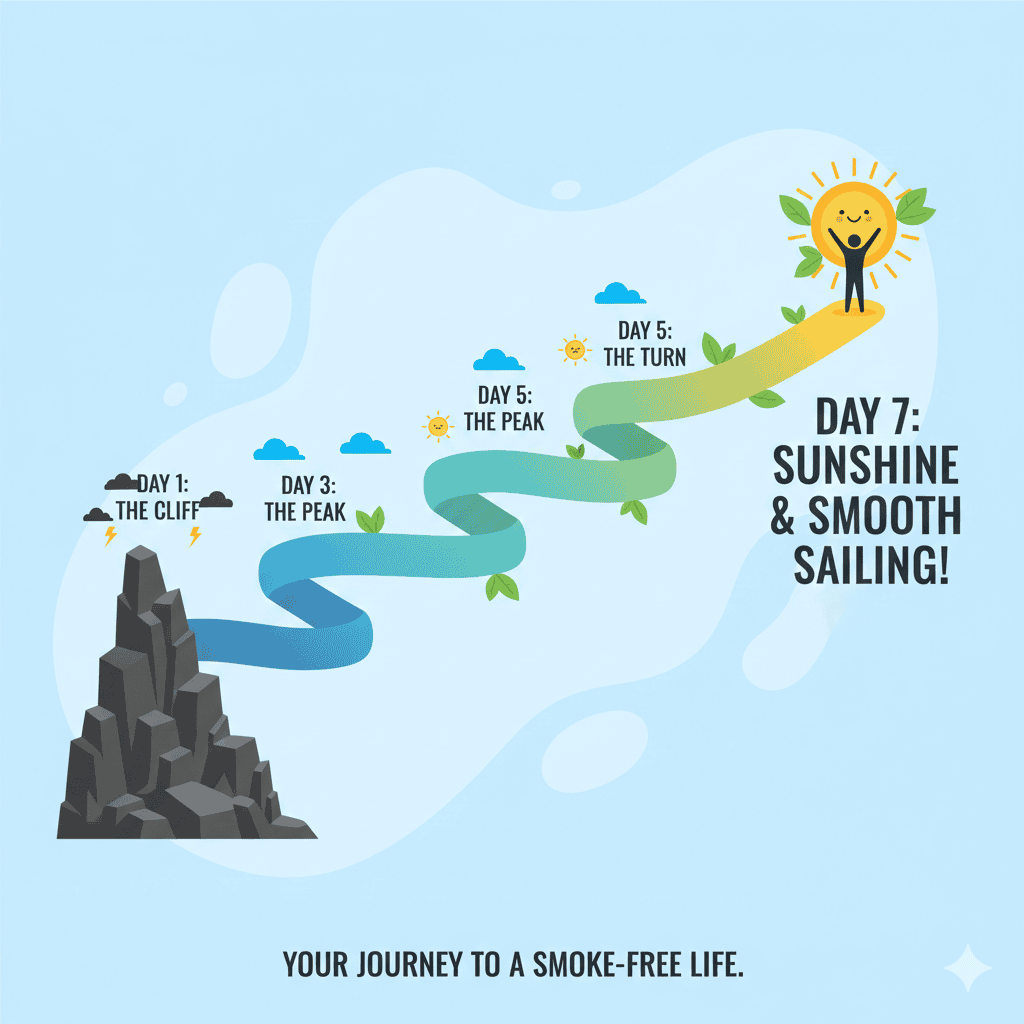
The first 24 hours represent a significant metabolic shift. Within just 20 minutes of your last cigarette, your heart rate and blood pressure begin to drop toward normal levels. By the 12-hour mark, the carbon monoxide level in your blood returns to normal, allowing your red blood cells to carry oxygen more efficiently.
However, the psychological challenge is immediate and intense. You will likely experience strong cravings that arrive in waves, each typically lasting only 3 to 5 minutes. Irritability sets in as your brain's nicotine receptors begin demanding the chemical they have grown accustomed to receiving. You may feel restless or anxious, unsure what to do with your hands or your break times.
To cope on Day 1, keep yourself physically active. Go for short walks, drink plenty of water, and use the coping tools in your Smoke Tracker app. Replace habitual smoking moments with new micro-rituals: a cup of herbal tea, a few minutes of stretching, or a brief mindfulness exercise. At night, you may find it harder to fall asleep as your body adjusts. Research suggests that sleep latency (the time it takes to fall asleep) can increase by 25-40% during the first night without nicotine.
What Happens to Your Body on Days 2 and 3?
Days 2 and 3 are widely recognized as the peak of nicotine withdrawal. Nicotine is almost completely eliminated from the body within 72 hours of the last cigarette. As your system purges the remaining nicotine, withdrawal symptoms reach their maximum intensity. Headaches are common as blood vessels dilate and circulation patterns normalize. Difficulty concentrating is typical because nicotine previously boosted dopamine and norepinephrine levels that aided focus.
Your appetite will likely increase noticeably. Nicotine is both an appetite suppressant and a metabolic stimulant, so its absence can leave you feeling hungrier than usual. The average weight gain during quitting is only 5 to 10 pounds, and most people can manage it with mindful eating and regular exercise.
This is when the "4 D's" technique is most valuable: Delay (wait out the craving for 3 to 5 minutes), Deep breathe (slow, calming breaths to reduce cortisol), Drink water (staying hydrated reduces headache severity), and Distract yourself with a task or activity. Sleep on nights 2 and 3 may be fragmented. Clinical studies report that REM sleep can increase significantly in the first week, sometimes producing unusually vivid or disturbing dreams.
What Changes Should You Notice on Day 4?
Day 4 often brings the first tangible sense of relief. Most of the nicotine and its primary metabolite, cotinine, have now been cleared from your bloodstream. While psychological cravings continue, their physical intensity begins to decline. You may notice that your sense of taste is sharpening: foods have more flavor, and sweet or savory notes become more distinct. This happens because the nerve endings in your mouth and nasal passages, previously dulled by the thousands of chemicals in cigarette smoke, are beginning to regenerate.
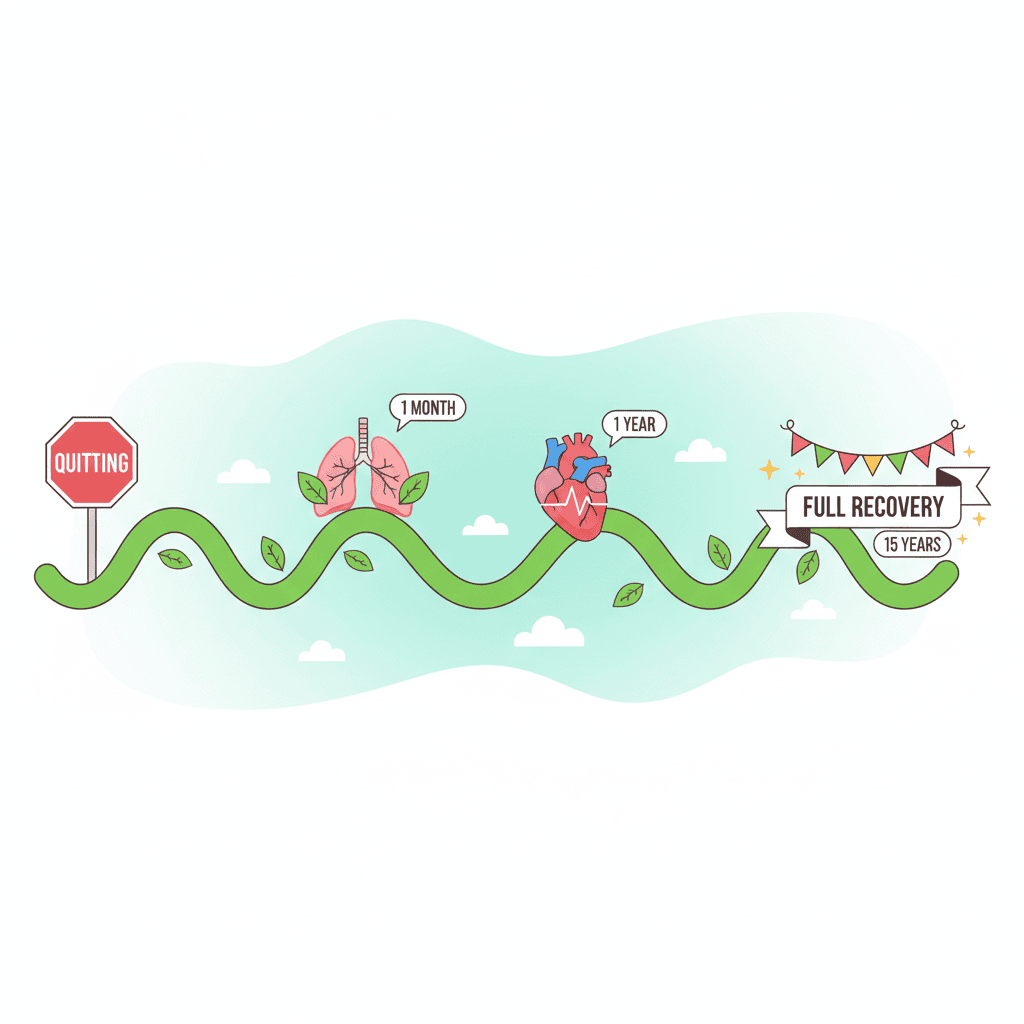
Energy levels often see a modest improvement on Day 4. Your lung function is starting to recover as bronchial tubes relax and ciliary function begins to restore, a process that follows the well-documented timeline of smoking cessation benefits. However, emotional volatility can persist. You may swing between feeling proud and capable one moment, then frustrated or sad the next. This is normal and expected as neurotransmitter systems recalibrate. Cope by journaling your emotions, calling a supportive friend, or reviewing the health milestones you have already achieved in your tracking app. At night, sleep quality typically remains disrupted but begins its slow trend toward improvement.
What Improvements Come on Day 5?
By Day 5, circulation throughout your body has meaningfully improved. Blood flow to the hands and feet increases as peripheral blood vessels recover their elasticity. You may notice that your fingers and toes feel warmer, and minor cuts or bruises seem to heal more quickly. Breathing becomes easier as airways continue to open and lung inflammation subsides.
Cravings still arrive but are noticeably less frequent and less overwhelming. Many former smokers describe Day 5 as the point where they start to feel genuinely different, not just as someone who is abstaining, but as someone who is actively becoming a non-smoker. Your brain's reward circuitry is beginning to form new associations, learning that satisfaction can come from sources other than nicotine.
Use this momentum to reinforce positive changes. Start noticing how much better your clothes, car, and home smell. Pay attention to flavors in your meals. Calculate how much money you have already saved. The average pack-a-day smoker spends over $2,500 per year on cigarettes. Track these savings in the app for a tangible reminder of your progress. Sleep disruption typically begins easing around Day 5, though some individuals report continued vivid dreaming.
What Should You Expect on Days 6 and 7?
Reaching the end of your first week is a significant achievement. Cravings become both shorter in duration and less intense with each passing day. By Days 6 and 7, many people notice improved mood stability, fewer intrusive thoughts about smoking, and a growing sense of personal agency. Your body is continuing to heal: lung cilia are actively sweeping out accumulated tar and debris, which may cause a temporary increase in coughing or throat clearing. This is actually a sign that your respiratory system is recovering.
Sleep quality often shows meaningful improvement by the end of the first week. While vivid dreams may continue for some, overall sleep duration and restfulness typically return closer to baseline. Energy levels during the day are more consistent, and the brain fog that characterized the earlier days has largely lifted.
Celebrate this milestone. You have survived the most challenging phase of nicotine withdrawal. After just one week, the risk of a heart attack has already begun to drop. Track your achievement, share it with your support network, and set your sights on the next milestone. The worst physical withdrawal is behind you, and every day forward builds on the foundation you have established this week.
What Are the Most Common Withdrawal Symptoms in the First Week?
Understanding the full spectrum of withdrawal symptoms can reduce anxiety and help you recognize that what you are feeling is normal. The most common nicotine withdrawal symptoms include irritability, anxiety, difficulty concentrating, increased appetite, restlessness, depressed mood, and insomnia. These symptoms arise because nicotine has fundamentally altered your brain chemistry over time, increasing the number of nicotinic acetylcholine receptors and changing the baseline release patterns of dopamine, serotonin, and norepinephrine.
Withdrawal symptoms typically begin within 4 to 24 hours of the last cigarette, peak between days 2 and 3, and gradually diminish over 2 to 4 weeks. The physical component of withdrawal, driven by nicotine clearance, resolves fastest. The psychological component, driven by habit and conditioned associations, takes longer to fade but responds well to behavioral strategies and support tools. Less commonly discussed symptoms include constipation (nicotine stimulates bowel motility), mouth ulcers, and dizziness. Knowing these are temporary and expected can prevent you from interpreting them as a reason to relapse. If any symptom feels severe or unmanageable, contact your healthcare provider for guidance.
Common Triggers and How to Handle Them
After Meals
Many smokers associate eating with smoking. Try going for a short walk after meals, brushing your teeth immediately after eating, or drinking a cup of herbal tea. Breaking the meal-to-cigarette link is one of the most important habit disruptions in the first week.
Morning Routine
If you used to smoke with your morning coffee, change the context of your routine. Switch to tea temporarily, move to a different spot for your morning beverage, or rearrange the order of your morning activities. Altering environmental cues linked to smoking helps weaken conditioned responses.
Stress
When stress arrives, practice deep breathing exercises using the tools in the app. Take a quick walk outside, try progressive muscle relaxation, or use the craving toolkit strategies. While many smokers believe cigarettes reduce stress, nicotine actually increases baseline cortisol levels, meaning quitting ultimately leads to lower stress over time.
Social Situations
If friends smoke, let them know you are quitting. Step away during smoke breaks and have a confident response prepared. Surrounding yourself with supportive people during the first week is especially important, as social triggers are among the hardest to manage without a plan.
Remember
- Cravings pass: No craving lasts forever, and most subside within 3 to 5 minutes
- Each day gets easier: The first week is the hardest, and you are already through it
- You're saving money: Track your savings to see the financial benefit grow daily
- Your health is improving: Measurable health benefits begin within the first 20 minutes of quitting
You have got this. One week down, a healthier lifetime ahead.
Sources
- World Health Organization. "Tobacco: Key Facts." who.int
- American Lung Association. "Benefits of Quitting." lung.org
- Centers for Disease Control and Prevention. "Benefits of Quitting Smoking Over Time." cdc.gov
- American Heart Association. "Why Quit Smoking?" heart.org
- Mayo Clinic. "Nicotine Dependence." mayoclinic.org
- National Institute on Drug Abuse. "Tobacco, Nicotine, and E-Cigarettes." drugabuse.gov
Common questions
- When are cigarette cravings the worst after quitting?
- Cravings peak in the first 1 to 3 days after the last cigarette. The single most intense day is usually day 3, when nicotine has fully cleared but the brain hasn't yet adapted. After day 5, the intensity drops and the frequency starts to fall. The strongest cravings the first week are nearly always the strongest cravings of the entire quit.
- How long does each craving last in the first week?
- An individual craving usually lasts 3 to 5 minutes per episode, even on the worst days. They feel longer because they pile up. The trick is to delay rather than fight: drink cold water, change tasks, or step outside for two minutes. Almost any 5-minute distraction outlasts the craving.
- Will I sleep badly when I first quit smoking?
- Yes, for the first 1 to 2 weeks. Withdrawal fragments sleep, with more night wakings and less deep slow-wave sleep. Vivid dreams (often about smoking) appear from week 2 as REM rebounds. Sleep architecture normalizes by week 3 to 4 and is often better than smoking-era baseline by month 2.
- What is the hardest day of quitting smoking?
- For most people it is day 3. Nicotine is fully cleared, withdrawal symptoms are peaking, the dopamine system is at its lowest, and the novelty of quitting has worn off. Getting through day 3 is the strongest single predictor that day 7 will be easier and day 14 easier still.
This article is for informational purposes only and does not constitute medical advice. Health information is based on published research from organizations such as the CDC, WHO, and American Lung Association. Always consult a healthcare professional for personalized guidance on smoking cessation.