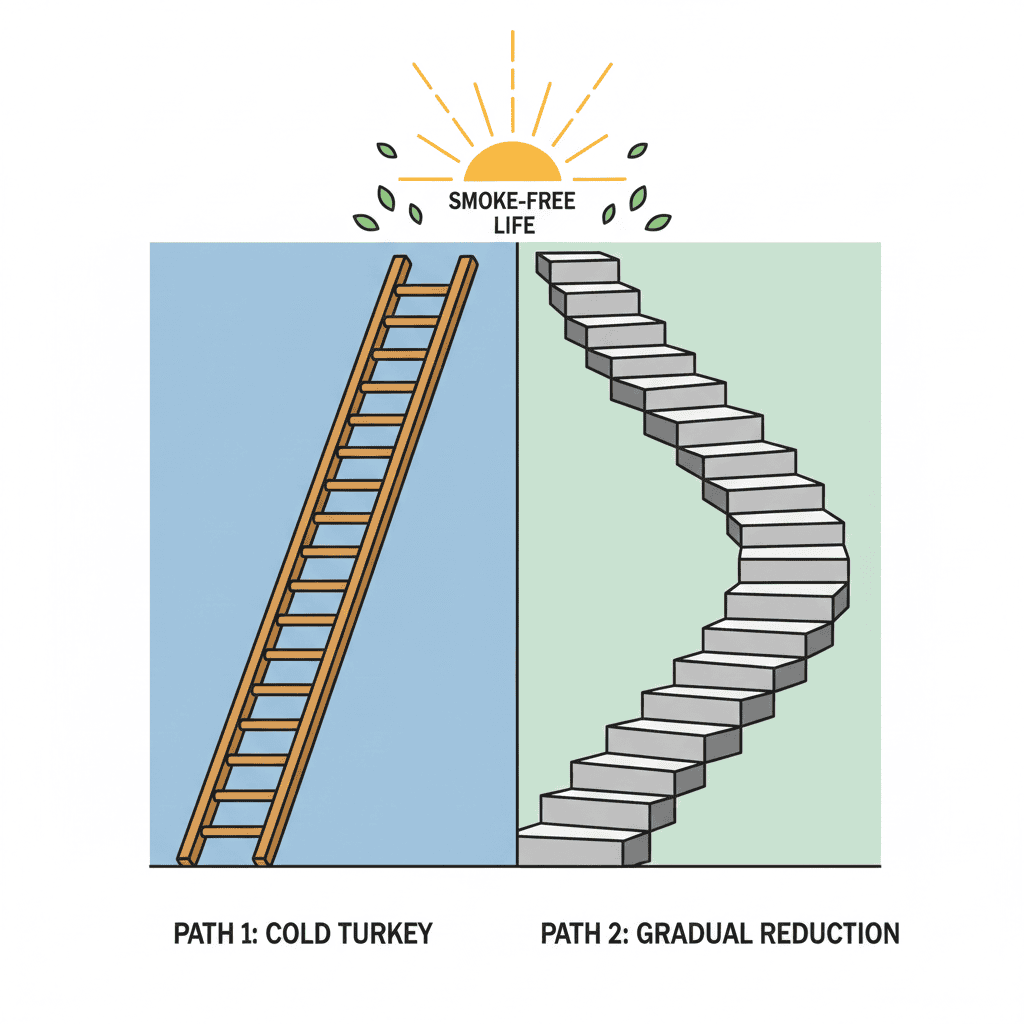
When it comes to quitting smoking, two dominant strategies emerge: stopping all at once (cold turkey) or reducing cigarette intake gradually over time. Both approaches have devoted advocates, but what does the science actually say? In this guide we break down the research, weigh the pros and cons, and help you choose the method that fits your life.
What Does the Research Say About Cold Turkey Success Rates?
A landmark randomized trial assigned 697 smokers to either abrupt cessation or gradual reduction over two weeks. At the four-week mark, 49% of the cold turkey group remained abstinent compared with 39% of the gradual group. By six months, cold turkey still held the advantage: 22% versus 15.5%. Research echoes these findings, noting that most successful long-term ex-smokers quit abruptly rather than through tapering. A Cochrane review analyzed 51 studies and confirmed moderate-quality evidence favoring abrupt cessation, though the reviewers stressed that gradual approaches still outperform making no quit attempt at all. The evidence consistently points to a measurable, if modest, advantage for the cold turkey method across multiple populations and study designs.
What Are the Advantages of Quitting Cold Turkey?
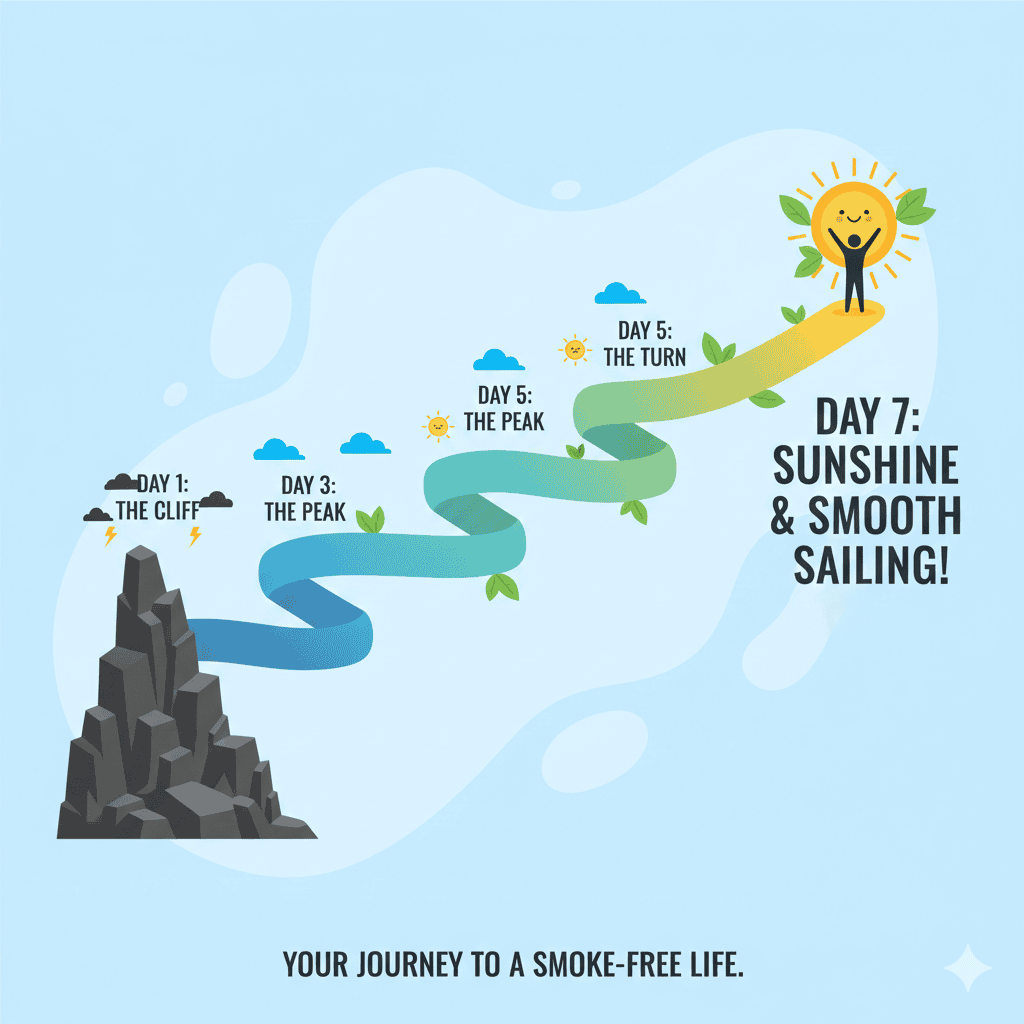
Stopping abruptly offers a clean psychological break from smoking. There is no daily negotiation about "how many" cigarettes remain allowed, which removes a persistent source of decision fatigue. The body begins healing within 20 minutes of the last cigarette: heart rate drops, blood pressure normalizes, and carbon monoxide levels start to fall. Because nicotine clears the bloodstream within 72 hours, cold turkey quitters pass through peak physical withdrawal faster than those who taper. Research shows that a decisive quit date supported by brief counseling doubles the odds of long-term success. For people who thrive on clear-cut commitments rather than flexible plans, going cold turkey aligns well with an all-or-nothing personality style. The simplicity of the approach also makes it easy to communicate to friends, family, and coworkers who can then offer targeted support.
What Are the Downsides of Stopping Abruptly?
The first 72 hours without nicotine can be intensely uncomfortable. Symptoms commonly include irritability, headaches, insomnia, difficulty concentrating, and strong cravings. For heavy smokers consuming more than 20 cigarettes per day, these acute symptoms can feel overwhelming and may trigger relapse within the first week. Without a support plan, the shock of complete abstinence leads some people to abandon the attempt entirely. Research shows that only about 3 to 5 percent of unassisted cold turkey attempts succeed long-term, which highlights the need for behavioral support or pharmacotherapy even when choosing abrupt cessation. Simply deciding to stop is rarely sufficient on its own. The emotional toll of an unsuccessful attempt can also erode self-confidence, making future quit efforts harder to initiate.
How Does Gradual Reduction Work in Practice?
Gradual reduction involves systematically lowering cigarette consumption over a defined period, typically one to four weeks, until reaching zero. Common strategies include cutting one or two cigarettes per day each week, delaying the first cigarette of the morning by progressively longer intervals, or eliminating specific "trigger" cigarettes tied to routines like coffee breaks. Health authorities recommend setting a firm quit date even when tapering, so the reduction phase has a definitive endpoint rather than an indefinite drift. Tracking tools, like the Smoke Tracker app, help maintain accountability during this phase by logging each cigarette and visualizing progress over time. Research suggests that structured reduction plans with a clear target quit date produce significantly better outcomes than open-ended cutting down without a final deadline.
Can Nicotine Replacement Therapy Support Gradual Quitting?
Nicotine replacement therapy (NRT), including patches, gums, lozenges, and inhalers, plays a well-documented role in gradual cessation. A Cochrane review found that combining NRT with a gradual reduction plan increased quit rates compared with reduction alone, offering smokers a pharmacological bridge during the tapering phase. Experts recommend that tapering smokers begin NRT early in the reduction process rather than waiting until the final quit date. Patches supply a steady baseline of nicotine while the smoker eliminates behavioral cues tied to individual cigarettes. Short-acting forms like gum or lozenges can address breakthrough cravings that emerge between reduced smoking sessions. The U.S. Food and Drug Administration has approved several NRT products for use during both abrupt and gradual quit attempts, recognizing that flexible prescribing guidelines improve real-world outcomes across diverse patient populations and smoking histories.
Who Benefits Most From Each Approach?
Cold turkey tends to work best for light to moderate smokers with strong intrinsic motivation, solid social support, and a preference for decisive action. A major clinical trial noted that participants who preferred abrupt cessation were more likely to succeed with that method, suggesting that personal belief in the approach itself matters. Gradual reduction may suit heavy smokers, those with anxiety about withdrawal, or individuals whose previous cold turkey attempts ended in early relapse. Clinical guidance advises clinicians to tailor the cessation approach to each patient's history and preferences rather than prescribing a single "best" method for everyone. Older adults and those with concurrent mental health conditions often benefit from the gentler trajectory of gradual reduction combined with professional counseling and pharmacotherapy, according to clinical guidance. Matching method to personality improves both adherence and long-term outcomes.
Why Does Behavioral Support Matter Regardless of Method?
Neither cold turkey nor gradual reduction performs optimally without behavioral support. A Cochrane review found that individual counseling, group therapy, and telephone quitlines each independently boosted quit rates by 40 to 80 percent when added to pharmacotherapy. Cognitive behavioral therapy helps smokers identify triggers, develop coping strategies, and reframe ingrained beliefs about nicotine dependence. International guidelines recommend integrating behavioral interventions into every cessation program worldwide. Even brief advice from a healthcare provider, lasting as little as three minutes, significantly increases the likelihood of a successful quit attempt, according to clinical research. Digital tools, including cessation apps and online support communities, can extend this support into daily life between formal sessions. The key takeaway is that method selection matters far less than the presence of consistent, sustained support.
What Is a Combination Approach and Does It Work?
Many cessation experts now advocate hybrid strategies that blend elements of both methods. A typical combination approach works as follows: set a quit date two to three weeks ahead, reduce cigarette intake by roughly 50 percent during that window, begin NRT one to two weeks before the quit date, and then stop completely on the chosen day. Clinical research has reported that scheduled gradual reduction before an abrupt quit date outperformed both standard cold turkey and unstructured tapering. Clinical guidelines endorse this type of flexible, patient-centered approach. By reducing consumption first, the smoker lowers physical dependence and eases into the transition, while the fixed quit date preserves the psychological commitment and finality that makes cold turkey effective as a long-term strategy.
How Should You Make Your Final Decision?
Choosing between cold turkey and gradual reduction ultimately depends on honest self-knowledge. Consider your smoking history, the results of past quit attempts, your daily cigarette count, your tolerance for physical discomfort, and the support systems available to you. Experts recommend discussing your plan with a healthcare provider who can suggest prescription medications like varenicline or bupropion alongside your chosen behavioral strategy. Whatever path you select, tracking your progress with a tool like the Smoke Tracker app reinforces accountability and provides tangible, visual evidence of improvement over time. The single most important predictor of success, according to decades of cessation research, is not the method itself but the smoker's sustained commitment to becoming smoke-free. Every quit attempt, regardless of its immediate outcome, builds valuable experience and brings you one step closer to lasting freedom from nicotine.
Sources
- American Cancer Society. "Health Benefits of Quitting Smoking Over Time." cancer.org
- World Health Organization. "Tobacco: Key Facts." who.int
- Centers for Disease Control and Prevention. "Benefits of Quitting Smoking Over Time." cdc.gov
- Cochrane Library. "Smoking Cessation Reviews." cochranelibrary.com
- National Cancer Institute. "Harms of Smoking and Benefits of Quitting." cancer.gov
- Mayo Clinic. "Nicotine Dependence." mayoclinic.org
This article is for informational purposes only and does not constitute medical advice. Health information is based on published research from organizations such as the CDC, WHO, and American Lung Association. Always consult a healthcare professional for personalized guidance on smoking cessation.