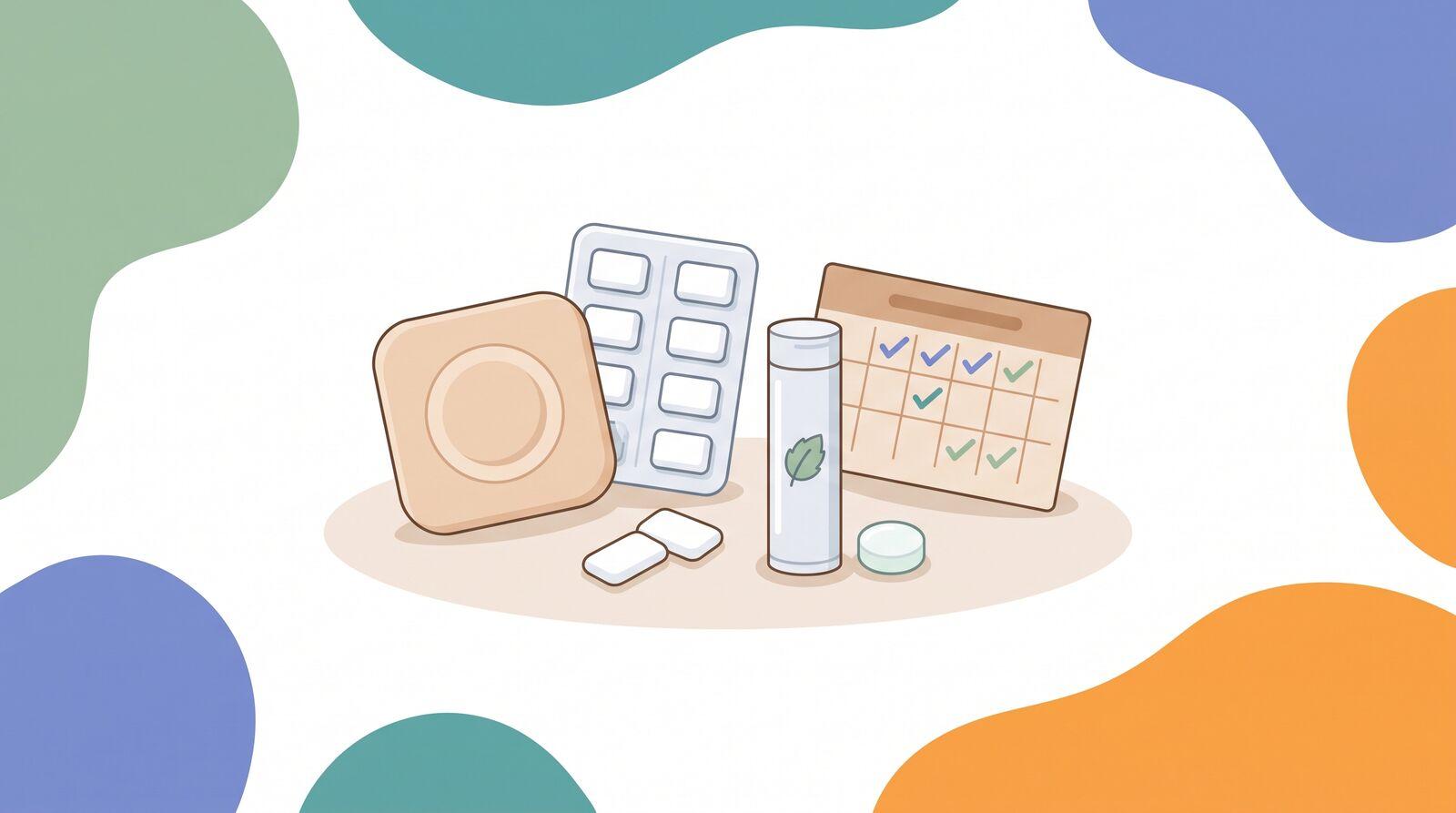
Walk into any pharmacy and the quit-smoking shelf looks simple: patches, gum, lozenges, all promising the same thing. Then the doubts start. Isn't this just paying for the same drug in a different wrapper? Don't most people fail on the patch anyway? A friend chewed the gum for a week, felt nothing, and went back to smoking, so what chance does it have against a twenty-year habit? Here is the strange truth about nicotine replacement therapy: it is one of the most thoroughly proven medicines in existence, and simultaneously one of the most incorrectly used. The gap between what NRT does in clinical trials and what it does on the average bathroom counter comes down to a handful of fixable mistakes. This guide covers what each form actually does, what the evidence says, and how to use them the way the people who succeed do.
What NRT Actually Does (And the Evidence It Works)
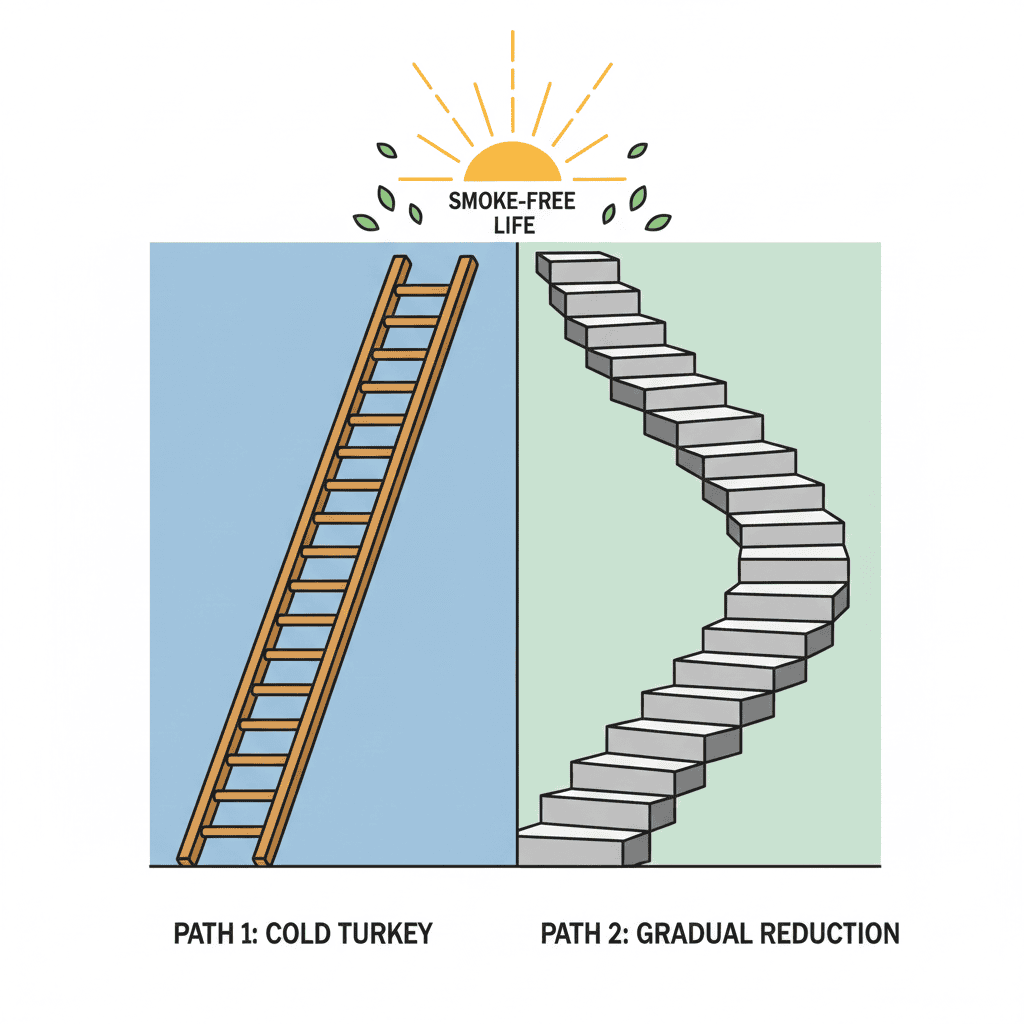
A cigarette is two problems fused together: a drug, nicotine, and a delivery system, smoke, that kills. The nicotine hooks you; the tar, carbon monoxide, and several thousand other combustion chemicals do the damage to your lungs, heart, and DNA. NRT splits those problems apart. It gives you the drug in a clean, controlled, slow form so that withdrawal loosens its grip, while you get to work on the other half of the addiction: the rituals, triggers, and hand-to-mouth reflexes that our cold turkey versus gradual reduction guide digs into.
The evidence for this approach is about as solid as evidence gets. A Cochrane systematic review pooling 133 trials and more than 64,000 participants found that all licensed forms of NRT increase the chance of successfully quitting by 50 to 60 percent compared with placebo or no medication. That result holds regardless of setting, level of extra support, or which form you pick. And for combination NRT, a patch plus a fast-acting form, the evidence is stronger still: it outperforms any single form and approaches the effectiveness of varenicline, the most powerful prescription quit-smoking medication.
Why does something so effective have such a mediocre street reputation? Because trial participants get coached on dose and duration, and pharmacy customers do not. Most real-world NRT use is too weak, too brief, and technically wrong, and then the product takes the blame. The rest of this guide is essentially that missing coaching.
The Patch: Steady Coverage You Don't Have to Think About
The patch is the background player. Stuck on clean, dry skin each morning, it releases nicotine slowly through the skin, reaching a plateau that holds for 16 or 24 hours depending on the version. That steadiness is its entire personality: it will not answer a sudden craving, because it cannot deliver quickly, but it quietly lowers the floor of withdrawal all day. The irritability, restlessness, and brain fog of the first weeks all run milder on the patch.
Getting it right is mostly about strength and duration. If you smoke ten or more cigarettes a day, start at the highest strength, typically 21 mg, then step down through the lower strengths over 8 to 12 weeks. Starting the patch one to two weeks before your quit date, while still smoking, is supported by evidence and improves success rates. Rotate the placement site daily to avoid skin irritation, the most common side effect. If you get vivid dreams or disturbed sleep on the 24-hour version, take it off before bed or switch to the 16-hour patch; if mornings are your hardest time, the 24-hour patch is your friend, since it is already working when you wake up.
Gum and Lozenges: Fast Relief You Control
Gum and lozenges are the rapid-response team. They deliver nicotine through the lining of the mouth within minutes, which makes them the tool for the moment a craving spikes: after a meal, with a drink in hand, at the first ring of a stressful phone call.
The gum comes with a technique that almost nobody is taught, and using it like regular gum is the single most common NRT mistake. The method is chew and park: chew slowly a few times until you notice a peppery, tingling taste, then park the piece between your cheek and gum until the tingle fades, then repeat, for about 30 minutes per piece. Chewing continuously washes the nicotine into your stomach with your saliva, where it does nothing for the craving and plenty for nausea and hiccups. One more detail with an outsized effect: acidic drinks like coffee, juice, and soda block nicotine absorption in the mouth, so avoid them for 15 minutes before and during a piece. Given how tightly coffee and cigarettes are wired together, the coffee-then-gum sequence is worth consciously rehearsing.
Lozenges do the same job with zero technique: park one in your cheek and let it dissolve over 20 to 30 minutes, moving it occasionally. They are discreet, kind to jaws and dental work, and the mini versions dissolve faster for quick hits. For both gum and lozenge, dose matters twice over. Use the higher strength (4 mg) if you smoke within 30 minutes of waking, and use enough pieces: the packaging typically recommends one every one to two hours at first, which lands around 8 to 12 pieces a day. Most people use two or three, feel unprotected, and conclude the product is weak. It was never given a fair trial.
The Real Answer: Combine Them
If you take one thing from this article, take this: the patch and the fast-acting forms are not competitors, they are two halves of one strategy. The patch covers the background withdrawal that grinds you down; the gum or lozenge covers the spikes that ambush you. Trials show combination NRT roughly doubles quit rates versus placebo and clearly beats any single form, which is why clinical guidelines now recommend it as first-line treatment, especially for anyone smoking more than ten a day or with previous failed attempts on a single product.
In practice it looks like this: patch on every morning without negotiation, plus a pocket supply of gum or lozenges deployed at your known danger moments. Over the weeks, the spikes get rarer and weaker, as they do for everyone (our craving timeline article maps that fade in detail), and you naturally reach for the fast-acting piece less often. Then you step the patch down. The system dismantles itself in the right order: cigarettes first, spikes second, baseline last.
One honest caveat: NRT handles the chemistry, not the choreography. The hand-to-mouth ritual, the punctuation-mark cigarette after a meal, the smoke break as a social escape hatch, those need behavioral replacements, not nicotine. This is where a slow-breathing practice earns its place: a 60-second paced breathing session mimics the deep-drag rhythm of smoking and calms the nervous system at the same time. Our companion app Flow Breath is built for exactly these short resets, and it pairs naturally with the gum: park the piece, breathe through the two minutes it takes to start working.
Mistakes That Sink NRT Attempts (And the Safety Question)
Nearly every "the patch didn't work for me" story contains one of these:
- Underdosing. Too weak a patch, too few gum pieces, 4 mg needs treated with 2 mg products. Match the dose to your actual smoking, not to your optimism.
- Quitting NRT too early. Feeling fine at week two is the medication working, not finished. Stopping then leaves you naked at week four. Run the full 8 to 12 week course and taper.
- Chewing the gum like gum. Chew and park, always.
- Coffee or soda right before a piece. Acid blocks absorption. Fifteen minutes of separation.
- Using one form when you needed two. Heavier smoking, early-morning smoking, or a failed previous attempt all point to combination therapy.
- Fear of trading addictions. Some people do use gum longer than planned, and clinicians consistently treat this as a minor issue: clean nicotine at gum doses is a tiny fraction of the harm of smoking. Taper it eventually; never let it scare you back to cigarettes. If what draws you is a pouch-style product instead, read our evidence check on nicotine pouches like Zyn first, since those are a different, less-studied animal than licensed NRT.
On safety: for the general population, NRT is dramatically safer than smoking, full stop. Common side effects are local and mild: skin irritation under the patch, hiccups or a sore jaw from over-chewed gum, mild nausea from swallowed nicotine, vivid dreams on the 24-hour patch. People who are pregnant, breastfeeding, under 18, or living with unstable heart disease or a recent cardiac event should involve a doctor in the decision, but even in most of these groups, clean nicotine is judged far less harmful than continued smoking.
How Can Smoke Tracker Help Your NRT Quit?
NRT quiets the chemistry, but an 8 to 12 week course is a project, and projects need a dashboard. That is the tracker's job while the patches and gum do theirs.
- Streak Counter: The step-down weeks are where NRT attempts quietly die, because nothing feels urgent anymore. A visible streak makes the invisible progress concrete right through the taper.
- Craving Toolkit: For the spikes that hit before the gum kicks in, or after you have stepped off it, the in-app strategies bridge those two to three raw minutes.
- Health Timeline: From the day you switch from smoke to clean nicotine, your lungs, heart, and circulation start recovering on schedule. Watching those milestones tick past is the answer to "is this even doing anything?"
- Money Saved: NRT costs money for a few months, and the tracker shows the full picture: what you spend on patches is a fraction of what cigarettes were costing, and after the course ends, all of it stays in your pocket.
The pharmacy shelf was never the gamble it looked like. Fifty years of trials say the patch, the gum, and the lozenge all work, that two together work best, and that the difference between the success stories and the disappointments is almost always dose, duration, and technique rather than willpower.
Pick your combination, use the full dose for the full course, and let clean nicotine carry the withdrawal while you dismantle the habit.
Sources
- Hartmann-Boyce, J., et al. (2018). "Nicotine replacement therapy versus control for smoking cessation." Cochrane Database of Systematic Reviews. pubmed.ncbi.nlm.nih.gov
- Lindson, N., et al. (2019). "Different doses, durations and modes of delivery of nicotine replacement therapy for smoking cessation." Cochrane Database of Systematic Reviews. pubmed.ncbi.nlm.nih.gov
- U.S. Department of Health and Human Services. (2020). "Smoking Cessation: A Report of the Surgeon General." ncbi.nlm.nih.gov
- Benowitz, N. L. (2010). "Nicotine addiction." New England Journal of Medicine. pubmed.ncbi.nlm.nih.gov
- U.S. Preventive Services Task Force. (2021). "Interventions for Tobacco Smoking Cessation in Adults." JAMA. pubmed.ncbi.nlm.nih.gov
- National Cancer Institute (smokefree.gov). "Using Nicotine Replacement Therapy." smokefree.gov
- American Cancer Society. "Nicotine Replacement Therapy to Help You Quit Tobacco." cancer.org
Common questions
- Do nicotine patches really work?
- Yes, and the evidence base is unusually strong. A Cochrane review covering over 64,000 people found that every licensed form of NRT, patch included, increases the rate of successfully quitting by 50 to 60 percent compared with placebo or no medication. The patch works by delivering a slow, steady stream of nicotine through the skin, which takes the edge off background withdrawal: the irritability, restlessness, and fog that make the first weeks hard. What the patch does not do is handle sudden craving spikes, because it cannot deliver nicotine quickly. That is why studies consistently show the best results when a patch is combined with a fast-acting form like gum or a lozenge. Used correctly, at the right strength, for the full 8 to 12 week course, the patch roughly doubles your odds versus going it alone.
- Which is better: the patch, gum, or lozenges?
- No single form is clearly superior, and head-to-head trials show broadly similar quit rates, so the real answer is whichever you will actually use correctly, and ideally two together. The patch is the low-effort option: apply it in the morning and forget it, with steady coverage all day. It suits heavier smokers and people who do not want to think about dosing. Gum and lozenges act faster and put control in your hands, which suits people whose smoking was tied to specific moments like coffee, driving, or stress, but they demand correct technique and enough pieces per day. Lozenges are the more discreet option and need no chewing technique at all. The combination that beats everything else in trials is patch plus a fast-acting form: the patch handles the background, the gum or lozenge handles the spikes.
- Can you get addicted to nicotine gum or the patch?
- It is possible but uncommon, and dramatically less dangerous than the alternative. NRT delivers nicotine slowly and at lower peaks than a cigarette, without the smoke-borne chemical mix that makes cigarettes so addictive and so lethal, so its dependence potential is much lower. A minority of ex-smokers keep using gum or lozenges well past the recommended course. Clinicians are notably relaxed about this, because the harm from clean nicotine is a small fraction of the harm from smoking, and the priority is staying off cigarettes. The practical approach: use full doses for the recommended 8 to 12 weeks, then taper gradually. If you find yourself using gum months later, treat it as a taper project, not an emergency, and never let fear of swapping addictions push you back toward cigarettes, which remain the worst possible delivery device for nicotine.
- How long should you use nicotine replacement therapy?
- The standard course is 8 to 12 weeks, tapering the dose down over time, and stopping too early is one of the most common reasons NRT quits fail. Many people stop after a week or two because they feel fine, then hit a stressful day at week four with no protection and relapse. Follow the step-down schedule on the packaging: for patches that usually means moving from the highest strength to lower ones over two to three months; for gum and lozenges it means gradually reducing pieces per day. Evidence also supports starting the patch one to two weeks before your quit date, which improves success rates. Using NRT longer than 12 weeks is safe for most people and far better than relapsing, so if you need a longer runway, take it.
- Can you smoke a cigarette while wearing the patch?
- A slip while wearing a patch is not dangerous for most healthy adults, despite the persistent myth that it causes heart attacks. You will likely feel unpleasantly overdosed: nausea, a racing heart, dizziness, which is your cue to stop at one. The real risk of smoking on the patch is strategic, not toxic: it keeps the cigarette-shaped habit alive and predicts full relapse. If you slip, do not rip the patch off and abandon the attempt. Keep the patch on, treat the slip as data about an unguarded trigger, and add a fast-acting form like gum for that situation next time. People who are pregnant or have unstable heart disease should talk to a doctor about any nicotine use, patch or otherwise.
This article is for informational purposes only and does not constitute medical advice. Health information is based on published research from organizations such as the CDC, WHO, and American Lung Association. Always consult a healthcare professional for personalized guidance on smoking cessation.