The first change may be small. Your usual coffee has a clearer aroma, or an apple tastes sharper than it did while you smoked. Some people notice this within days; others do not. If nothing seems different after a week, keep noticing familiar foods and scents over time. Taste and smell are related but different senses, so their changes may not arrive together.
What Does Smoking Actually Do to Taste and Smell?
Smoking is linked to lower scores on some taste and smell tests. Several parts of the sensory system may be involved. In a 2017 study of taste sensitivity, 83 smokers had higher electrogustometry thresholds at several tongue locations than 48 non-smokers. A higher threshold means the test required more stimulation to detect a sensation. The researchers discuss changes to taste papillae and saliva among possible explanations for that reduced sensitivity.
Smell has its own pathway. Odor-detecting tissue sits high in the nose, and smoking is one of several factors linked to smell problems. A large odor-identification study involving 638 people found a relation between smoking exposure and poorer test performance, while former smokers' scores were related to time since quitting.
Flavor depends on both senses. The tongue detects basic tastes such as sweet, sour, salty, bitter and umami. Much of the detail that makes coffee, strawberries or herbs recognizable comes from aromas traveling from the mouth toward the nose while you eat. That is why someone may say food tastes “flat” when the main change is in smell rather than on the tongue.
Nasal congestion, oral health, medicines and recent infections can affect what you notice too. The NIDCD's smell-disorders guide lists smoking alongside sinus disease, respiratory infection, dental problems, medications and other causes. These possibilities matter if a new change appears after you quit or improvement is slower than you expected.
When Does Taste Come Back After Quitting?
A useful direct answer is it may begin to improve within days, while measurable changes can continue over weeks. NHS Better Health describes taste and smell beginning to improve around 48 hours. That milestone tells you when improvement can begin; you may notice it earlier or later.
The clearest follow-up measurement here comes from the Chéruel study. Its second phase followed 24 people who quit smoking and measured electrical taste thresholds at different points on the tongue. In that small sample, improvement was detected at some tip and edge locations after about two weeks. Other measured locations took longer: the authors report posterior locations by nine weeks and dorsal locations after two months or more. The test measured sensitivity at tongue locations; the taste of a whole meal involves aroma too.
In the first days: You might notice a familiar food more clearly, or nothing yet. Try a simple comparison, such as the same apple or coffee on two different mornings.
Over the next weeks: Some people discover that a potato tastes sweeter, a sauce has more herbs, or a familiar snack seems saltier. Keep a note of what changes for you. The order and strength of those changes can differ. Our guide to 30 days smoke-free covers other changes you may notice at the one-month mark.
After a month and beyond: More subtle differences may become noticeable. If your own taste still seems unchanged, that alone cannot tell you whether tongue sensitivity, smell, medication or another issue is responsible. If you still have questions about persistent loss, a clinician can help separate possible causes.
When Does Smell Come Back After Quitting?
Smell may begin improving within days, as the NHS timeline describes, while other changes take longer. The best way to judge your own progress is to compare ordinary smells over time. A separate 2019 study published in Laryngoscope tested 28 volunteers just before they quit and again 45 days later. On average, odor discrimination, identification and a combined smell score improved. The study measured improvement across those two visits. Your own perception may follow a different path.
In the first days: A smell may seem clearer, or you may notice no difference. Avoid concluding from one coffee cup or one morning that the entire sense has recovered or failed to recover.
Over weeks: The 45-day study provides a concrete example of improvement. The researchers also found that longer smoking duration was associated with less improvement on some tests. Their design did not measure every intermediate day, and it did not establish a fixed order in which coffee, flowers, cooking smells or gasoline return.
Over months: Some changes may continue. A calendar cannot tell you when your own sense of smell will feel complete. In a larger study of older adults, odor dysfunction could persist after cessation, reinforcing that age, prior exposure and other health factors matter. If smell stays poor, changes suddenly, or becomes distorted, an evaluation is more useful than waiting for a calendar milestone.
Reduced smell can affect awareness of smoke, gas leaks and spoiled food. If smell is impaired, use working smoke and gas alarms and check food dates rather than relying on your nose alone. The NIDCD describes safety concerns as part of living with a smell disorder.
Why Do Some Foods Suddenly Taste Wrong?
A familiar meal can feel different as taste or smell changes, sometimes pleasantly and sometimes not. Use the food itself as a low-stakes observation: try a smaller portion, change one ingredient, and notice whether the difference repeats.
Coffee may seem more bitter or roasted than you remember. You can try a lighter roast, a different brewing strength, less coffee or a splash of milk for a while. Coffee is also a smoking cue for many people, so changing the routine may help in more than one way.
Alcohol may also taste different if you drink it, because aroma contributes much of its flavor. Beer, wine or spirits may seem sweeter, sharper or less appealing. If you want a simple comparison, use an ordinary food or alcohol-free drink you already know.
Sweet foods may seem more intense to you. Taste preferences and appetite can change during a quit attempt. Adjust sweetness to what you enjoy now; you need not keep making a drink exactly as you did while smoking.
Strong odors may feel unpleasant or overwhelming. Perfume, cooking smells, waste or smoke can be hard to ignore once you notice them more. If an odor seems distorted, or you smell something that is not there, tell a clinician, especially if it persists. Smell disorders have several possible causes.
Can Returning Taste and Smell Cause Weight Gain?
Food can become more enjoyable after quitting, and appetite may increase. The CDC's withdrawal guide notes both changes. People may also eat to keep their hands or mouth busy, and quitting can change how the body uses calories. Together, these changes can make eating feel different. Notice whether you are hungry, enjoying a flavor, or reaching for food because you miss the hand-to-mouth routine.
The practical response is still useful: eat a meal slowly enough to notice when you are satisfied, keep foods you enjoy available, and find a different answer for a craving that is actually about cigarettes rather than hunger. Crisp fruit, herbs or a new spice can make meals interesting without turning eating into another strict challenge. Our article on weight gain after quitting smoking covers the wider causes and ways to manage them.
Staying smoke-free matters more than hitting a perfect food plan. A dietitian or healthcare professional can help when changes are difficult to manage.
How Can You Speed Up Taste and Smell Recovery?
The main step is to stay away from cigarette smoke. For day-to-day comfort, try gentle oral care, ordinary hydration and a simple record of scents and flavors.
Explore scents deliberately. You can compare a few familiar scents, such as citrus, coffee, herbs or soap, once or twice a week and note what you can recognize. If you are considering a formal scent-training program, discuss it with a clinician. Most research concerns smell loss after viral illness, so they can help decide whether it is relevant to your situation.
Clean your tongue gently. Brush your teeth and tongue as part of normal oral care. A gentle tongue scraper is optional if you find it comfortable. Avoid scraping hard enough to make your tongue sore. If your mouth hurts or has sores, a dentist can help identify the cause.
Drink to thirst and comfort. Water can help when your mouth feels dry. Drink according to thirst, meals and activity; your own health conditions may change how much fluid is appropriate.
Address congestion appropriately. If your nose is blocked, discuss suitable care with a pharmacist or clinician. A saline rinse may be an option for nasal symptoms if used correctly. Ask for instructions that fit your situation, particularly if congestion persists.
Get nutrients from ordinary food. Pumpkin seeds, beans, meat or seafood can be part of a varied diet. If your diet is limited or deficiency is a concern, ask a clinician whether testing or supplementation makes sense. Ordinary meals are a sensible starting point; a supplement dose should address your actual need.
Keep up oral care. Brush, floss as appropriate and arrange dental care for persistent mouth problems. Good oral hygiene protects your mouth and may make eating more comfortable. If you are thinking about an antibacterial mouthwash, ask a dentist whether it suits your mouth.
A small comparison you can repeat
Choose one familiar food or drink that you already have regularly, such as an apple or your usual tea. Compare it at an ordinary meal, not through repeated sniffing or tasting sessions. Use the same preparation when possible: similar ripeness, temperature and recipe make your notes easier to read later.
- Before eating, notice whether you can recognize its smell without bringing it unusually close to your nose.
- During the meal, note one taste or aroma detail, such as sweetness, bitterness or a familiar spice. Record whether it is recognizable, pleasant and strong as three separate observations.
- Add the date and a few words of context: a blocked nose, recent illness or a new medicine can matter when you discuss a change with a clinician.
- Repeat after a week or two, then look for a pattern across entries instead of judging one meal.
This is a personal record, not a diagnostic test or a way to speed recovery. If a sense is suddenly lost, remains absent or affects safety, ask for an assessment rather than repeatedly testing it at home.
When Should You Worry?
You do not need to wait six months to ask about complete taste or smell loss. If a sense disappears suddenly, remains absent, becomes distorted, or is affecting safety, talk with a healthcare professional. The NIDCD explains that assessment may include a history, ear-nose-throat examination and supervised smell testing. Sinus problems, a recent infection, medicines and dental issues are among the possible contributors.
Bring a short timeline: when you quit, when the change began, whether it is one-sided or accompanied by congestion, recent illness or a new medicine, and whether taste or smell is the main problem. That gives a clinician a better starting point than “it should have recovered by now.” If you smell smoke or chemicals when none are present, say so; phantom and distorted odors deserve their own assessment.
Many people do enjoy clearer flavors after stopping smoking. Improvement can start soon and continue gradually. Get advice for a persistent problem while you keep the benefits of staying smoke-free.
How Can Smoke Tracker Help You Notice Sensory Recovery?
Gradual changes are easy to miss. A record helps you connect changes with days, meals and circumstances. Keep the notes simple enough that you will actually use them.
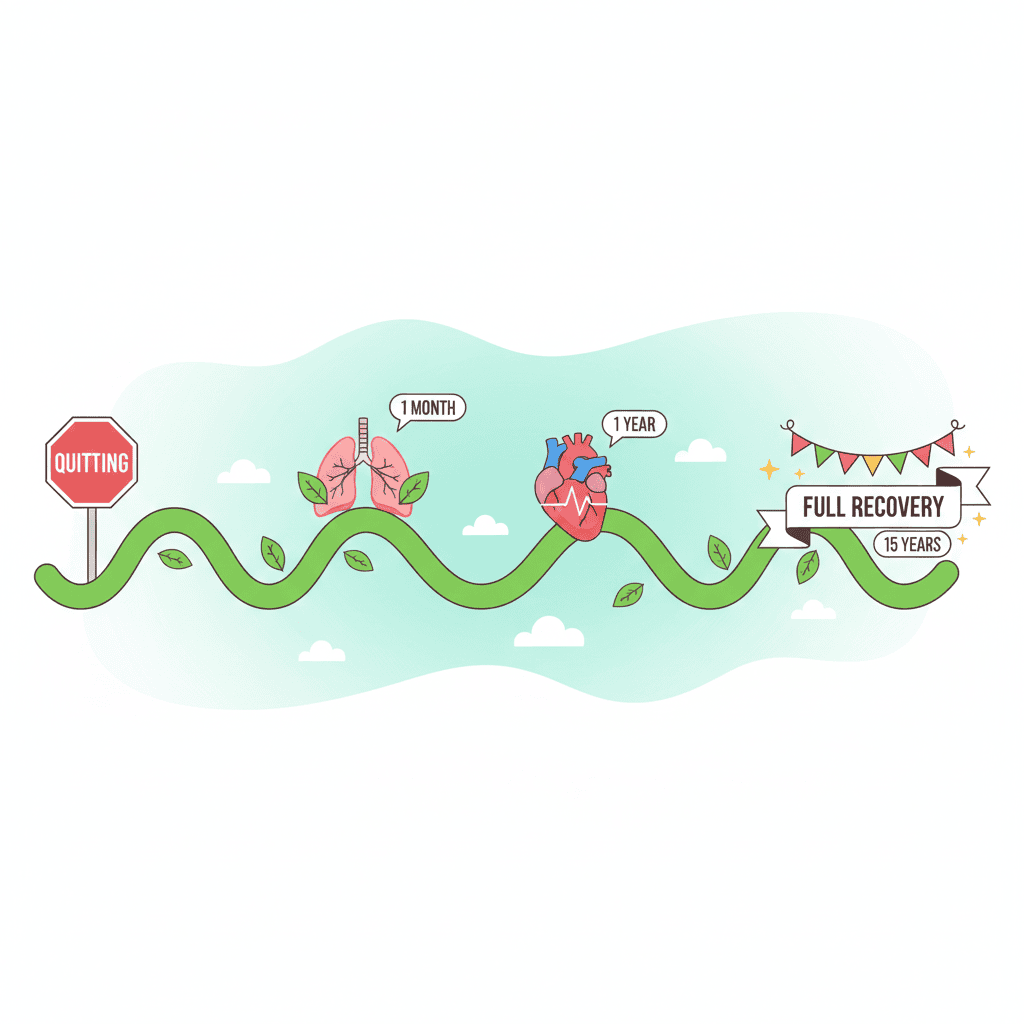
- Health Timeline: Use broad smoke-free milestones as context, then compare them with what you actually notice in food and scents.
- Streak Counter: It records days without smoking. Pair that count with occasional sensory notes to see how your own experience changes.
- Craving Log: Note whether a meal, coffee, a particular smell or a social setting brings a craving, and what you did next. Look for your own changes over the following weeks.
- Money Saved: Spend some of what you no longer spend on cigarettes on foods you like, perhaps quality coffee, fresh herbs or ripe fruit. Enjoying them is worthwhile even when sensory change is subtle.
You can compare the same ordinary food every couple of weeks, note any congestion or illness, and keep the record private. The point is to see your own pattern over time.
Your senses may change after you quit. Give them time, enjoy what improves, and get advice when a loss is sudden, persistent or troubling.
Sources
- Chéruel F, Jarlier M, Sancho-Garnier H. “Effect of cigarette smoke on gustatory sensitivity, evaluation of the deficit and of the recovery time-course after smoking cessation.” Tobacco Induced Diseases, 2017. Publisher. DOI: 10.1186/s12971-017-0120-4.
- Dinc AS et al. “Smoking cessation improves olfactory functions.” Laryngoscope, 2020. PubMed.
- NHS Better Health: What could happen when you quit smoking.
- CDC: Seven common withdrawal symptoms.
- NIDCD: Smell disorders.
- Frye et al.: Dose-related effects of cigarette smoking on olfactory function.
- Older-adult cohort: Olfactory dysfunction persists after smoking cessation.
This article is for informational purposes only and does not constitute medical advice. Health information is based on published research from organizations such as the CDC, WHO, and American Lung Association. Always consult a healthcare professional for personalized guidance on smoking cessation.
Edited by Ivan Terekhin, drafted with AI tools, not medically reviewed. How we write and check: Editorial policy.