You finally quit, and instead of feeling better, you seem to be coughing more. Maybe you are clearing your throat all morning, bringing up phlegm you never noticed before, or wondering whether cigarettes were somehow holding something in. It is a common and confusing experience, and you are not doing anything wrong.
Many people cough more for a while after they stop smoking as the airways' cleaning system starts working again. Others cough less straight away. Neither pattern, by itself, tells you how healthy your lungs are. This guide explains why the cough can change, how long it usually takes to settle, what phlegm colors can and cannot tell you, what helps day to day, and which symptoms mean you should get checked rather than wait.
What smoker's cough is trying to do
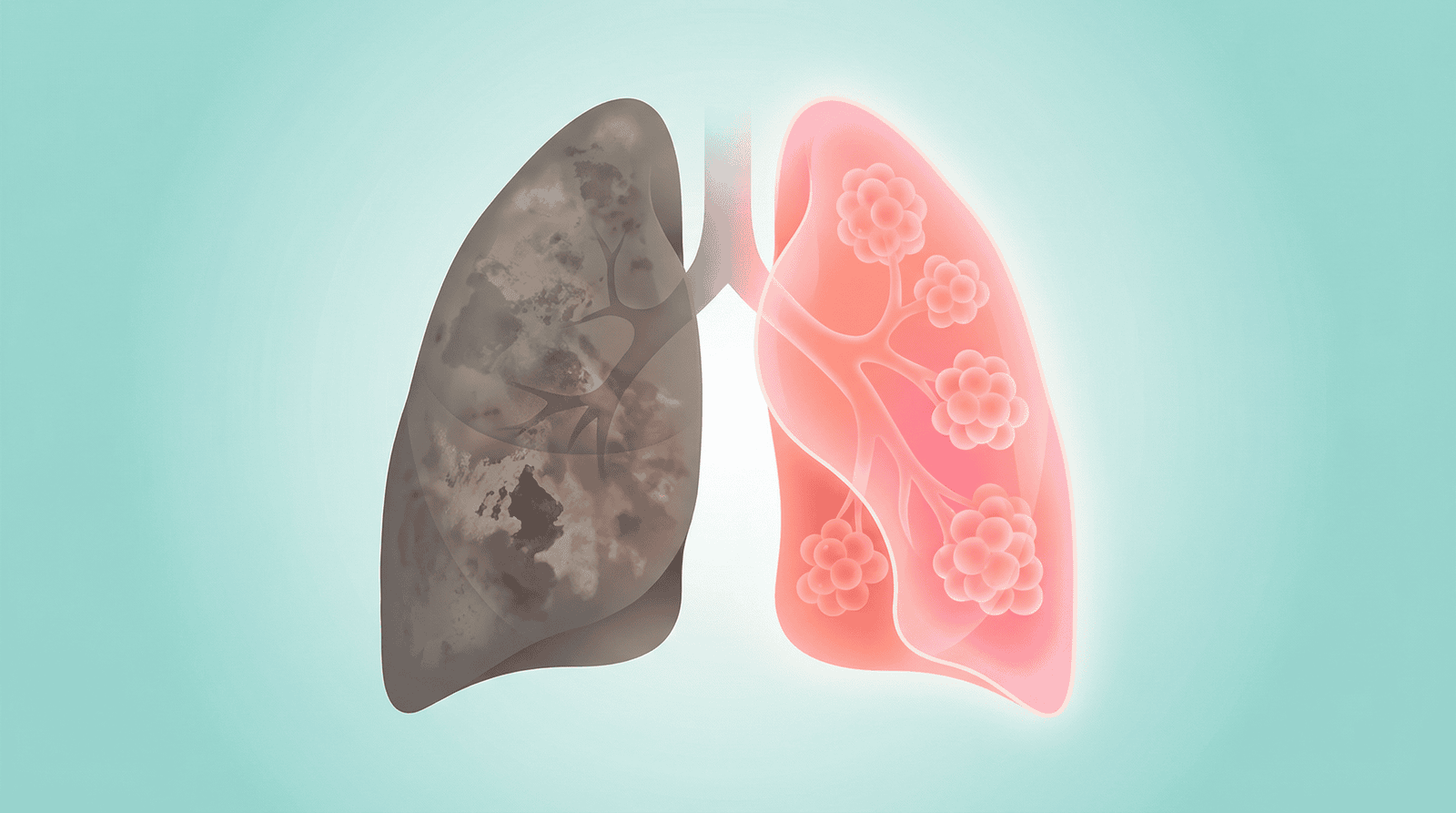
Your airways are lined with cells that make mucus, a sticky layer that traps dust, germs, and other particles you breathe in. Between them are cells covered in tiny hair-like structures called cilia. The cilia beat in waves and sweep the mucus up toward your throat, where you swallow or cough it out, usually without noticing. This system is often called the mucociliary escalator.
Smoking interferes with it from both sides. The American Lung Association explains that smoking produces thicker mucus, increases the amount of mucus in the airways, and that nicotine paralyzes the cilia that help move mucus out of your lungs. With the escalator slowed down, mucus tends to sit in the airways, and coughing becomes one of the main ways it gets cleared. That is one reason many smokers cough most in the morning.
So the cough you had while smoking was not a sign that your lungs were coping well. It was partly your body working around a clearing system that was not doing its job.
Why you might cough more after quitting
When you stop, the cilia can begin to recover, and the airways are no longer being irritated by fresh smoke every day. As clearance picks up, mucus that had been sitting in the airways can start moving again, and you may notice more coughing or more phlegm for a while. The Mayo Clinic explanation of coughing after quitting describes this recovery as one possible reason for a temporary increase.
That does not mean every new cough is recovery. Colds and chest infections, asthma, acid reflux, postnasal drip, and smoking-related lung conditions such as chronic bronchitis or COPD can all cause coughing too, and some of them can first become noticeable around the time you quit. If you also feel feverish, achy, or run down, our guide to feeling sick after quitting smoking covers that overlap.
And if you barely cough at all after stopping, you have not failed to clear your lungs. Coughing is a symptom, not a target you need to reach. For the wider picture of what changes inside your chest, see how your lungs heal after quitting smoking.
How long does smoker's cough last after quitting?
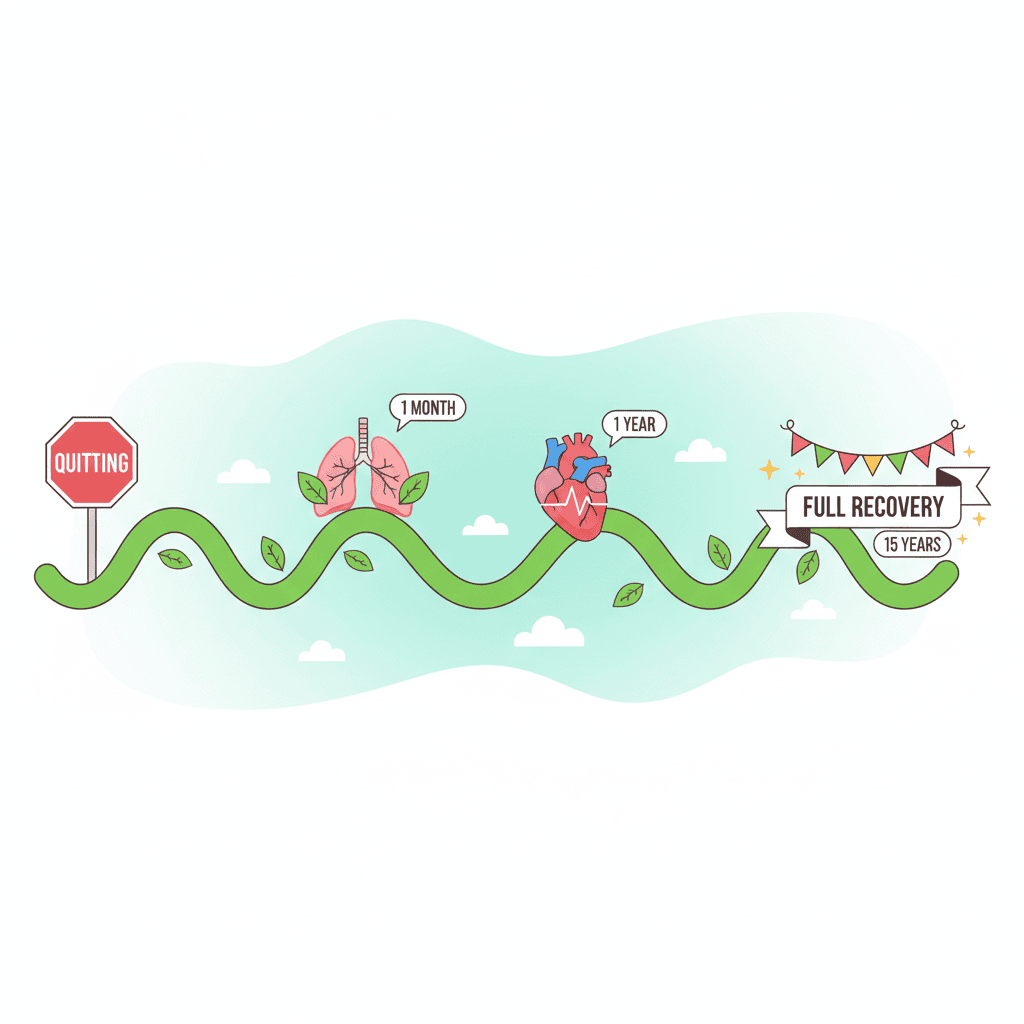
Here is the most direct answer reputable sources give: coughing and shortness of breath decrease within 1 to 12 months of quitting, according to both CDC and the American Cancer Society. For many people, a cough that picks up after quitting eases over weeks rather than months. For others, especially after many years of heavy smoking, it takes longer to settle.
There is no universal peak day, and no study gives a schedule that applies to everyone. What you can watch is the direction. A useful way to think about it:
The first weeks. Some people notice more throat clearing, a tickly cough, or more phlegm, often worst in the morning. Others notice nothing much. This is also the period when other early quit symptoms show up; our first week smoke-free guide covers the rest.
The following weeks and months. In a typical recovery, the cough gradually becomes less frequent and brings up less phlegm. Phlegm that gets lighter, thinner, and less frequent is a reassuring direction, not a guarantee.
Toward the end of the first year. For many people, the cough has faded or become an occasional morning clear. Lung function and breathing tend to keep improving; the NHS lists reductions in cough, wheezing, and other breathing problems among the longer-term benefits.
One important limit. None of this means you should wait months to see whether a cough goes away. The NHS cough guidance says a cough usually clears within 3 to 4 weeks and advises seeing a GP if it lasts more than three weeks. A cough that is still there six months or a year after quitting, or one that keeps getting worse, should be assessed. Tell the clinician when the cough began, including whether you had it before you stopped smoking.
What changes the course
Three things mostly explain why one person coughs for a couple of weeks and another for much longer.
How much and how long you smoked. Heavier and longer-term smoking usually means more mucus and more airway irritation to settle, so recovery can take longer and the cough can be more noticeable.
Existing airway disease. If smoking had already caused chronic bronchitis or COPD, or if you have asthma, the cough may not simply fade on its own. These conditions are treatable, and a quit attempt is a good moment to have them looked at.
Ongoing irritation and infections. Secondhand smoke, smoky or dusty workplaces, and fresh colds can all keep a cough going or bring it back. A new infection can make it seem as if your recovery has reversed when it has simply been interrupted.
What color is phlegm after quitting smoking?
This is one of the most searched questions about quitting, and the honest answer is that color is a clue, not a diagnosis. There is no reliable sequence from black to brown to yellow to clear, and the same cause can produce more than one color. Notice what you see, how long it has been happening, and what else has changed.
Clear or white. These colors are common with ordinary airway mucus and irritation. Clear phlegm does not, on its own, mean a persistent cough is harmless.
Yellow or green. These colors can appear with inflammation or a respiratory infection. They do not, on their own, prove a bacterial infection or mean you need antibiotics, and they do not prove your lungs are simply cleaning themselves either. Yellow or green phlegm together with a fever, feeling unwell, or breathlessness is a reason to get checked.
Brown, gray, or black. Many people who recently quit search for "coughing up tar". Inhaled particles are one possible explanation for darker phlegm, but dark phlegm can have other causes, and nobody can confirm it is old tar from how it looks. Report persistent, recurrent, or unexplained dark phlegm to a clinician rather than treating it as reassuring.
Red, pink, rust-colored, or blood-streaked. If you think there may be blood in your phlegm, get medical advice promptly. The NHS guidance on coughing up blood recommends an urgent GP appointment or NHS 111 for a few small spots or streaks of blood, and 999 or A&E for more than a few streaks, or for blood together with difficulty breathing, a very fast heartbeat, or chest or upper back pain.
The American Lung Association suggests reporting changes in the amount, color, or thickness of your mucus to your doctor. A short note or a description of what changed and when is more useful to them than a guess about what the color means.
When a cough is not just recovery
A cough that fits ordinary recovery tends to bring up mucus, ease gradually over time, and come without fever, blood, or worsening breathlessness. Anything outside that pattern deserves attention.
Book a routine GP appointment if:
- The cough lasts more than three weeks, keeps coming back, or is getting worse instead of easing.
- You have unexplained weight loss, night sweats, or persistent tiredness alongside the cough.
- You keep getting chest infections, or you notice wheezing or a lasting change in your usual cough.
- You have a weakened immune system, a long-term lung condition, or a smoking history you are worried about.
Get urgent help if:
- You cough up blood, even a little. Larger amounts of blood need emergency care.
- Your breathing is getting harder, especially with light activity.
- You have chest pain, particularly sharp pain or pain with breathing. Our guide to chest pain after quitting smoking explains why this always deserves a check.
- The cough is very bad or quickly getting worse, or you feel very unwell.
You do not have to work out whether a symptom is recovery, an infection, or a lung condition before you contact a clinician. Describe the symptom and the timing, and let them do the sorting. Many people find a doctor's visit after quitting reassuring rather than frightening.
A note on lung cancer screening
If you smoked heavily for many years, quitting is a good moment to ask about screening. The U.S. Preventive Services Task Force recommends yearly low-dose CT screening for adults aged 50 to 80 with a 20 pack-year smoking history who currently smoke or quit within the past 15 years, whether or not they have a cough. Screening rules differ between countries, so ask your own doctor what applies to you. For how risk falls after you stop, see our cancer risk after quitting timeline.
What helps with a cough after quitting
For a mild cough that is gradually easing, the aim is not to fight it but to make it more comfortable. These steps are low-risk and can help.
Drink enough fluid. The American Lung Association notes that staying hydrated keeps mucus thinner, which makes it easier to clear. Regular water or warm drinks through the day are enough. You do not need special "lung cleanse" drinks, and if you have been told to limit fluids, follow that advice.
Try a warm drink with honey and lemon. The NHS suggests hot lemon and honey, which can have a similar effect to cough syrup, although the evidence is limited. Honey can soothe a tickly throat at night. Never give honey to a baby under one year old.
Rest and take it easy. The NHS recommends rest for a cough. If your throat is sore, a saltwater gargle or simple painkillers such as paracetamol or ibuprofen, used as directed, may help with comfort. Our sore throat after quitting smoking guide has more on that.
Ask a pharmacist before buying cough medicine. A pharmacist can help you choose a syrup, lozenge, or medicine that suits your type of cough and any other medicines you take. Do not use leftover or borrowed antibiotics; the NHS notes that antibiotics are usually not needed for a cough unless there is a bacterial infection or a risk of complications.
Use warm, moist air with care. A warm shower can feel soothing. If you use a humidifier, follow the cleaning instructions, because a dirty one can make things worse. Avoid steam over a bowl of boiling water, as it can cause burns.
Try controlled coughing. The American Lung Association describes controlled coughing as a way to loosen mucus and help it move through the airways: a slow, deliberate cough can do more than a series of scratchy ones.
Keep away from smoke and other irritants. Smoke from cigarettes, cannabis, or a fireplace, strong fumes, and dusty air can all set off coughing fits. Going back to smoking is not a treatment for the cough, even if a cigarette seems to calm it briefly.
Move in a way that feels comfortable. Gentle walking can feel good and is part of rebuilding fitness; our guide to exercise after quitting smoking covers how to start. Do not push through chest pain, breathlessness, or feeling unwell, and follow any plan you already have for asthma or COPD.
Keep up your vaccines. The American Lung Association recommends staying current on flu and pneumonia vaccines to help prevent infections, which matters while your airways are recovering.
These measures can make you more comfortable. They do not replace a medical check when a cough lingers or warning signs appear.
When the cough makes you want a cigarette
A strange thing can happen in the first weeks: the cough feels so unpleasant that smoking starts to look like the cure, because "I never coughed like this when I smoked". That thought is common, and it is worth naming when it shows up. Smoking slowed the clearing system; it did not protect your lungs. If a craving hits during a coughing fit, our guide to managing nicotine cravings has quick techniques that work in the moment.
Keep a short record
A few notes can make an appointment much more productive: when you stopped smoking, when the cough started, whether it is dry or brings up phlegm, what color the phlegm is, whether you have seen any blood, and anything else you have noticed, such as fever, wheezing, or weight change. Include current medicines and any smoke or dust you are exposed to at work or at home.
Smoke Tracker keeps the date of your last cigarette and your smoke-free streak in one place, so you always know exactly how long it has been when a doctor asks. It cannot tell you what a phlegm color means or whether you need treatment. Use it as context for a clinician, and as a reminder that every smoke-free day gives your airways another day without fresh irritation.
For the wider timeline of benefits, see what happens when you quit smoking. There are good reasons to stay smoke-free even when a symptom needs attention.
A cough after quitting is common and often eases within weeks to months, with official sources putting the improvement in cough and breathlessness at 1 to 12 months. There is no required phlegm color and no guaranteed schedule. Keep going, make yourself comfortable, get a cough lasting more than three weeks checked, and treat blood, chest pain, or breathing difficulty as reasons to seek help.
Sources
- Mayo Clinic: coughing more after quitting smoking
- CDC: benefits of quitting smoking
- American Cancer Society: benefits of quitting smoking over time
- American Lung Association: mucus and the lungs
- NHS: cough
- NHS: coughing up blood
- NHS Better Health: benefits of quitting smoking
- U.S. Preventive Services Task Force: lung cancer screening
This article provides general information and does not replace medical advice, diagnosis, or treatment.
Common questions
- Is it normal to cough more after quitting smoking?
- Yes, many people notice more coughing or more phlegm for a while after they stop. Smoking slows the tiny hair-like cilia that move mucus out of your lungs, and as that system recovers, coughing can pick up. Others cough less straight away, and that is normal too. A cough that lasts more than three weeks, keeps getting worse, or comes with blood, chest pain, or breathlessness still needs a check.
- How long does smoker's cough last after quitting?
- There is no fixed date, but CDC and the American Cancer Society both say coughing and shortness of breath decrease within 1 to 12 months of quitting. A cough that is slowly easing, with less phlegm, is a reassuring direction. A cough that has lasted more than three weeks without improving, or one that started or changed after you quit, deserves a GP visit rather than more waiting.
- What color is phlegm after quitting smoking?
- It varies. Clear, white, yellow, green, gray, or brown phlegm can all appear, and there is no set order the colors move through. Inhaled particles are one possible reason for darker phlegm, but color alone cannot prove that tar is leaving your lungs or rule an infection in or out. Any red, pink, or rust-colored phlegm needs prompt medical advice.
- Is coughing up phlegm a sign that my lungs are healing?
- It can be part of recovery, but it is not proof of it, and you do not need to cough to heal. Infections, asthma, reflux, and smoking-related lung disease can also cause phlegm. Treat a steadily easing cough as a good sign, and treat a cough that persists or worsens as something to get checked.
- I quit six months or a year ago and still cough up phlegm. Is that normal?
- Some people take many months to settle, especially after heavy or long-term smoking. But a cough that has been going on for months is past the point where you should wait it out. The NHS advises seeing a GP for any cough lasting more than three weeks, so book an appointment and mention your smoking history and quit date.
This article is for informational purposes only and does not constitute medical advice. Health information is based on published research from organizations such as the CDC, WHO, and American Lung Association. Always consult a healthcare professional for personalized guidance on smoking cessation.