Most people picture quitting smoking as a test of willpower: white knuckles and a lot of suffering. That picture is out of date. Prescription medicines without nicotine work on the brain chemistry behind withdrawal and make a quit attempt more likely to last. The best known are Chantix (Champix in some countries) and Zyban, and they work in quite different ways.
If cold turkey did not stick, that is not a verdict on your character; you may simply have been fighting withdrawal with no help. This guide explains how varenicline and bupropion work, how they compare, their side effects, the alternatives, and what to ask your prescriber.
How do prescription quit-smoking medicines work?
Nicotine acts on the brain's reward system and releases dopamine. Over years of smoking the brain comes to expect that, and when nicotine stops you get the cravings, irritability, poor sleep and low mood of nicotine withdrawal. Our withdrawal timeline covers what that usually feels like.
There are two broad ways medicine can help. The first is nicotine replacement therapy (patches, gum, lozenges and similar products), which gives you nicotine without the smoke and is then reduced. The second, the focus here, uses non-nicotine prescription pills. The two main ones are varenicline (Chantix, Champix) and bupropion (Zyban). Both need a prescription, and both are started before your quit date, while you are still smoking.
What is Chantix (varenicline) and how does it work?
Varenicline does two jobs at once. It acts at the same nicotine receptors that cigarettes stimulate, partly switching them on, which takes the edge off cravings and withdrawal. At the same time it blocks nicotine's pleasant effects, so if you do smoke while taking it, the cigarette is less satisfying. MedlinePlus classes it as a smoking-cessation aid. It contains no nicotine and is not an antidepressant.
How it is usually taken. The CDC's varenicline guide describes a short build-up from a low dose in the first week and two ways to time it: start one week before your quit date, or start the medicine and set a quit date between 8 and 35 days later. Most people take it for 12 weeks, and MedlinePlus notes that people who have stopped smoking by then may be offered another 12 weeks. Follow your prescriber's schedule rather than copying someone else's dose.
Common side effects. Nausea is the one most people notice. In the EAGLES trial, a large study of about 8,000 smokers, about a quarter of people on varenicline reported nausea, and the Cochrane review describes it as mostly mild or moderate and usually clearing over time. The CDC advises taking it after food with water and asking about a lower dose if nausea persists. Vivid dreams and other sleep changes are also common; the CDC suggests discussing the evening dose if they bother you. If you are struggling with sleep after quitting, our insomnia guide has practical tips. Severe kidney problems can change the dose, so mention them before starting.
A rough first week does not mean the medicine has failed. Note what happened, when, and the dose, so your clinician has something specific to work with.
Is Chantix still available? The recall and generic varenicline
Short answer: the medicine is still prescribed, though the name on the box may differ. In 2021 Pfizer recalled Chantix in the US, first some lots and then, by September 2021, all lots, because they contained a nitrosamine impurity (N-nitroso-varenicline) above the acceptable level. The FDA told patients to keep taking their medicine until given a replacement, and said the benefits of stopping smoking outweigh the cancer risk from the impurity. The FDA later set an acceptable daily limit that newly manufactured varenicline for the US market should meet. In the UK, the NHS notes that varenicline, formerly available as Champix, is available again.
So if your prescription says varenicline, it is the same active ingredient people mean by Chantix or Champix, not a weaker treatment. Suppliers vary by country, so ask the pharmacist what is available rather than assuming a missing brand means you cannot get the medicine.
What is Zyban (bupropion) and how does it work?
Bupropion came to smoking cessation from depression treatment. MedlinePlus lists Wellbutrin, Wellbutrin SR and Wellbutrin XL as brands used for depression and Zyban as the brand used to help people stop smoking. So Zyban and Wellbutrin share an active ingredient, while Chantix is a different drug altogether. Rather than acting on nicotine receptors, it changes brain chemicals to reduce cravings and withdrawal symptoms, as the NHS puts it.
How it is usually taken. The CDC's bupropion guide says to start it one to two weeks before your quit date, with the dose increased after the first few days and the two daily doses taken at least eight hours apart. The usual course is 12 weeks. The CDC also notes that it may help delay weight gain after quitting and can help people who have depression.
Common side effects. Trouble sleeping and dry mouth are the ones people mention most, and the CDC also lists nausea and constipation. In EAGLES, insomnia was the most frequent side effect in the bupropion group, reported by about one in eight people. If sleep is a problem, ask your prescriber whether the timing of the second dose can change.
Who should not take it. Bupropion can cause seizures, so it is not used by people with a seizure disorder, current or previous anorexia or bulimia, or some situations involving abrupt withdrawal from alcohol or sedatives. The CDC adds people taking MAO inhibitors and advises limiting or avoiding alcohol during treatment. Other medicines matter too, which is why a prescriber needs your full history.
Low mood and worries about weight gain after quitting are worth raising, but neither alone should decide the choice.
Chantix vs Zyban: which is more effective?
On average, varenicline comes out ahead. The 2023 Cochrane review found that for every 100 people using varenicline, about 21 to 25 stopped smoking for at least six months, compared with about 18 in 100 using bupropion, 18 in 100 using a single form of nicotine replacement, and 20 in 100 using two or more forms of nicotine replacement together. The comparison with combination nicotine replacement was less certain and did not show a clear difference. EAGLES reached a similar conclusion: varenicline was more effective than placebo, the nicotine patch and bupropion, while bupropion and the patch both beat placebo.
A rough way to read that evidence:
- Most effective on average: varenicline, with combination nicotine replacement (patch plus gum or lozenge) not clearly different from it.
- Effective: bupropion, or a single form of nicotine replacement.
- Least effective: quitting with no medicine and no support.
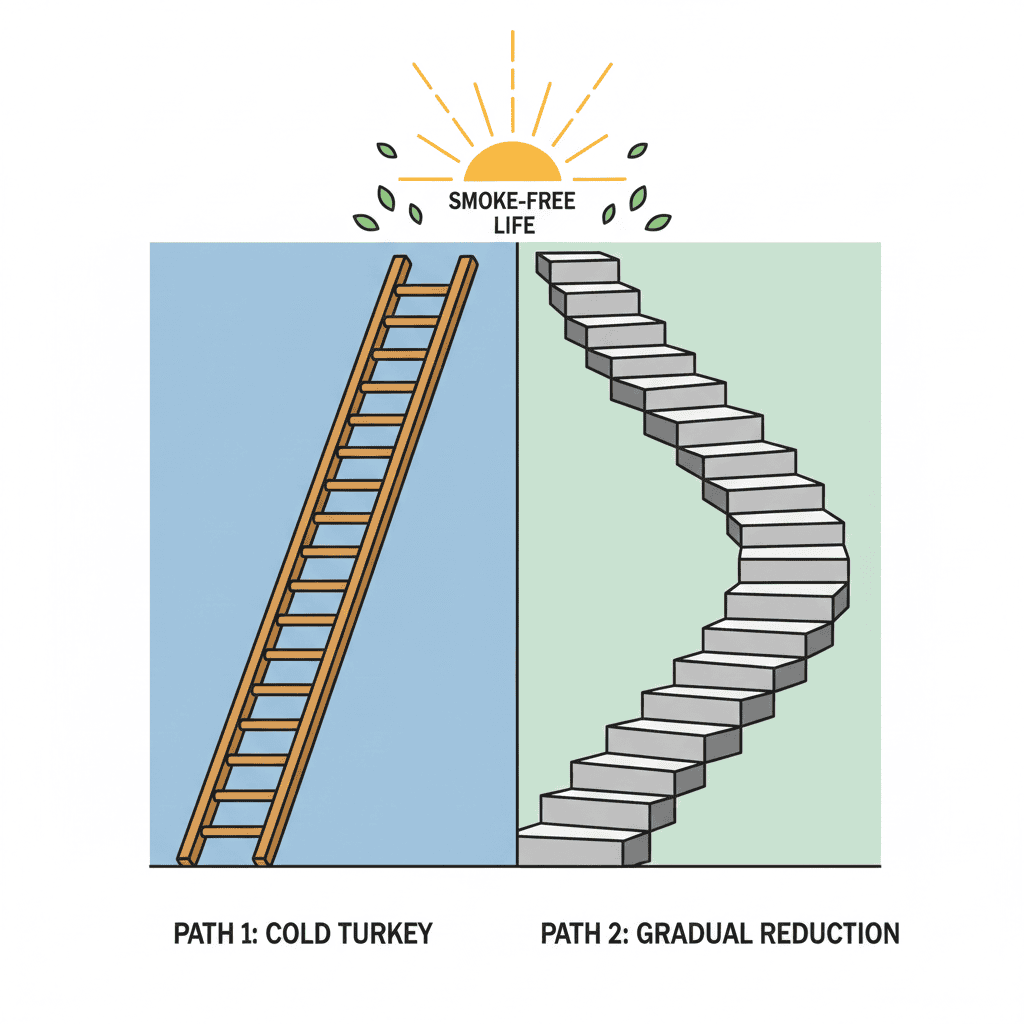
These are averages, not a promise about your result. The "best" medicine is the one that is safe for you and that you can stay on for the course. Nor is it a ladder where you must "fail" every lower step first. Still deciding how to quit? Our cold turkey vs gradual guide compares the approaches.
Side effects and safety: what changed and what did not
For years both medicines carried a boxed warning about serious mental health side effects. The FDA required a large safety trial, and EAGLES, published in The Lancet in 2016, did not show a significant increase in serious neuropsychiatric events with varenicline or bupropion compared with the nicotine patch or placebo. After that trial, the FDA removed the boxed warning about serious mental health side effects from the varenicline label, as an editorial in Addiction records, and also removed that language from the boxed warning on the bupropion label.
That is reassuring, not a guarantee. MedlinePlus and the CDC still advise contacting your doctor right away about depressed mood, agitation, hostility, suicidal thoughts or unusual behaviour on either medicine. Severe allergic symptoms or any immediate danger to your safety need urgent help. If you have a history of depression or anxiety, tell your prescriber first, and see our guide to low mood after quitting.
Who might each medicine suit?
There is no universal winner, but some patterns help shape the conversation with your doctor:
- Varenicline is often considered first by people who want the pill with the strongest average results. Kidney problems affect the dose.
- Bupropion may come up for someone with low mood, strong worries about weight gain, or who could not tolerate varenicline. Seizure risk or an eating disorder rules it out.
- Combination nicotine replacement suits people who prefer to keep nicotine in the picture while they taper.
Pregnancy changes the options, so raise it early; see our guide to quitting while pregnant. This decision is individual, and one to make with a clinician who knows your history.
Alternatives to varenicline
If varenicline caused side effects, is unavailable, or is not suitable for you, these are the real options. Remember that a generic is the same medicine, not an alternative.
Combination nicotine replacement therapy
A nicotine patch supplies a steady background level, while gum or lozenges handle cravings as they come. The CDC explains how to combine them and says that using two forms of nicotine replacement together is more likely to help than using one. The products still need to be used correctly, so ask about strength, timing and gum technique. Our patch, gum and lozenge guide covers the basics.
Bupropion
Bupropion may be an alternative after a review of its risks and interactions, but it is not appropriate for everyone who cannot use varenicline.
Cytisine (cytisinicline)
Cytisine works like varenicline, by blocking nicotine's effects in the brain. The NHS lists it alongside varenicline and bupropion, and Cochrane found no clear difference in quit rates between the two, though that evidence is of low certainty. Availability varies by country. Our cytisine guide has more context.
Prescriptions and combining medicines
The CDC says both varenicline and bupropion need a prescription, because someone has to check your history, other medicines and interactions first. Nicotine patches, gum and lozenges, by contrast, are sold without a prescription in many countries. Beyond patch plus gum or lozenge, the CDC suggests asking your doctor about other combinations; do not stack products on your own, and never double up Wellbutrin and Zyban, since they share an active ingredient.
Questions to settle before starting
Bring a complete medicine list, including supplements, and mention pregnancy, kidney disease, seizures, eating disorders, mood symptoms, and alcohol or sedative use. Then ask:
- Which product and formulation am I taking?
- When do I start, and what is my quit date?
- What if I miss a dose or smoke a cigarette?
- Which side effects mean I should stop and call you?
- When will we review whether the plan is working?
A slip does not mean the plan has failed; see what to do after a relapse.
Medicine is only half the plan
Here is what the prescription leaflet will not tell you: these medicines raise your odds, but they do not quit for you. CDC guidance on treating tobacco dependence recommends behavioural support alongside medication, and the CDC's bupropion guide adds that coaching, such as 1-800-QUIT-NOW in the US, improves success when combined with medicine. The pill eases the chemical pull; the plan handles the habits and triggers.
Start with your reliable triggers, like the morning coffee or the drive home, and decide in advance what you will do instead and who you can call if it gets hard. Our quit-smoking guide helps you organise those decisions.
Smoke Tracker records your smoke-free time and money saved while you follow your treatment plan, and the log can help you remember what to mention at your review. It cannot tell you which medicine is safe for you; that is your prescriber's job.
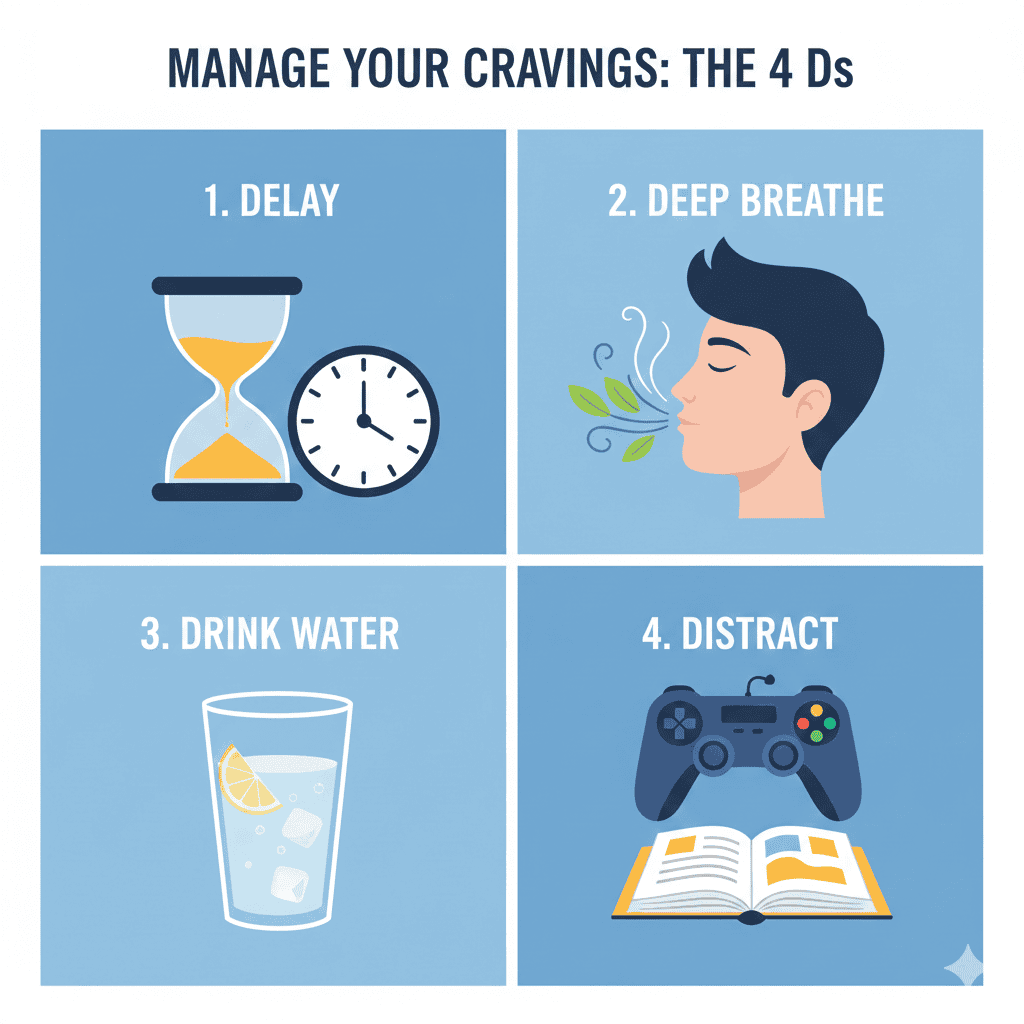
Medicine also does not switch off the sudden craving after a stressful call. Slow, comfortable breathing can help you ride out the urge, and an app like Flow Breath can guide the pace, as an optional aid rather than a substitute for treatment. Our craving-management guide has more practical options.
The bottom line
Varenicline (Chantix, Champix) helps more people quit on average than bupropion (Zyban), and generic varenicline is the same medicine. Bupropion, the same active ingredient as Wellbutrin, is a reasonable alternative for many people but is ruled out for anyone with seizure risk, and combination nicotine replacement is the other strong option. Choose with a professional who knows your history, start before your quit day, and pair the medicine with a practical plan. If willpower alone did not work before, the right tool plus the right habits deserves a turn.
This article is educational and does not replace medical advice. Varenicline and bupropion are prescription medicines with real risks and contraindications. Follow the prescribed treatment and consult a qualified professional before starting, stopping, switching or combining any quit-smoking medicine.
Sources
- Cochrane: Nicotine receptor partial agonists for smoking cessation (2023)
- Anthenelli RM, et al. Neuropsychiatric safety and efficacy of varenicline, bupropion, and nicotine patch (EAGLES). The Lancet, 2016
- FDA: Updates and press announcements on nitrosamine in varenicline (Chantix)
- The Food and Drug Administration and varenicline: should risk communication be improved? Addiction, 2017
- Trends in Incident Varenicline Prescribing Among Veterans Following the US FDA Drug Safety Warnings. J Clin Psychiatry, 2021 (boxed warning removed December 2016)
- CDC: How to use varenicline
- CDC: How to use bupropion SR
- CDC: How to combine quit-smoking medicines
- CDC: Treating tobacco dependence in clinical settings
- MedlinePlus: Varenicline
- MedlinePlus: Bupropion
- NHS: Nicotine-free stop-smoking medicines
Common questions
- Is Chantix or Zyban more effective?
- On average, varenicline (Chantix) helps more people quit than bupropion (Zyban). A 2023 Cochrane review found that about 21 to 25 in 100 people stopped smoking with varenicline, compared with about 18 in 100 with bupropion, and the large EAGLES trial also found varenicline more effective than bupropion and the nicotine patch. That is an average, not a personal prediction: your health history and tolerance decide which suits you.
- What is an alternative to varenicline?
- The main alternatives are combination nicotine replacement therapy, such as a patch plus gum or lozenges, and bupropion when it is safe for you. In the Cochrane review, combination nicotine replacement did not clearly differ from varenicline. Cytisine (cytisinicline) works in a similar way to varenicline and is available in some countries, including the UK. A prescriber can say which option fits you.
- Is generic varenicline the same as Chantix? Is Chantix still available?
- Yes, varenicline is the active ingredient in Chantix (sold as Champix in some countries), so a generic varenicline product is the same medicine, not a different treatment. Pfizer recalled all lots of brand-name Chantix in the US in 2021 because of a nitrosamine impurity, and the FDA then set a limit that newly made varenicline must meet. Varenicline is prescribed again today, including as generics, so ask your pharmacist which product is available where you live.
- Is Chantix the same as Wellbutrin?
- No. Chantix is varenicline, a smoking-cessation medicine that acts on nicotine receptors, and it is not an antidepressant. Wellbutrin is bupropion, an antidepressant, and Zyban is the brand of bupropion used to help people stop smoking. Because Wellbutrin and Zyban share an active ingredient, they should not be taken together.
- Can I combine these medicines with nicotine replacement?
- A nicotine patch plus a short-acting product such as gum or a lozenge is an established combination, and the CDC says two forms of nicotine replacement together work better than one alone. Adding nicotine products to varenicline or bupropion, or combining the two prescriptions, is something to agree with your prescriber first rather than stacking products on your own.
This article is for informational purposes only and does not constitute medical advice. Health information is based on published research from organizations such as the CDC, WHO, and American Lung Association. Always consult a healthcare professional for personalized guidance on smoking cessation.