The Great American Smokeout falls on Thursday, November 19, 2026. The American Cancer Society holds it on the third Thursday of every November and invites people who smoke to use the day as a starting point. Its own wording is useful here: you do not have to stop smoking in one day, but you can start with day one.
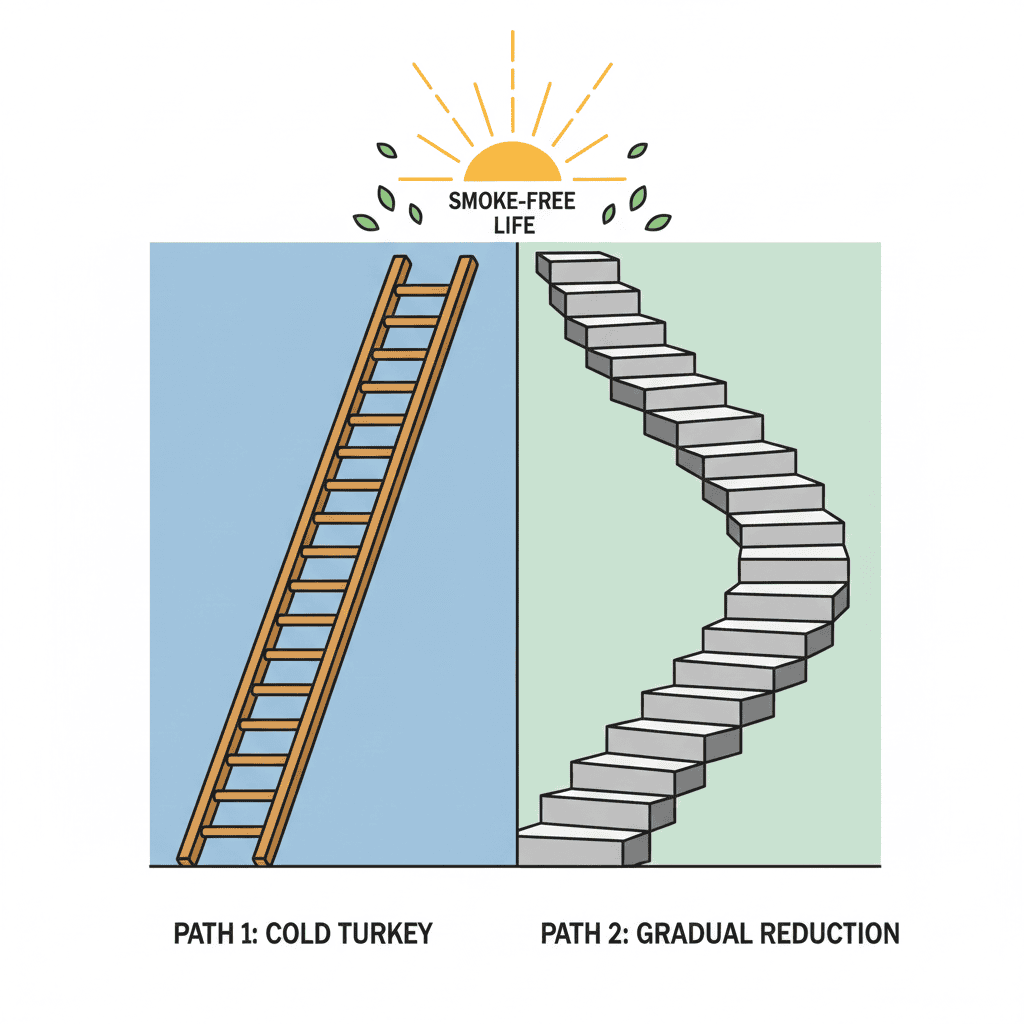
This guide is for people who want to turn that date into an actual quit day. It covers what to do in the twelve days you still have, how to get through the day itself, and what the first week after looks like. If you have not yet decided between stopping abruptly and cutting down first, read our comparison of cold turkey and gradual reduction first; this page assumes you have picked November 19 as the day you stop.
What the Great American Smokeout is
The idea started small. According to the ACS history page, a 1970 event in Randolph, Massachusetts asked people to give up cigarettes for a day and donate the money to a school scholarship fund. Minnesota held a "Don't Smoke Day" in 1974, and on November 18, 1976, the California Division of the American Cancer Society got nearly a million people to quit for the day. The ACS took the event nationwide in 1977.
The day is a shared date, not a treatment. Its value is that you are not quitting alone on an arbitrary Thursday: workplaces, clinics, and quitlines expect calls that week, and the people around you may already know what the date means.
Two ways to use the day
As a one-day trial. You go 24 hours without smoking and see what happens. You learn which hours are hardest and which situations trigger the urge. That is real information, and it costs little to collect.
As the start of a full quit. November 19 becomes day one, and the plan extends past Friday. This is the version the rest of the guide covers. If you choose the trial instead, still write down what you will do on November 20, because a trial without a next step tends to end with the first cigarette after it.
The week before: November 12 to 18
Use the days before the Smokeout for the things that are hard to arrange once cravings start.
- Line up support. The CDC's quitting guide recommends calling 1-800-QUIT-NOW to talk to a coach and make a quit plan, and says counseling plus medication gives you the best chance of quitting for good. Calling before the day means the plan is ready when you need it.
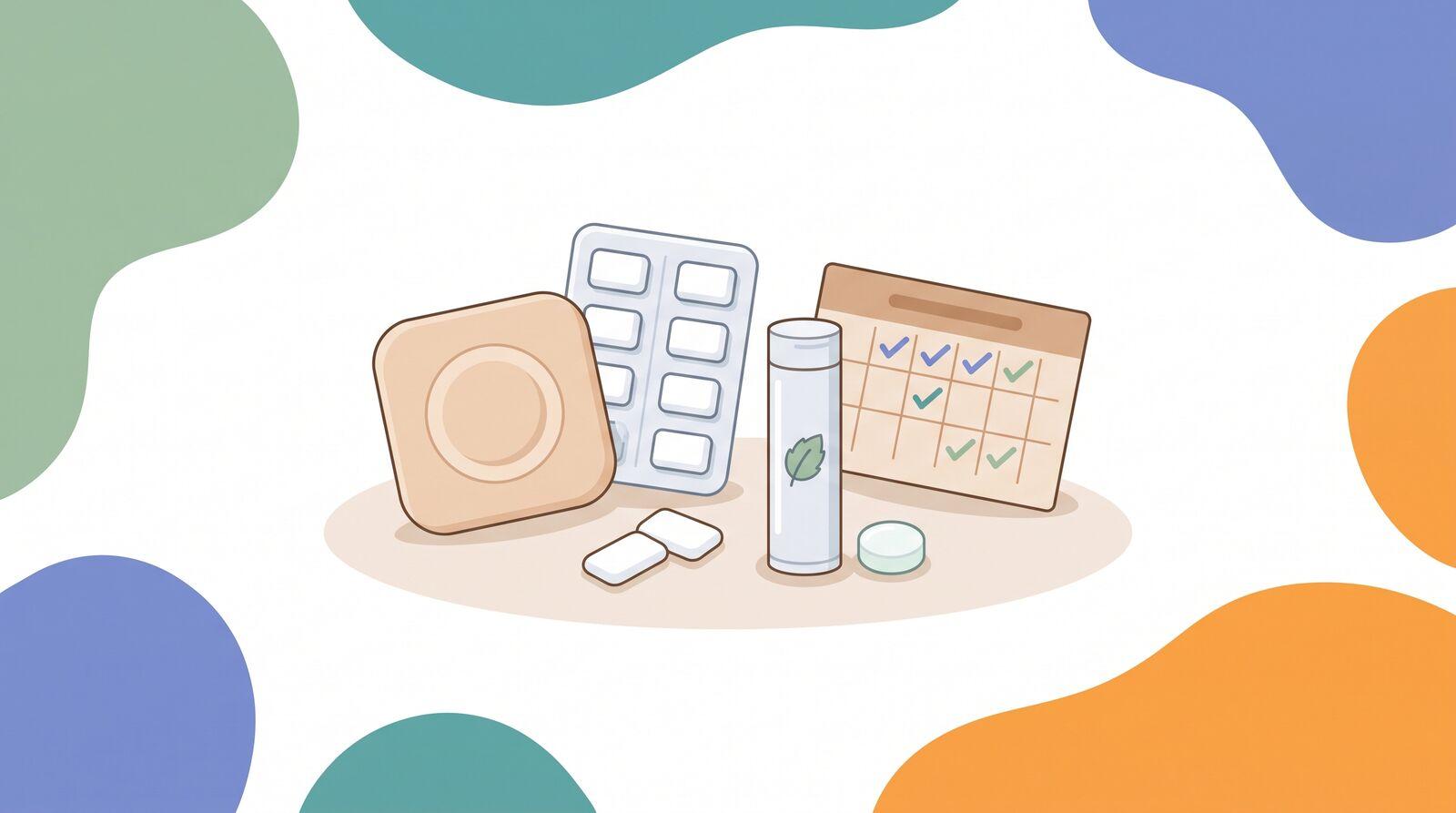
- Decide on medication. Over-the-counter options are the nicotine patch, gum, and lozenge; prescription options include varenicline and bupropion. The CDC notes that a long-acting patch combined with a short-acting gum or lozenge can raise your chances more than one form alone. Some prescription treatments start before the quit date: MedlinePlus describes starting varenicline one week before it. That is why this is a question for a doctor or pharmacist now, not on Thursday. Our patch, gum, and lozenge guide compares the forms.
- Map your cigarettes. For three or four days, note when and where you smoke. Most people find the same handful of moments: the first cigarette with coffee, the drive, the break at work, after meals, with alcohol. Each of those needs a plan for Thursday.
- Tell one or two people. Choose someone who will check in on Thursday evening and someone you can text when an urge hits.
- If you are tapering, keep the count falling toward zero on the 19th and log each cigarette honestly, so you can see whether it is really dropping.
The night before
On Wednesday, November 18, remove cigarettes, lighters, and ashtrays from your home, car, and bag. Wash the jacket you smoke in if you can. Put substitutes where the cigarettes were: water, sugar-free gum or mints, something to hold. If you are using a patch, have it next to your bed so it goes on when you wake up. Set your quit date in Smoke Tracker so the counter starts the moment you stop.
On the day
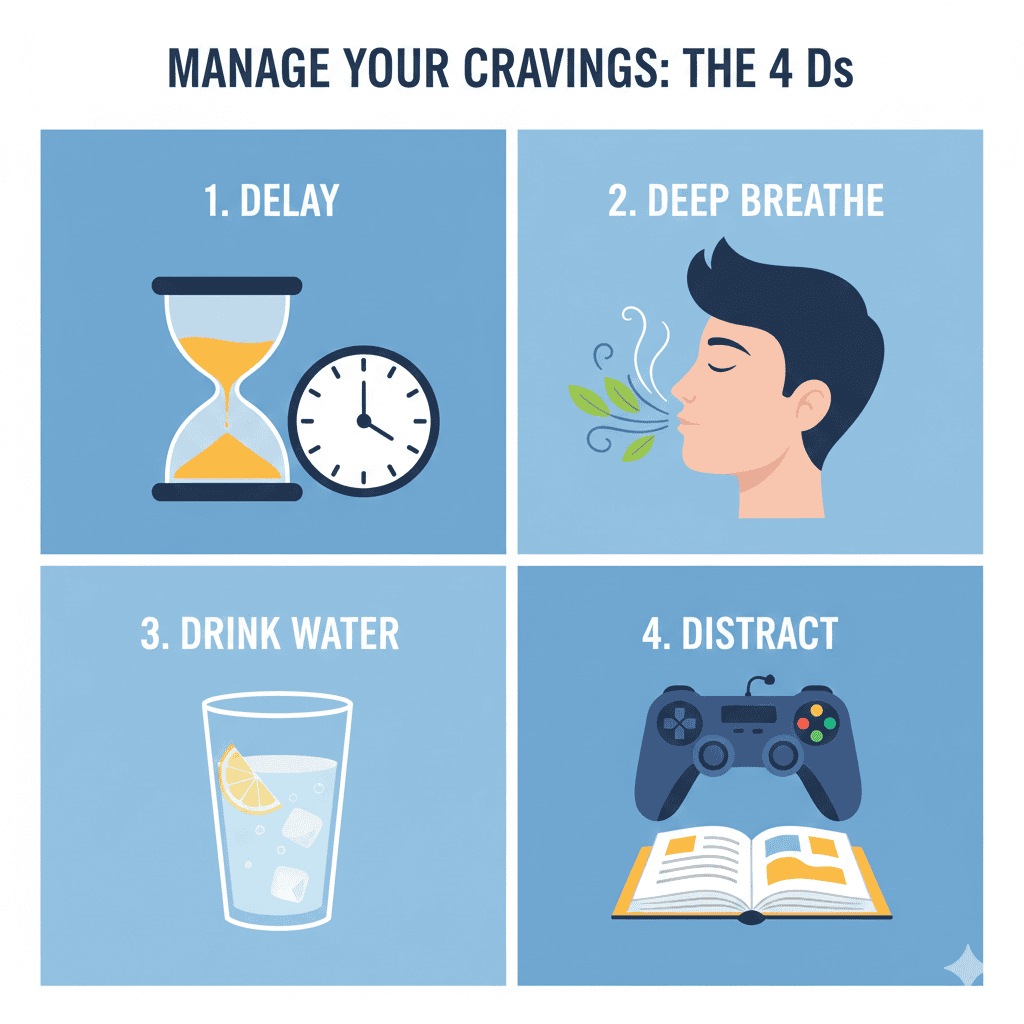
Plan the day around the moments you mapped. If your first cigarette comes with coffee, change the routine: drink it somewhere else, or switch to tea for a few days. If the drive to work is a trigger, choose a podcast before you start the engine. Cravings come in waves rather than as one long pull; our guide to managing nicotine cravings has techniques for getting through each one, such as delaying, a short walk, or slow breathing.
Short-acting nicotine replacement is meant for these moments. Use it as the product leaflet says rather than waiting until a craving has already taken over. If an urge is strong, call the quitline or the ACS line at 1-800-227-2345, which is open around the clock.
Expect the day to feel long. That is normal, and it does not mean the plan is failing.
The first week after
Thursday is one day. The week after is where most quit attempts are won or lost. Smokefree.gov's withdrawal page says withdrawal symptoms are strongest in the first few days or weeks, and that the worst of them usually last a few days to a couple of weeks before easing. Irritability, poor sleep, trouble concentrating, and stronger appetite are common. Our first week guide goes through them day by day.
Two things help most in that week. First, keep using the medication for the full course rather than stopping when the first day goes well. Second, plan for the weekend: social events and alcohol are frequent triggers, and Thanksgiving falls one week after the Smokeout, on November 26. Decide now how you will handle the gathering, who you will stand with, and what you will hold instead of a cigarette.
If you smoke after November 19
A cigarette on day two or day five does not cancel the quit. Note what led to it, what time it was, and who you were with, then go back to the plan rather than deciding the whole attempt is over. The CDC's advice is direct: keep trying and do not give up, even after previous attempts. Our guide on what to do after a relapse covers the next steps. And if November 19 itself does not work out, the date is not magic; pick another one soon and keep the preparation you have already done.
The Great American Smokeout gives you a shared date, Thursday, November 19, 2026. Use the week before to arrange support and medication, plan the specific hours when you usually smoke, clear the house the night before, and decide in advance what you will do on day two. The date starts the quit; the plan carries it through the first week.
Sources
- American Cancer Society. "Great American Smokeout." cancer.org
- American Cancer Society. "History of the Great American Smokeout." cancer.org
- Centers for Disease Control and Prevention. "How to Quit Smoking." cdc.gov
- MedlinePlus (U.S. National Library of Medicine). "Varenicline." medlineplus.gov
- Smokefree.gov (National Cancer Institute). "Managing Nicotine Withdrawal." smokefree.gov
Common questions
- When is the Great American Smokeout in 2026?
- Thursday, November 19, 2026. The American Cancer Society holds it every year on the third Thursday of November.
- Do I have to quit for good on the Smokeout?
- No. The American Cancer Society frames it as a starting point and says you do not have to stop smoking in one day. Some people use it as a 24-hour trial, others as the first day of a full quit. Either way, decide in advance what you will do on Friday, November 20.
- Should I cut down before November 19 or stop abruptly?
- Both routes can work when they lead to a fixed quit day. Our cold turkey vs. gradual guide covers the trial evidence. If you want to taper, start about two weeks before, which means around November 5; if that date has passed, stop on the day or pick a later date and taper toward it.
- What help is free on the day?
- In the US, 1-800-QUIT-NOW connects you to a free quitline coach, and the American Cancer Society runs a 24/7 line at 1-800-227-2345. The CDC says counseling plus medication gives you the best chance of quitting for good.
- What if I smoke on November 20?
- Treat it as information, not as failure. Note what triggered it, keep the quit date you set, and make the next cigarette a decision rather than a reflex. Our relapse guide walks through the next steps.
This article is for informational purposes only and does not constitute medical advice. Health information is based on published research from organizations such as the CDC, WHO, and American Lung Association. Always consult a healthcare professional for personalized guidance on smoking cessation.
Edited by Ivan Terekhin, drafted with AI tools, not medically reviewed. How we write and check: Editorial policy.