You quit smoking. You got through the physical withdrawal. You are supposed to feel better, healthier, and freer.
But instead, you just feel... bored.
Not ordinary boredom, either. A deep, gray, listless feeling where nothing seems exciting. Your morning coffee does not hit the same. Deep work feels impossible. Even your favorite hobbies feel like a chore.
Welcome to the Dopamine Gap.
This is not just "in your head." It is a very real, biological process happening inside your brain. Nicotine hijacked your reward system for years, and now that it is gone, your brain is scrambling to recalibrate. The good news? This state is temporary. If you frame it correctly, this period of "the blahs" is actually a powerful sign that your brain is healing. It is the ultimate dopamine detox.
Here is exactly what is happening under the hood, and how to support your biology through the recovery.
How Did Nicotine Hijack Your Brain's Joy System?
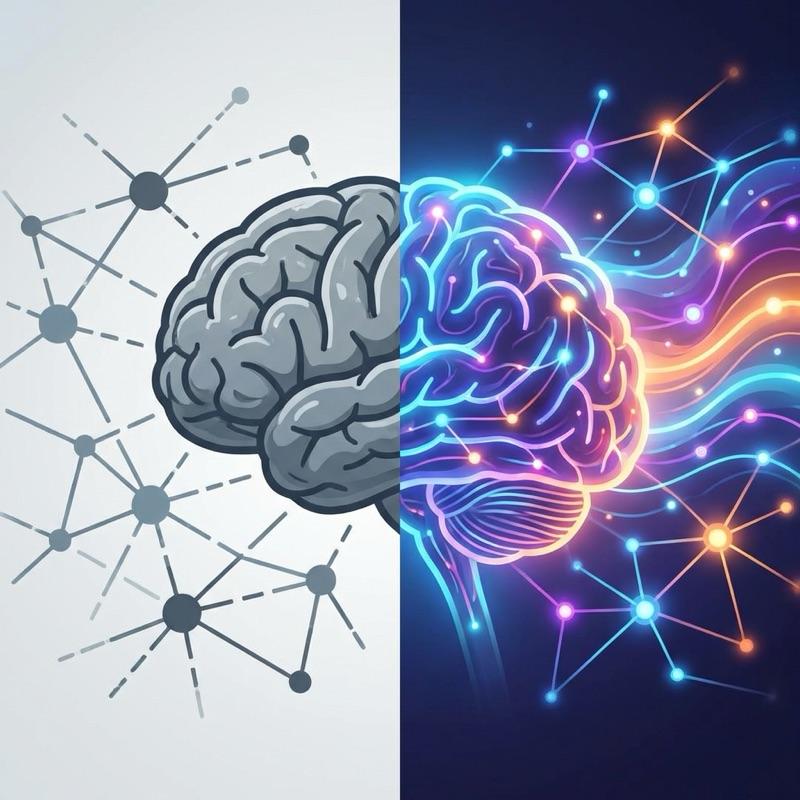
To understand why you feel so flat, you need to understand how nicotine operates at the molecular level. Nicotine is a close structural mimic of a neurotransmitter called acetylcholine. When you smoked, nicotine crossed the blood-brain barrier in roughly 10 seconds and bound to nicotinic acetylcholine receptors (nAChRs), triggering a massive, unnatural release of dopamine in the nucleus accumbens, the brain's core reward center. Normally, you earn dopamine hits as rewards for survival activities: eating nutritious food, accomplishing a task, social bonding. These natural hits are gentle waves. Nicotine delivers a tsunami. Because your brain wants to maintain balance, a process called homeostasis, it responds to chronic overstimulation by reducing baseline dopamine synthesis and pruning dopamine D2 receptors from synaptic membranes.
What Happens to Dopamine Receptors When You Smoke?
When nicotine floods your reward circuit repeatedly, your brain initiates a protective countermeasure called downregulation. Chronic smokers show significantly reduced dopamine D1 receptor availability in the striatum compared to non-smokers. Simultaneously, the number of nicotinic acetylcholine receptors actually increases, a process called upregulation, because the brain tries to compensate for nicotine constantly occupying these binding sites. Think of it like living next to a loud highway: your ears go numb to protect themselves. When you quit smoking, the highway noise stops abruptly. But your ears, your receptors, are still numbed, and your brain is still whispering with low dopamine production. The result is anhedonia: a clinical inability to feel pleasure from ordinary experiences.
What Does the Dopamine Recovery Timeline Look Like?
Understanding that this "gray" feeling is a mechanical repair process can be incredibly grounding. You are not "just a depressed person now." You are a healing system. Clinical research has mapped this recovery with PET brain imaging.
Stage 1: The Crash (Days 1 to 5)
- What it feels like: Irritability, intense cravings, brain fog.
- What is happening: Your brain is screaming for its usual fix. Dopamine levels in the nucleus accumbens plummet to well below baseline. The brain has not yet realized the supply is gone for good.
Stage 2: The Void (Weeks 2 to 4)
- What it feels like: Deep boredom, lack of motivation, emotional flatness. This is where many people relapse, not because they crave a cigarette, but because they want to feel something.
- What is happening: This is the critical healing phase. Your brain recognizes that nicotine is not returning and begins the slow work of upregulating (re-growing) dopamine receptors.
Stage 3: The Spark (Months 2 to 3)
- What it feels like: You laugh at a joke and really mean it. You finish a task and feel a spark of pride. Food starts tasting incredible.
- What is happening: Receptor density is returning toward normal levels. Natural dopamine production is ramping up significantly.
How Long Does It Take for Dopamine Receptors to Fully Normalize?
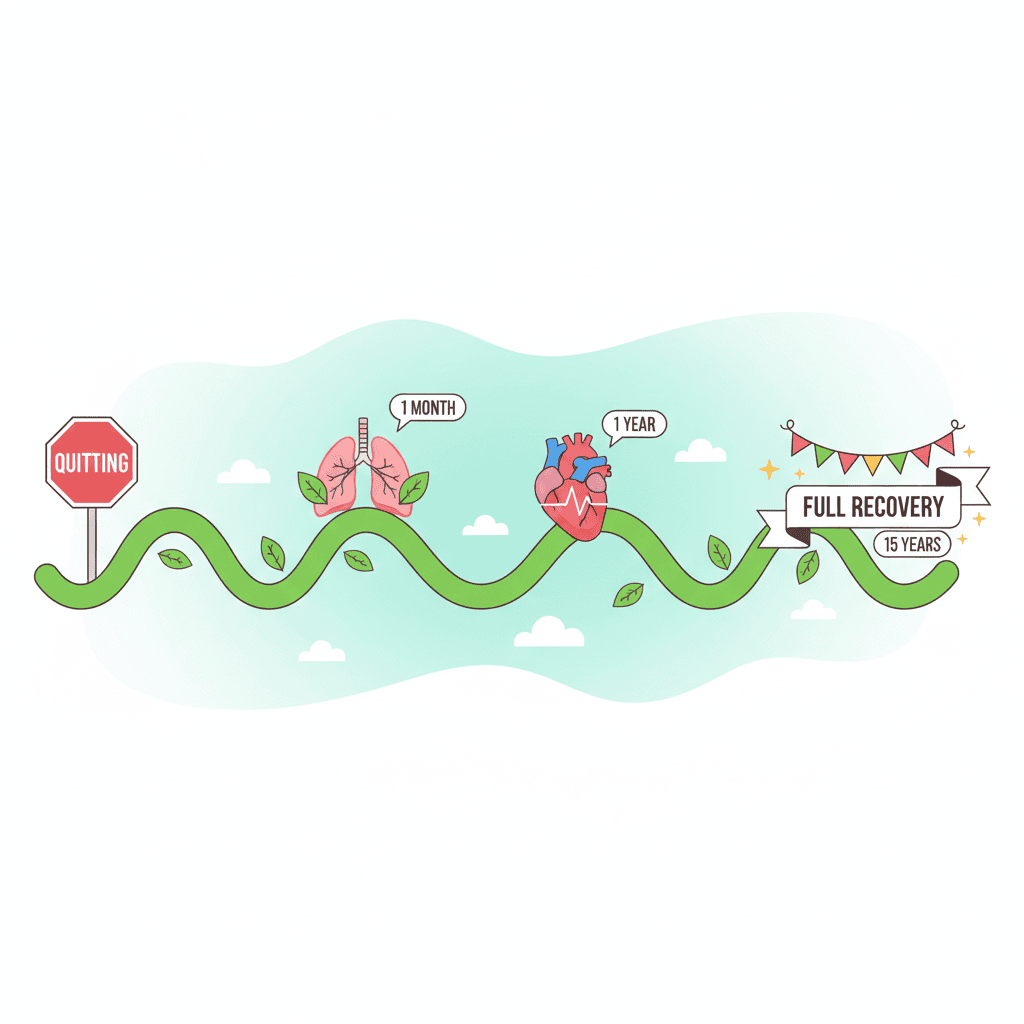
This is one of the most important questions ex-smokers ask, and neuroscience offers encouraging answers. PET imaging research has demonstrated that the elevated density of nicotinic acetylcholine receptors in smokers begins declining within the first week of abstinence and reaches levels statistically indistinguishable from non-smokers by approximately 6 to 12 weeks. Dopamine transporter availability also normalizes during this window. However, the subjective experience of full hedonic recovery, meaning the ability to feel deep pleasure and motivation from everyday activities, may take 3 to 6 months. Clinical research has found that D2 receptor availability in the striatum continued improving for up to 3 months post-cessation. The key insight is that healing is not linear. You may have wonderful days followed by flat ones, but the overall trajectory bends steadily upward.
Can You Speed Up Dopamine Receptor Recovery?
You cannot skip the healing process, but you can support it with evidence-based strategies. Instead of forcing happiness, focus on activities that naturally encourage receptor regrowth and healthy dopamine signaling.
1. Sunlight and Circadian Rhythm
Viewing morning sunlight within 30 minutes of waking triggers the release of cortisol, which primes dopamine synthesis for the entire day. Research has confirmed that light exposure modulates dopaminergic activity through retinal pathways connected to the ventral tegmental area. Aim for 10 to 15 minutes of direct outdoor light each morning, even on overcast days.
2. Cold Exposure
Controlled cold exposure, such as a cold shower or cold water immersion, has been shown to increase dopamine levels by up to 250% above baseline. Research has proposed cold hydrotherapy as an adjunctive treatment for depression based on its robust dopaminergic effects. Importantly, the dopamine elevation from cold exposure stays elevated for hours, unlike the sharp spike-and-crash cycle of nicotine.
3. Zone 2 Cardio
High-intensity exercise is valuable, but steady-state, low-intensity cardio, like a brisk walk or slow jog where you can still hold a conversation, creates a sustained release of endorphins and dopamine. Clinical research has found that regular aerobic exercise increases striatal dopamine D2 receptor availability, directly counteracting the deficit left by nicotine. This makes Zone 2 cardio an ideal tool during the "Void" phase.
4. Tyrosine-Rich Foods
Dopamine is synthesized from an amino acid called L-Tyrosine, which itself derives from phenylalanine. The enzyme tyrosine hydroxylase converts it into L-DOPA, the direct precursor to dopamine. Ensuring you consume adequate building blocks supports the recovery pipeline. Foods high in tyrosine include eggs, chicken, almonds, avocados, and bananas.
Why Should You Embrace the Boredom?
If you are in the thick of the "gray" period right now, stop fighting it. Stop thinking something is wrong with you. As Dr. Anna Lembke, Chief of the Stanford Addiction Medicine Dual Diagnosis Clinic and author of Dopamine Nation (2021), explains, the experience of boredom during recovery is not a failure state. It is a necessary recalibration. Lembke explains that allowing a period of reduced stimulation gives the brain the space to restore its dopamine set point, the baseline level around which pleasure and motivation oscillate. Every moment of boredom you endure is literally your brain re-sensitizing itself to the subtle joys of ordinary life. You are trading the cheap, synthetic spikes of nicotine for sustainable, deep satisfaction rooted in real experience. The flatness you feel today is the foundation for richer emotional texture tomorrow. Keep going. The color is coming back.
If you are tempted to fix the gray period with a strict "dopamine detox", our sister app Baseline looked at whether a dopamine detox actually works and which parts of the idea hold up.
Sources
- National Institute on Drug Abuse. "Tobacco, Nicotine, and E-Cigarettes." drugabuse.gov
- Centers for Disease Control and Prevention. "Benefits of Quitting Smoking Over Time." cdc.gov
- American Heart Association. "Why Quit Smoking?" heart.org
- World Health Organization. "Tobacco: Key Facts." who.int
- Mayo Clinic. "Nicotine Dependence." mayoclinic.org
This article is for informational purposes only and does not constitute medical advice. Health information is based on published research from organizations such as the CDC, WHO, and American Lung Association. Always consult a healthcare professional for personalized guidance on smoking cessation.