You stopped smoking on Sunday night and by Wednesday the cough you barely noticed for ten years has turned into something you cannot ignore. You are bringing up mucus you do not remember producing, hacking through phone calls, and quietly wondering whether the cigarettes were actually keeping you healthy. They were not. What you are experiencing is one of the most counterintuitive and reassuring patterns in all of smoking-cessation medicine: the smoker's cough gets noticeably worse before it gets better. It is also, almost without exception, a sign that the recovery is working exactly as it should. Here is the cellular reason your cough is louder this week than it was while you smoked, the timeline of how it resolves, and the small list of signs that mean it is something other than healing.
What Is Smoker's Cough Actually Trying to Do?
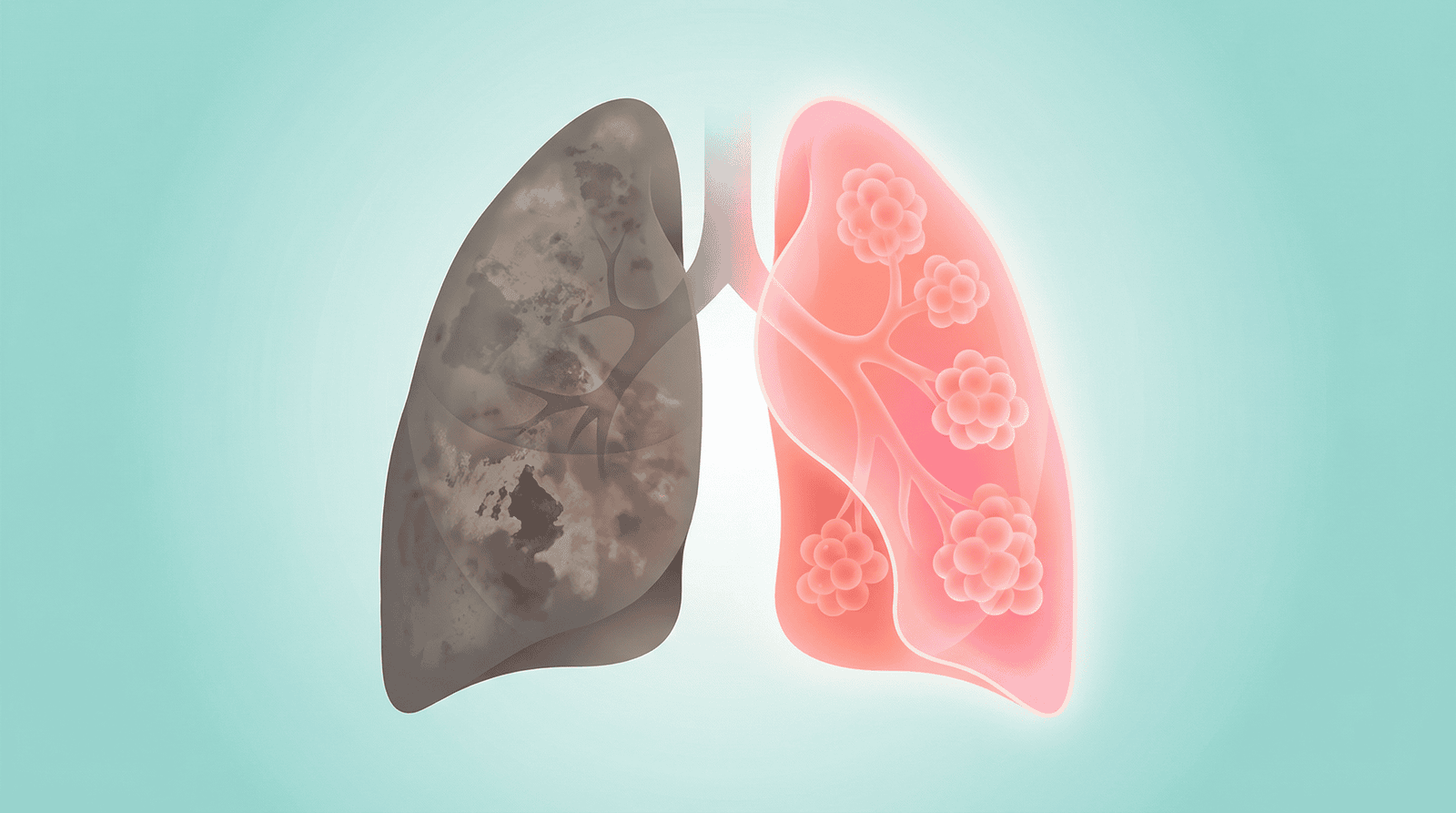
Smoker's cough is a productive cough, which means its job is to clear mucus and debris from the airways. To understand why it ramps up after quitting, you first need to know what the airway looks like in a smoker.
The bronchial tubes are lined with two kinds of cells working together. Goblet cells secrete mucus, a sticky layer that traps inhaled particles, microbes, and chemical irritants. Ciliated cells sit between them and grow thousands of hair-like projections called cilia, which beat in coordinated waves at roughly 1,000 strokes per minute. The mucus catches the dirt, the cilia sweep the mucus upward toward the throat, and you swallow most of it without noticing. This system is called the mucociliary escalator, and it is one of the cleanest engineering metaphors the human body offers.
Smoking breaks the system in two places at once. The thousands of chemicals in tobacco smoke paralyze and eventually destroy ciliated cells, so the escalator stalls. At the same time, the smoke directly irritates goblet cells, which respond by producing more mucus, often a thicker and stickier kind. The result is that smokers carry a chronic load of stagnant mucus in their airways. The body's only remaining clearance mechanism is the cough reflex itself, which is why active smokers cough periodically, especially in the morning, but cannot keep up with the volume being produced.
In other words, the smoker's cough during smoking is not a sign the lungs are working well. It is the only thing left when the escalator is broken.
Why Does Cough Get Worse in the First Days After Quitting?
The answer is that the escalator turns back on. Within roughly 48 to 72 hours of your last cigarette, ciliated cells begin to recover function. New cilia start to grow, and the surviving ones regain their coordinated beating. The system reactivates, and it has months of accumulated debris to move.
This is the moment the cough becomes more obvious. The mucus that has been sitting in the lower airways, which the broken escalator could not lift, is now being mobilized upward. It needs to come out somewhere, and the cough reflex is the only delivery mechanism for the final centimeters of the journey from upper airway to mouth.
The mucus coming up in the first few weeks often looks different from the small amount most smokers were used to. It is frequently thicker, sometimes yellow, gray, or brown, and occasionally streaked with small black particles. The discoloration is not infection. It is tar residue, dead cells, and oxidized debris that has been embedded in the airway lining for months or years and is now being escorted out. The body is taking out the trash, and the trash is exactly the color you would expect.
For more detail on the wider lung recovery process this cough is part of, see how your lungs heal after quitting smoking.
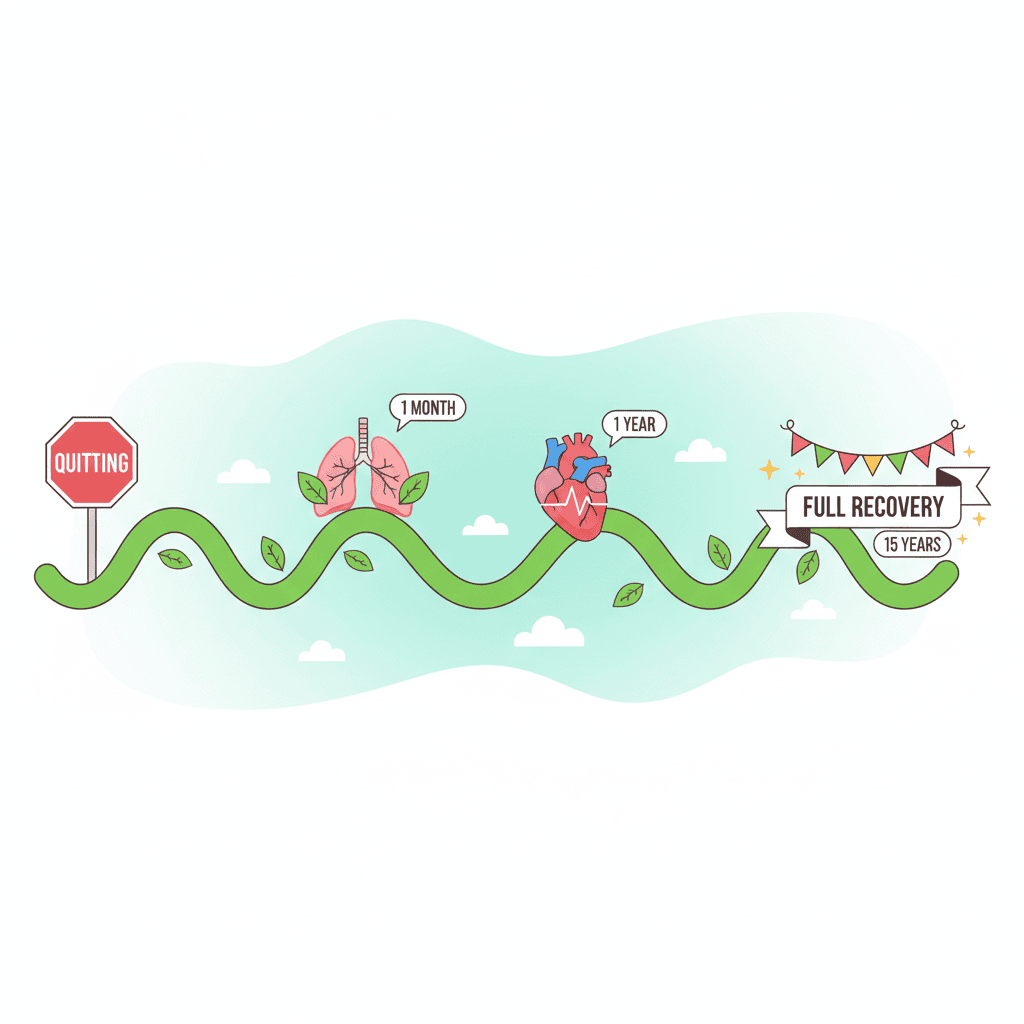
The Full Timeline of Smoker's Cough After Quitting
The trajectory is well-documented across cohort studies of recent quitters, and although individual variation is significant, the general shape is consistent.
Days 1 to 3. Cilia begin to regain function. Most quitters do not yet notice a change in cough. Some report a slight increase in throat clearing or a tickle that comes and goes.
Days 3 to 14. Peak productive cough for most people. This is the window where the cough is most disruptive: louder, more frequent, often worst in the morning, and accompanied by visibly more mucus than you remember producing. Many quitters at this stage worry they are getting sick or that the smoking gave them a hidden infection. In the absence of fever, blood, or progressive shortness of breath, the cough at this stage is almost always cilia doing their job.
Weeks 2 to 8. Cough frequency starts to decline as the bulk of the accumulated debris is cleared. Mucus color tends to lighten, often shifting from gray-brown to pale yellow to clear over the course of a few weeks. The morning cough often remains the most stubborn, since mucus pools overnight and needs to clear when you sit up.
Months 2 to 9. Continued gradual decline. By 3 months, the mucociliary escalator is operating at near non-smoker efficiency in most former smokers. Cough is typically much less frequent and much less productive, and many people stop noticing it day to day. By 9 months, the cilia regrowth process is essentially complete in former smokers without structural lung damage.
Months 9 to 12. Cough has resolved for most quitters who did not develop COPD during their smoking years. A small residual morning cough is common and not concerning.
Beyond 12 months. Persistent productive cough at this stage is no longer a healing cough and deserves medical evaluation, since it can indicate underlying chronic bronchitis, COPD, asthma, GERD, or in rare cases something else. The 12-month mark is the inflection point at which "this is healing" stops being the default answer.
For a wider view of which symptoms cluster in which weeks, our first week smoke-free guide maps the full early-quit symptom landscape.
Why Some Quitters Cough More Than Others
Three factors mostly explain the difference between someone who hacks for six weeks and someone who barely notices a change.
Years and intensity of smoking. Heavier and longer-term smokers accumulated more mucus and more cilia damage, so they have more debris to clear and a slower starting cilia population. A pack-a-day, ten-year smoker will typically have a more prominent cough recovery than a half-pack, three-year smoker.
Pre-existing airway inflammation. Smokers who had already developed chronic bronchitis (defined as a productive cough on most days for at least 3 months in 2 consecutive years) tend to have a longer and louder cough recovery, because the goblet cell hyperplasia that came with chronic bronchitis takes longer to normalize than cilia function does.
Hydration and air quality. Mucus viscosity is highly sensitive to hydration. Quitters drinking adequate water through the first 2 to 4 weeks have thinner mucus that clears more easily. Dry indoor air, particularly in heated winter homes or air-conditioned summer ones, thickens mucus and prolongs the cough. A humidifier set to 40 to 50 percent humidity often produces a noticeable change within a few days.
There is also a group of former smokers who report little to no increase in cough after quitting, sometimes none at all. This is normal too, particularly for shorter-term smokers and those with less mucus burden to begin with. The absence of a productive cough does not mean the lungs are not healing. It just means there was less to clear.
What Does the Mucus Color Mean?
This is one of the most-asked questions in cessation forums and one of the most over-interpreted. Here is what the colors actually indicate.
Clear or white mucus. Normal airway secretion. Common throughout the recovery and especially in the later weeks.
Yellow mucus. Often produced by the activity of immune cells (neutrophils) that have been working in the airway lining. In the post-quit context, this almost always reflects ongoing clearance rather than infection. Yellow mucus that comes and goes for weeks is part of the normal recovery pattern.
Gray, brown, or black-flecked mucus. Particulate residue from years of inhaled smoke and combustion products. Frequently dramatic in the first 2 weeks and usually fades by week 4. This is the most visually alarming variation, and also the most reassuring once you know what it is.
Green mucus. Can indicate higher concentrations of an enzyme called myeloperoxidase, which is released by neutrophils. In an otherwise healthy quitter with no fever and no worsening symptoms, transient green mucus is generally still part of the clearance process. Persistent green mucus combined with fever, fatigue, chest pain, or shortness of breath warrants medical evaluation, since it can also be a sign of bacterial bronchitis or pneumonia in some cases.
Blood-streaked or bright red mucus. This is the one that always warrants medical attention. Small streaks of blood can sometimes come from irritated upper airway tissue after frequent coughing, but any persistent or significant blood needs evaluation. Do not wait it out. Coughing up blood is the one symptom on this list that does not have a benign "just healing" explanation.
When Is a Cough Not a Healing Cough?
The post-quit recovery cough is well-defined. The features that distinguish it from something needing medical attention are equally well-defined.
A healing cough is productive (brings up mucus), decreasing over time (worst in weeks 1 to 4, then improving), not accompanied by fever or major systemic symptoms, and resolves by 6 to 12 months.
Symptoms that fall outside that pattern and deserve evaluation include:
- Cough lasting longer than 8 weeks without any sign of decline. Persistent or worsening cough past this window can indicate chronic bronchitis, asthma triggered or unmasked by smoking, GERD, postnasal drip, or in some cases medication side effects (ACE inhibitors are a common culprit).
- Coughing up blood. Any volume, any frequency, any color, gets evaluated. The most common cause after smoking cessation is benign airway irritation, but the differential includes infection, COPD exacerbation, and rarely lung cancer, and the differential is not one you settle from home.
- Progressive shortness of breath, especially with mild exertion. A healing cough does not come with worsening breathlessness. Increasing dyspnea raises the suspicion of underlying COPD that smoking had been masking.
- Fever above 38°C / 100.4°F, particularly if it persists for more than a couple of days. Bacterial or viral lower-respiratory infections in newly quit smokers are not uncommon, since the just-reactivating cilia are working at less than full capacity.
- Sharp chest pain with coughing. A healing cough can cause sore intercostal muscles, which is mild, dull, and bilateral. Localized, sharp, or pleuritic pain is different and gets checked.
- Unexplained weight loss, night sweats, or persistent fatigue alongside the cough. These are systemic flags that move the cough out of the post-quit recovery category into something that needs imaging and bloodwork.
Heavy long-term smokers, particularly those over 50, should also be aware that the post-quit period is exactly when a previously masked structural problem can first become visible. If you have smoked heavily for 20+ years, the U.S. Preventive Services Task Force currently recommends annual low-dose CT screening for lung cancer between ages 50 and 80, regardless of whether you have a cough. Quitting is the single best thing you can do for your lung cancer risk, and our cancer risk after quitting timeline lays out exactly how that risk falls over the years.
What Helps and What to Avoid
The instinct when a cough is loud and disruptive is to suppress it. With the post-quit cough, that instinct works against the recovery. You want the cough to be productive, because that is the whole point. The aim is not to silence it but to make it more efficient and more comfortable.
Hydrate aggressively. The single highest-leverage thing you can do. Water thins mucus, makes it easier to clear, and reduces the time you spend with each coughing fit. Two to three additional glasses of water a day during the first month is real, not decorative.
Add a humidifier if your air is dry. 40 to 50 percent indoor humidity is the comfort range for healing airways. A cheap cool-mist humidifier in the bedroom often produces noticeable overnight improvement.
Use steam from a hot shower. A 10-minute hot shower or 5 minutes of leaning over a bowl of hot water with a towel over your head can loosen mucus and make a single productive cough do the work of several scratchy ones.
Honey for nighttime irritation. A teaspoon of honey before bed has consistent evidence for reducing nighttime cough frequency in adults. It coats the back of the throat and reduces the tickle that prompts dry coughing fits. Not for children under 1 year.
Saltwater gargle. Useful for the throat irritation that often comes with frequent coughing. Half a teaspoon of salt in a cup of warm water, gargle and spit, two or three times a day.
Avoid most over-the-counter cough suppressants. Dextromethorphan (DXM) and similar suppressants are designed for dry, unproductive coughs. The post-quit cough is productive by design, and suppressing it slows clearance. Expectorants like guaifenesin, which thin mucus to make it easier to bring up, are the more appropriate choice if you need pharmacological help, though plain water does most of what guaifenesin does.
Avoid smoking anything, including cannabis. The cilia are mid-regrowth. Any combustion product paralyzes them again and resets the clock.
Avoid dry, dusty, or strong-fragrance environments where possible. The airways are unusually sensitive in the first 4 to 8 weeks. Smoke from a fireplace, heavy perfume, cleaning products, and outdoor wildfire smoke all provoke more coughing fits during this window than they will later.
How Can Smoke Tracker Help You Through the Cough?
The recovery cough is one of the strangest motivators in quitting: the louder it is, the more clearly your body is undoing the damage. The tracker is built to make that pattern legible rather than alarming.
- Streak Counter: The first 2 to 4 weeks are when the cough is loudest and the temptation to interpret it as failure is highest. Watching the number tick upward reframes the cough as proof of progress rather than proof of damage.
- Health Timeline: See exactly which lung-recovery milestone you are on. The cough peaking in week 2 is the visible expression of the cilia regrowth happening invisibly underneath, and seeing both side by side reduces the worry that something has gone wrong.
- Craving Log: A productive cough often triggers the misattribution "smoking calmed this." Logging the craving and rereading it a week later, when the cough has begun easing, is one of the cleanest ways to break that association.
- Money Saved: Use part of the savings on a decent humidifier and a few weeks of better hydration habits. Both pay back in cough comfort within days.
For the moments when the cough fits stack up, anxiety rises, and the urge to smoke surfaces, slow paced breathing can settle the autonomic system in roughly 90 seconds. We built Flow Breath for exactly that kind of short, situational regulation, and it pairs particularly well with the first month of quitting when the body is doing several recoveries in parallel.
The smoker's cough getting louder is not the betrayal it sometimes feels like in the first week. It is the sound of an escalator that had been stalled for years finally moving again. Each productive cough is one more piece of debris that is no longer in your lungs. The work is loud because the cleanup is real.
The cough is louder because the cilia are working. The cilia are working because the smoke is gone. Keep going.
Sources
- U.S. Department of Health and Human Services. (2020). "Smoking Cessation: A Report of the Surgeon General." cdc.gov
- Leopold, P. L., et al. (2009). "Smoking is associated with shortened airway cilia." PLoS One. pubmed.ncbi.nlm.nih.gov
- Tilley, A. E., Walters, M. S., Shaykhiev, R., and Crystal, R. G. (2015). "Cilia dysfunction in lung disease." Annual Review of Physiology. pubmed.ncbi.nlm.nih.gov
- American Lung Association. "Smoker's Cough: What It Is and How to Get Rid of It." lung.org
- Bhalla, D. K., et al. (2009). "Cigarette smoke, inflammation, and lung injury: a mechanistic perspective." Journal of Toxicology and Environmental Health. pubmed.ncbi.nlm.nih.gov
- Paul, I. M., et al. (2007). "Effect of honey, dextromethorphan, and no treatment on nocturnal cough and sleep quality for coughing children and their parents." Archives of Pediatrics and Adolescent Medicine. pubmed.ncbi.nlm.nih.gov
- U.S. Preventive Services Task Force. (2021). "Screening for Lung Cancer: Recommendation Statement." uspreventiveservicestaskforce.org
- Mannino, D. M. and Buist, A. S. (2007). "Global burden of COPD: risk factors, prevalence, and future trends." The Lancet. pubmed.ncbi.nlm.nih.gov
- NHS. "Quit smoking: stop smoking treatments." nhs.uk
This article is for informational purposes only and does not constitute medical advice. Health information is based on published research from organizations such as the CDC, WHO, and American Lung Association. Always consult a healthcare professional for personalized guidance on smoking cessation.