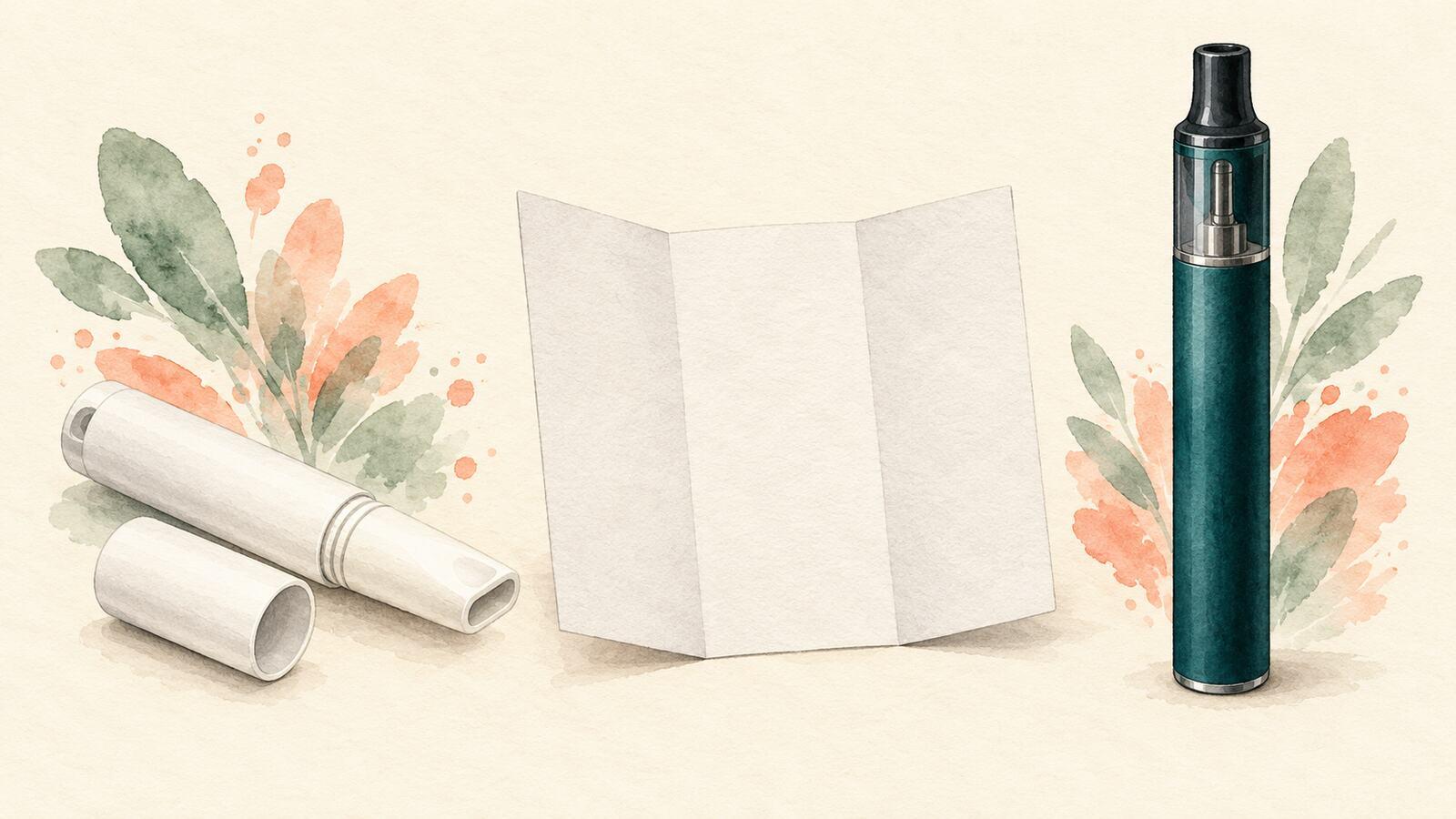
“Nicotine inhaler” can mean different devices in different countries. This article compares a licensed medicinal nicotine inhalator, using the UK Nicorette 15 mg product as its example, with a nicotine vape, also called an e-cigarette. Neither is an asthma inhaler. Getting the name right matters because a similar hand-to-mouth motion does not mean the same nicotine source, instructions or evidence.
The comparison is meant to help you ask better questions before choosing a quit tool. It cannot rank the long-term safety of every product or decide a nicotine schedule for you. Check the exact pack you can obtain where you live. If you are still smoking, the first goal is to replace cigarettes rather than to add another nicotine habit alongside them. Our vaping-versus-smoking guide deals with that separate comparison.
Three devices hidden behind one word
The UK Nicorette 15 mg Inhalator patient leaflet describes a mouthpiece holding a nicotine cartridge. The user draws air through it; nicotine is released and absorbed through the lining of the mouth. The professional product information says absorption is predominantly through the buccal mucosa and that minimal nicotine reaches the lungs for this product. Its name “inhalator” does not mean that nobody inhales or that nothing reaches the lungs. Follow the illustrated instructions for your actual medicinal device.
A nicotine vape is an electronic device that heats e-liquid into an aerosol inhaled by the user, as the NHS vaping guide explains. Devices and liquids vary, so the nicotine amount and experience cannot be inferred from the word vape alone. It is not the same cartridge-and-mouthpiece product as the UK medicinal inhalator.
An asthma inhaler delivers medicine for airway disease. According to the NHS asthma guidance, some inhalers prevent symptoms and others relieve them under an asthma care plan. The medicinal nicotine inhalator treats nicotine dependence, not an asthma attack. If someone asks for an “inhaler” at a pharmacy, naming the purpose and exact product avoids a potentially serious mix-up.
Compare the device you actually mean
Use this table as a product-label worksheet, not a safety ranking. The inhalator column refers to the UK Nicorette 15 mg Inhalator; a different country's medicinal product can have a different label. The vape column describes the NHS category, not one universal device.
| Question | UK medicinal nicotine inhalator | Nicotine vape | Asthma inhaler |
|---|---|---|---|
| What produces the dose? | Air drawn through a nicotine cartridge in a mouthpiece releases nicotine; the UK label says it is absorbed mainly in the mouth. | A powered device heats an e-liquid to produce an inhaled nicotine aerosol; liquid and device characteristics vary. | A prescribed or otherwise indicated respiratory medicine is delivered according to the person's asthma plan; it is not nicotine replacement. |
| What is controlled by the user? | Cartridge choice and puff pattern follow the specific medicine leaflet. “15 mg” names cartridge content, not the amount absorbed from one puff. | Device, liquid strength and puff pattern can vary; do not treat a label concentration as a fixed absorbed dose. | Product and technique follow the clinician's asthma instructions, not a quit-smoking schedule. |
| Which instructions and oversight apply? | UK medicine leaflet and SmPC for this licensed NRT product. Read precautions, cartridge handling and disposal. | UK vape product rules and NHS quit guidance differ from a medicine leaflet; the NHS says no vape has been licensed there as a stop-smoking medicine. Check current local rules. | Its medicine label and asthma action plan govern use. Do not swap it for a nicotine product. |
| What should you ask before choosing? | Does the mouthpiece/cartridge routine fit your quit plan and any relevant health conditions? Can a pharmacist check your exact pack? | Does the chosen device and liquid help you move off cigarettes, and who can advise on use and eventual stopping? | Are you seeking relief from breathing symptoms? Follow your asthma plan and seek medical advice, not this comparison. |
The row about control is not an invitation to calculate equivalent puffs. The inhalator's 15 mg is cartridge content. The professional information says nicotine uptake varies with use and conditions, and part of its pharmacokinetic discussion draws on an earlier 10 mg inhalator. A vape's liquid strength, heater and puff pattern also vary. There is no reliable cross-device conversion in the labels used here. If someone offers a neat “one cartridge equals one vape pod” rule, ask what product and measured absorbed dose support it.
What the medicinal inhalator label can tell you
The UK Nicorette leaflet calls the inhalator a nicotine-replacement therapy (NRT) product for cravings and withdrawal during stopping or reducing smoking or vaping. It shows how to assemble the mouthpiece, insert a cartridge and use the device. These are medicine-specific instructions. The leaflet also lists local effects such as throat irritation, sore mouth, cough, hiccups and nausea, and advises speaking with a health professional about relevant medical conditions. It treats child access to cartridges as a serious hazard.
The SmPC reports that mouth or throat irritation and cough can occur early and that use patterns differ between people. It does not turn the product into an asthma reliever, and it does not establish that every device called a nicotine inhaler elsewhere works identically. If you have a long-term respiratory or throat condition, the UK leaflet specifically calls for advice before use. For bothersome effects, the mouth-spray side-effect guide is a reminder that oral nicotine products have their own labels and techniques; a spray instruction must not be transferred to a cartridge inhalator.
Use the current leaflet supplied with your medicine for eligibility, technique and dose. This article does not repeat its cartridge schedule because the available product, age rules and instructions vary by place and may change. A pharmacist can check the actual pack and your other nicotine sources. The patch, gum and lozenge guide covers other licensed NRT forms if a mouthpiece is not a good fit.
What the vape evidence does and does not answer
The NHS vaping guide says nicotine vaping is less harmful than smoking, but is not risk-free and its long-term effects are not fully known. Vaping avoids burning tobacco; it still exposes users to an aerosol. The NHS currently says no vape has been licensed as a stop-smoking medicine in the UK, although vapes are subject to product rules and some local stop-smoking services may provide them. That UK status must not be presented as a worldwide rule.
The current Cochrane living review, updated with evidence through 1 January 2026, finds that nicotine e-cigarettes help more people stop smoking for at least six months than NRT as a comparator class. Its NRT groups are not a clean head-to-head trial of the UK Nicorette 15 mg Inhalator against a particular vape. The review also says evidence about unwanted effects may change as more data arrive. A quit-rate result cannot answer which of these two specific devices is safer over decades.
This is the central distinction in the decision. The evidence supports nicotine vapes as a real cessation option for adults who smoke, and the inhalator is a licensed NRT medicine with its own instructions. It does not support a confident universal winner for every person's preferences, medical history, location and long-term exposure. Avoid the opposite unsupported claim that vaping is as harmful as continued smoking. If you do choose a vape to quit cigarettes, the NHS emphasizes making a complete switch for the full benefit rather than continuing to smoke alongside it.
A product-label and quit-plan record
Before asking a pharmacist or stop-smoking service to compare options, write down six facts. This is a hypothetical decision record, not a dosing worksheet:
- Current use: whether you smoke cigarettes, vape, use NRT or combine them, and what you want to stop first.
- Exact products: photo or name of the inhalator cartridge and leaflet, or the vape device and liquid label. Include country because rules differ.
- Reason for considering a change: cravings, hand-to-mouth routine, side effects, device effort or a previous quit attempt.
- Health context: relevant respiratory or throat disease, pregnancy or breastfeeding, other medicines and anything the product leaflet asks you to discuss.
- Practical constraint: where you can obtain support, whether you can follow the exact device instructions, and safe storage around children.
- Question for the professional: which product fits the goal, how to avoid continued cigarette use, and how to review the plan if it does not work.
For example, “I smoke and want to replace cigarettes; I am comparing the UK Nicorette 15 mg Inhalator with a specific rechargeable vape, and I have a chronic throat problem” gives a pharmacist a useful starting point. It does not tell them which option to pick. Smoke Tracker can hold your quit date and a short note about cravings or cigarette use; it cannot determine dose, product safety or the cause of a symptom.
Keep nicotine cartridges and liquids away from children and pets. Read the disposal and charging instructions for the actual device, rather than applying one device's steps to another. If breathing symptoms are severe or worsening, use your asthma plan if you have one and seek appropriate medical care; a nicotine inhalator is not a rescue inhaler.
Frequently asked questions
Is a nicotine inhalator just a vape without a battery? No. The UK medicinal example uses a nicotine cartridge and mouthpiece, with absorption mainly through the mouth lining. A vape heats e-liquid into an inhaled aerosol. Their labels, regulation and use steps differ.
Does the inhalator send nicotine into the lungs? The UK Nicorette SmPC says minimal nicotine reaches the lungs and most is absorbed through the mouth lining. It does not say none reaches the lungs. Do not generalize this label to every device called an inhaler.
Which one is safer long term? No study has directly compared the long-term safety of these specific products, so there is no direct answer. The NHS says vaping is less harmful than smoking but not risk-free, and long-term vaping effects are not fully known. The cessation trials compare vapes with mixed NRT products, not this exact pair's lifetime safety.
Does a vape work better for quitting? Current Cochrane evidence finds higher six-month quit rates for nicotine e-cigarettes than NRT as a group. That result does not isolate the UK 15 mg inhalator or guarantee an individual outcome. A quit adviser can help apply it to your situation.
Can I use a nicotine inhalator for wheezing? No. It treats nicotine dependence, not asthma or an acute breathing problem. Use your prescribed asthma plan and seek medical advice for breathing symptoms.
This article is for informational purposes only and does not constitute medical advice. Health information is based on published research from organizations such as the CDC, WHO, and American Lung Association. Always consult a healthcare professional for personalized guidance on smoking cessation.
Edited by Ivan Terekhin, drafted with AI tools, not medically reviewed. How we write and check: Editorial policy.