The debate rages on: is vaping the savior of smokers, or a new public health crisis? If you're trying to quit smoking, switching to a vape can feel like a lifeline. It smells better, costs less initially, and doesn't fill your lungs with tar. But is it actually "safe"? Or are you just trading one set of chains for another? Let's cut through the marketing smoke and look at the evidence.
How Do the Chemicals in Cigarettes Compare to Vape Ingredients?
Combustible cigarettes are, by any measure, chemical disasters. Cigarette smoke contains more than 7,000 chemicals, of which at least 70 are known carcinogens. These include formaldehyde, benzene, arsenic, lead, and hydrogen cyanide. The combustion process itself is the primary culprit: burning tobacco at 600-900°C generates tar, carbon monoxide, and thousands of toxic byproducts that accumulate in the body over time. Vape liquids, by contrast, typically contain just four core ingredients: propylene glycol, vegetable glycerin, nicotine, and flavorings. Because e-cigarettes heat liquid rather than burn plant matter, they avoid most combustion-related toxins. However, vape aerosol is not harmless "water vapor." It contains ultrafine particles, volatile organic compounds, and heavy metals like nickel, tin, and lead that leach from heated coils into every breath. Fewer chemicals does not equal zero risk.
What Does Public Health England Say About Relative Harm?
The most widely cited statistic in the vaping debate comes from a 2015 Public Health England (PHE) report, which concluded that e-cigarettes are roughly 95% less harmful than combustible tobacco. The UK's health services have since adopted this position, actively promoting vaping as a harm-reduction tool for adult smokers who cannot quit through other means. This stance is notably more permissive than positions held by health authorities in the United States or Australia. Critics, including researchers published in The Lancet, have argued that the 95% figure was derived from an expert panel rather than long-term clinical data, and that it may create a false sense of security. UK medical authorities support the general direction, noting that the hazard from long-term vapor inhalation is unlikely to exceed 5% of that from smoking. Still, "less harmful" is not a synonym for "safe," and the full picture requires decades of follow-up data.
What Was the EVALI Crisis, and What Did It Reveal?
In 2019, federal health authorities identified a nationwide outbreak of e-cigarette or vaping product use-associated lung injury, known as EVALI. Over 2,800 hospitalizations and 68 deaths were recorded across the United States. Investigations by the CDC and the FDA traced the majority of cases to vitamin E acetate, an additive found in black-market THC cartridges. While most commercial nicotine e-liquids were not directly implicated, the crisis exposed a critical flaw: the vaping market remains poorly regulated, and consumers often cannot verify what their devices actually contain. The EVALI crisis demonstrated how quickly unregulated inhalation products can cause severe, sometimes fatal, lung damage. Even after the acute outbreak subsided, it left a lasting lesson: the absence of combustion does not guarantee respiratory safety, and supply-chain transparency matters enormously for any inhaled product.
Why Do So Many Vapers Become Dual Users?
One of the most concerning patterns identified in tobacco research is dual use, the simultaneous use of both cigarettes and e-cigarettes. Research has found that roughly 40% of adult e-cigarette users in the United States also continued to smoke conventional cigarettes. The logic seems straightforward: people vape in places where smoking is banned and smoke when they have the opportunity. However, the Population Assessment of Tobacco and Health (PATH) study, found that dual users may actually face comparable cardiovascular risk to exclusive smokers because there is no safe threshold for cigarette exposure. In practical terms, adding a vape on top of continued smoking does not reduce harm; it increases total nicotine intake and extends the hours per day that the body is exposed to toxic substances.
Does Vaping Act as a Gateway to Smoking for Young People?
The "gateway effect" is one of the most debated topics in nicotine research. A meta-analysis encompassing over 44,000 participants found that adolescents who used e-cigarettes were 3.5 times more likely to subsequently try combustible cigarettes compared to peers who had never vaped. A landmark 2018 report reached a similar conclusion, stating that there is "substantial evidence" that e-cigarette use among youth increases the risk of ever trying conventional cigarettes. Youth vaping has been called an "epidemic," with researchers noting that flavored products and sleek device designs specifically appeal to teenagers. While correlation does not prove causation, the consistency of findings across multiple longitudinal studies has led major health organizations to recommend strict regulation of e-cigarette marketing and sales to minors.
Is Nicotine Addiction from Vaping the Same as from Cigarettes?
Many people assume that because vaping delivers "just nicotine," the addiction must be milder. In reality, modern pod-based devices using nicotine salts can deliver nicotine to the brain as rapidly as combustible cigarettes, according to recent research. Nicotine salts have a lower pH than traditional freebase nicotine, which eliminates the harsh throat hit and allows users to inhale far higher concentrations without discomfort. A single JUUL pod, for example, contains roughly the same amount of nicotine as an entire pack of 20 cigarettes. Research confirms that nicotine, regardless of delivery method, alters brain chemistry by flooding dopamine receptors, creating dependence that is notoriously difficult to break. For adolescents, whose brains are still developing, this process is even more pronounced. In short, the addiction is not lighter because the device looks different.
Why Doesn't the FDA Endorse Vaping as a Proven Cessation Method?
Despite marketing claims, the U.S. Food and Drug Administration has not approved any e-cigarette as a smoking cessation device. The FDA's Center for Tobacco Products has stated that while some smokers may have successfully switched, the current body of evidence does not meet the rigorous standards required for cessation-aid approval. FDA-approved cessation tools, including nicotine replacement therapies (patches, gum, lozenges), bupropion, and varenicline, have undergone extensive randomized controlled trials demonstrating both efficacy and safety. A Cochrane Review did find moderate-certainty evidence that e-cigarettes with nicotine help smokers quit at higher rates than traditional nicotine replacement, but the authors noted that long-term safety data remains limited. Clinical guidance recommends that clinicians advise patients to use FDA-approved methods first and consider e-cigarettes only as a last resort, with a clear plan to discontinue vaping after the transition.
What Are the Long-Term Health Risks We Still Don't Understand?
Commercial e-cigarettes have been widely available for roughly 15 years, which means there is simply no 30- or 40-year epidemiological data on chronic vaping. A landmark 2018 report noted that "there is no available evidence whether or not e-cigarettes cause respiratory diseases in humans," not because they are proven safe, but because sufficient time has not elapsed. Emerging research from the University of California, San Francisco suggests that daily vaping is associated with increased odds of chronic lung disease, independent of cigarette use. Animal studies published in the Proceedings of the National Academy of Sciences have shown that e-cigarette aerosol can damage DNA in the lungs, bladder, and heart. Health authorities have called for caution, stating that the long-term effects remain "firmly unknown." For anyone weighing the decision, this uncertainty itself is a risk factor worth considering carefully.
What Happens When You Quit Both Smoking and Vaping?
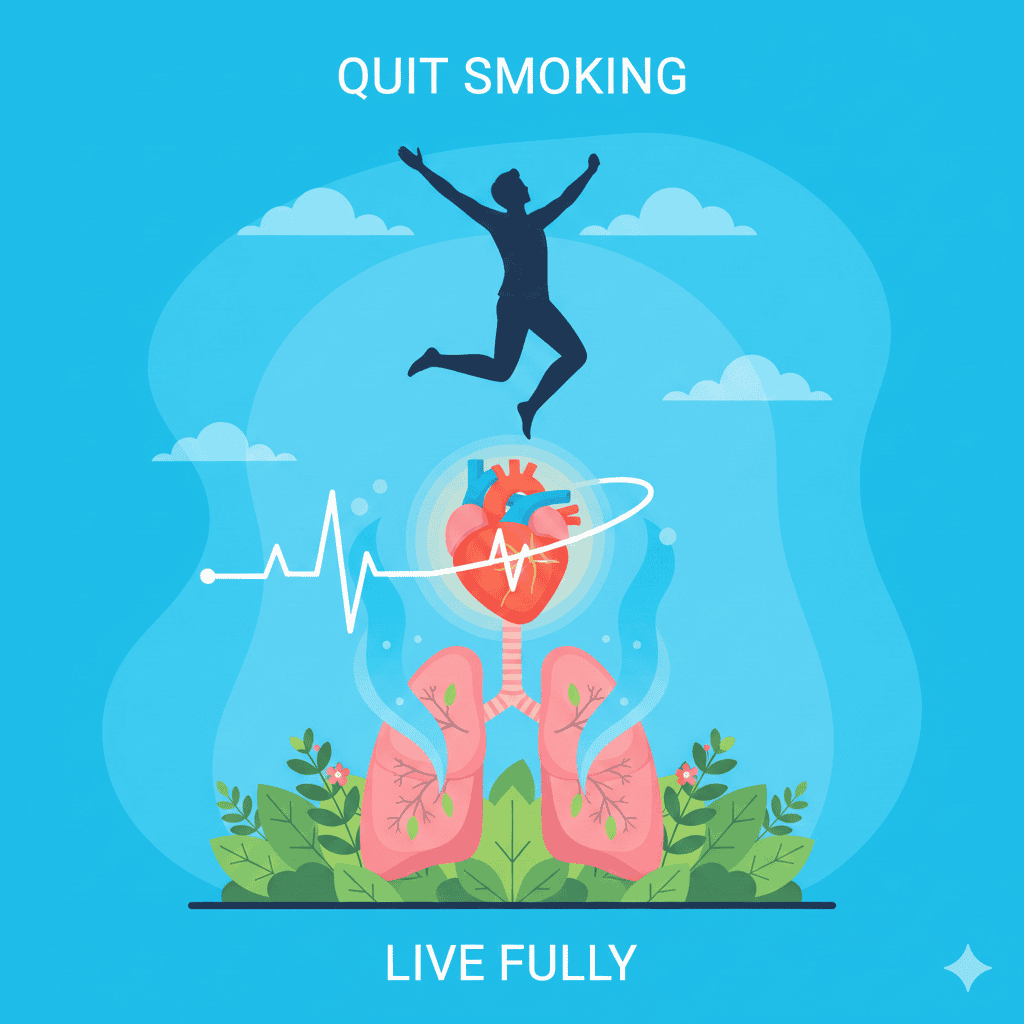
The good news is that your body is remarkably resilient. Whether you are ditching the pack or the pod, the recovery timeline is encouraging. Within 20 minutes, heart rate and blood pressure begin to drop, according to research. At 24 hours, carbon monoxide levels from smoking normalize, and even former vapers experience improved oxygen delivery as lung inflammation decreases. By 48 hours, nicotine is purged from the body and senses of taste and smell sharpen noticeably. Over the next two weeks to three months, circulation improves and lung function increases. Between one and nine months, cilia (the tiny hair-like structures that clean the airways) regenerate, reducing infection risk significantly. After one year smoke-free, research shows that excess coronary heart disease risk drops to half that of a continuing smoker. The only path that eliminates all inhalation-related risk is complete cessation of both products, with no exceptions.
Sources
- Centers for Disease Control and Prevention. "Benefits of Quitting Smoking Over Time." cdc.gov
- U.S. FDA. "Vaporizers, E-Cigarettes, and Other ENDS." fda.gov
- National Institute on Drug Abuse. "Tobacco, Nicotine, and E-Cigarettes." drugabuse.gov
- American Cancer Society. "Health Benefits of Quitting Smoking Over Time." cancer.org
- World Health Organization. "Tobacco: Key Facts." who.int
- American Heart Association. "Why Quit Smoking?" heart.org
Common questions
- Is vaping safer than smoking?
- Modern vapes deliver far less tar and combustion byproduct than cigarettes, which makes them less harmful in short-term lung studies. But "less harmful" is not "safe." Vapes still expose users to nicotine, ultrafine particles, flavor chemicals, and metal traces. Long-term effects are not yet fully understood, and addiction risk remains high.
- Are nicotine salts more addictive than cigarettes?
- Yes, in practice. Nicotine salt pods (the format used by most modern disposable vapes) deliver nicotine more efficiently and at higher peak concentrations than a cigarette, which makes them faster to reinforce dependence and harder to quit. Many vapers report finding pods harder to stop than the cigarettes they replaced.
- Should I switch from smoking to vaping to quit?
- Switching to vaping can work as a step-down for committed quitters who treat it as a temporary aid. The evidence is roughly comparable to nicotine replacement therapy for short-term quit rates. But many users get stuck on vapes for years. For most smokers, going directly to NRT plus a firm quit date outperforms a vape transition.
- Is vaping risk-free?
- No. Vapes are not risk-free. They expose the lungs and cardiovascular system to nicotine, fine particles, flavorings, and trace metals. Cases of severe vape-related lung injury (EVALI) have been documented, mainly with illicit cartridges. The long-term cancer and heart-disease impact of decade-scale vaping is still unknown.
This article is for informational purposes only and does not constitute medical advice. Health information is based on published research from organizations such as the CDC, WHO, and American Lung Association. Always consult a healthcare professional for personalized guidance on smoking cessation.