You stop smoking indoors, put away the ashtray, and open a window. The room is quieter, but the curtain, armchair, and car seat still carry the history of smoke. The material left behind is called thirdhand smoke: tobacco-smoke chemicals that remain on surfaces, in dust, and sometimes deep inside porous materials after a cigarette is out.
Stopping smoking in a space prevents new tobacco smoke from being added there. It does not instantly erase what was already deposited. That distinction gives you a useful next step: stop new exposure first, then decide which belongings can be washed and which problems need more help. The Thirdhand Smoke Resource Center's cleanup guidance describes both the value and the limits of cleaning.
What remains after the visible smoke clears?
Secondhand smoke comes from a burning tobacco product and from smoke exhaled by the person smoking, as the CDC explains. Thirdhand smoke is the residue that persists on things the smoke reached. Think of a sleeve, a tabletop, a carpet, and the inside of a car. The surface can look ordinary even when it has been exposed. Dust and fabrics can hold residue too.
The distinction matters because one response does not solve both problems. Opening a window changes the air, but it does not wash a blanket. Washing a blanket does not make an actively smoked-in room smoke-free. If someone still smokes indoors or in the car, new residue is being added while you clean. Agreeing that indoor spaces and vehicles stay smoke-free is the first practical boundary; cleaning follows it.
The quantity and reach of residue depend on the smoking history and the materials involved. A home with occasional past smoking is a different job from one in which people smoked frequently for years. The Resource Center says washable objects may be cleaned, while residue in upholstery and building materials can be much harder to remove. There is no honest date on which all residue from every home simply disappears.
Why the residue matters
Residue does not simply sit still. A 2017 review in Chemical Research in Toxicology by Jacob and colleagues describes how nicotine on indoor surfaces can react with nitrous acid, a gas released indoors by combustion such as gas stoves and smoking itself, to form tobacco-specific nitrosamines, a family that includes strong carcinogens. Young children are likely to take in more than adults: they play on the floor, swallow house dust, put objects in their mouths, and touch the clothes of adults who smoke. The same review says these hazards are less well documented than those of secondhand smoke, and most of the evidence on health effects so far comes from exposure measurements, cell studies, and animal experiments rather than long-term studies of people.
Start with an inventory you can finish
You do not need to empty the whole house on day one. Walk through the spaces where smoking happened and make a short list of what touches people most often and what you can reasonably clean. Start with a single room or the car you use daily.
Sort what you find into three groups:
- Washable belongings: clothes, sheets, removable covers, and washable household objects. Check their care labels or product instructions before washing.
- Fixed, reachable surfaces: tables, shelves, doors, and other surfaces you can clean using methods suitable for the material. Note nearby dust and places that are easy to overlook.
- Porous or inaccessible materials: upholstered furniture, carpets and padding, mattresses, books, and parts of a heavily smoked-in building. These may need more than a routine wash, and some may not be fully cleanable.
Write down the room, item, and next action. For example: “Bedroom: wash bedding if labels allow; ask about the carpet.” Separate today's wash from questions for a property owner or specialist.
Wash the things designed to be washed
The Resource Center names clothes, blankets, some toys, and kitchenware as examples of washable objects. Use the manufacturer's care instructions and an ordinary wash appropriate for the item. If odor remains after the first wash, some items may need another wash, though repeated cycles may not remove everything from every fabric.
Start with the clothes and bedding you use most, then washable curtains or removable covers. Keep cleaned items away from new smoke. For household objects, first confirm that water, soap, or a dishwasher is suitable.
The car deserves its own inventory: seats and floor mats, washable covers if present, dashboard and hard trim, plus hidden soft material. Remove ash and loose rubbish and clean the surfaces and removable items according to their material instructions. A wipe of the dashboard does not address residue within a seat or headliner. If the car has a long history of smoking and you are worried about what remains, ask a qualified detailer or remediation provider what can realistically be cleaned. Do not treat a new car scent as the test of success.
Do not use smell as a pass-or-fail test
A room may smell less after ventilation, a scented spray, or fresh paint. That is useful information about odor, not proof that chemical residue has gone. The Resource Center notes that fragrances can mask odor and that paint may cover a smell without removing underlying residue. It also warns that ozone generators can create new chemicals while failing to remove residue embedded in materials. Do not use an ozone machine as a home shortcut based on a promise of “smoke removal.”
The reverse mistake is possible too: noticing a smell does not tell you the exact quantity of residue or what a particular person has absorbed. Your nose is not a measurement instrument. Use it to decide that an item needs attention, while avoiding claims that “no smell” means “no residue.” A cleanup plan should be based on the known smoking history, the material, and the available methods.
Fresh paint is particularly tempting because it can make a room look transformed in an afternoon. The appearance can outrun the underlying problem. If walls or flooring were heavily exposed, ask the person responsible for the property how contamination will be assessed and handled before simply covering it. Some professional methods use chemicals and protective equipment that require trained handling.
Know when the job exceeds a normal wash
Porous materials complicate the plan. A carpet may have residue below the visible fibres, an upholstered chair has padding, and a wall has layers beneath the paint. The Resource Center cautions that residue can remain within such materials even when a surface looks or smells better. For a heavily smoked-in property, a routine cleaning list cannot establish complete removal.
If you rent, document the smoking history and the areas you are concerned about, then speak with the property owner or manager about appropriate remediation. If you own the home, a professional with relevant remediation experience can explain what may be cleaned and what may need replacement. Ask what their proposed work actually addresses, what remains uncertain, and whether any chemicals or equipment require precautions. You do not have to accept a guarantee based solely on a deodorizer, fresh coat of paint, or machine.
This is a scale decision, not an instruction that every former smoker must gut a home. The Resource Center distinguishes occasional smoking from substantial, long-term contamination. Use that distinction to decide whether a normal wash is a reasonable first pass or whether the structure itself needs assessment.
Separate cleanup from your quit plan
A stale-smoke smell or an old ashtray can also be a cue for a cigarette. That is a different question from chemical exposure. Removing the ashtray and changing the place where you take breaks may help you avoid a familiar smoking routine, even though it does nothing about the residue. Conversely, cleaning a curtain will not by itself answer what you will do at your old smoking time.
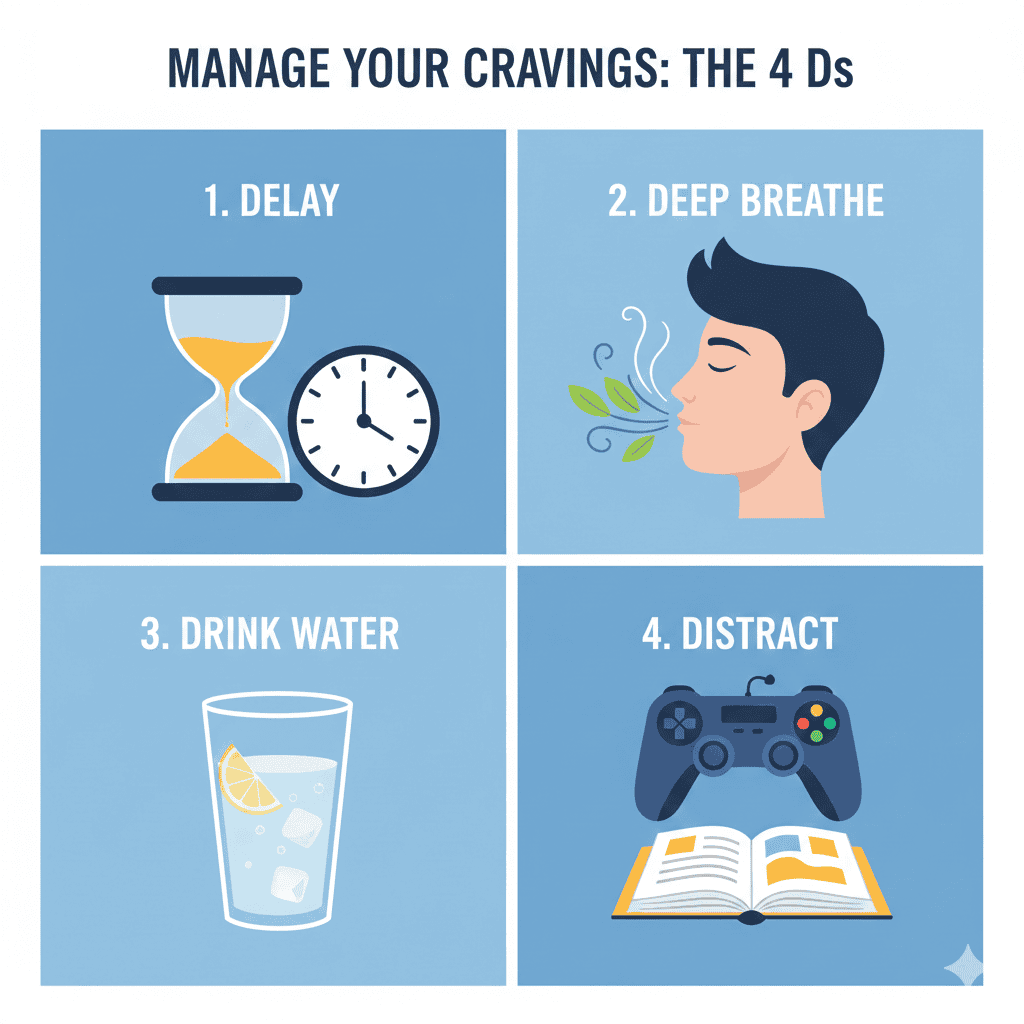
Use both plans without confusing them. For the environment, stop smoking in the home and car, wash what can be washed, and seek help where materials are hard to clean. For the quit, choose a response to the moment you would normally smoke. Our guide to staying smoke-free covers the later part of quitting, and managing nicotine cravings focuses on the urge itself. Smoke Tracker can help you record smoke-free time and notice routines.
If another person still smokes at home, make a clear request about shared spaces and vehicles. The partner support guide addresses the supporter's role. The separate issue here is the physical residue left in a place after smoking stops or moves elsewhere.
A modest first-pass checklist
- Stop adding new smoke indoors and in vehicles. Ask others who use those spaces to follow the same rule.
- Choose one room or vehicle and list washable, reachable, and porous items separately.
- Wash washable clothes, bedding, and other belongings under their care instructions; keep them away from new smoke afterward.
- Clean suitable hard surfaces with methods appropriate to the material, without assuming one cleaner works on all finishes.
- Identify upholstery, carpet, books, and building materials that a normal wash cannot reach.
- For extensive past smoking, ask the property owner or a qualified professional what remediation can actually address.
- Do not declare the space clear because the smell fades, a fragrance covers it, or new paint looks clean.
Frequently asked questions
How long does thirdhand smoke last after quitting?
There is no single duration for every home, car, or item. The Resource Center says residue can persist for a long time and may become embedded in porous materials. The smoking history and what the material is made of matter more than counting a fixed number of days after the last cigarette.
Can thirdhand smoke be washed out of clothes?
Clothes are among the washable items the Resource Center recommends cleaning. Follow the garment's care label and repeat a wash if needed and permitted. Heavily exposed fabrics may not come fully clean.
Does opening windows remove thirdhand smoke?
Ventilation can change indoor air and odor, but it does not wash residue from clothes, dust, upholstery, or walls. Prevent new smoking indoors and treat the material surfaces separately.
Is a car different from a room?
The same distinction applies: some hard surfaces and removable items can be cleaned, while seats, headliners, and other soft layers may hold residue. A scented interior is not proof of removal. Ask an experienced professional about a heavily smoked-in vehicle.
Is thirdhand smoke the same as a smoking trigger?
No. Thirdhand smoke is physical residue. A smell or familiar chair may also remind you of smoking and prompt a craving. Change the routine to support your quit, and assess cleaning separately; neither job proves the other is finished.
This article is for general educational purposes and does not certify a home or vehicle as free of tobacco residue. For extensive contamination or questions about exposure in your property, seek appropriate professional or property-owner advice.
This article is for informational purposes only and does not constitute medical advice. Health information is based on published research from organizations such as the CDC, WHO, and American Lung Association. Always consult a healthcare professional for personalized guidance on smoking cessation.