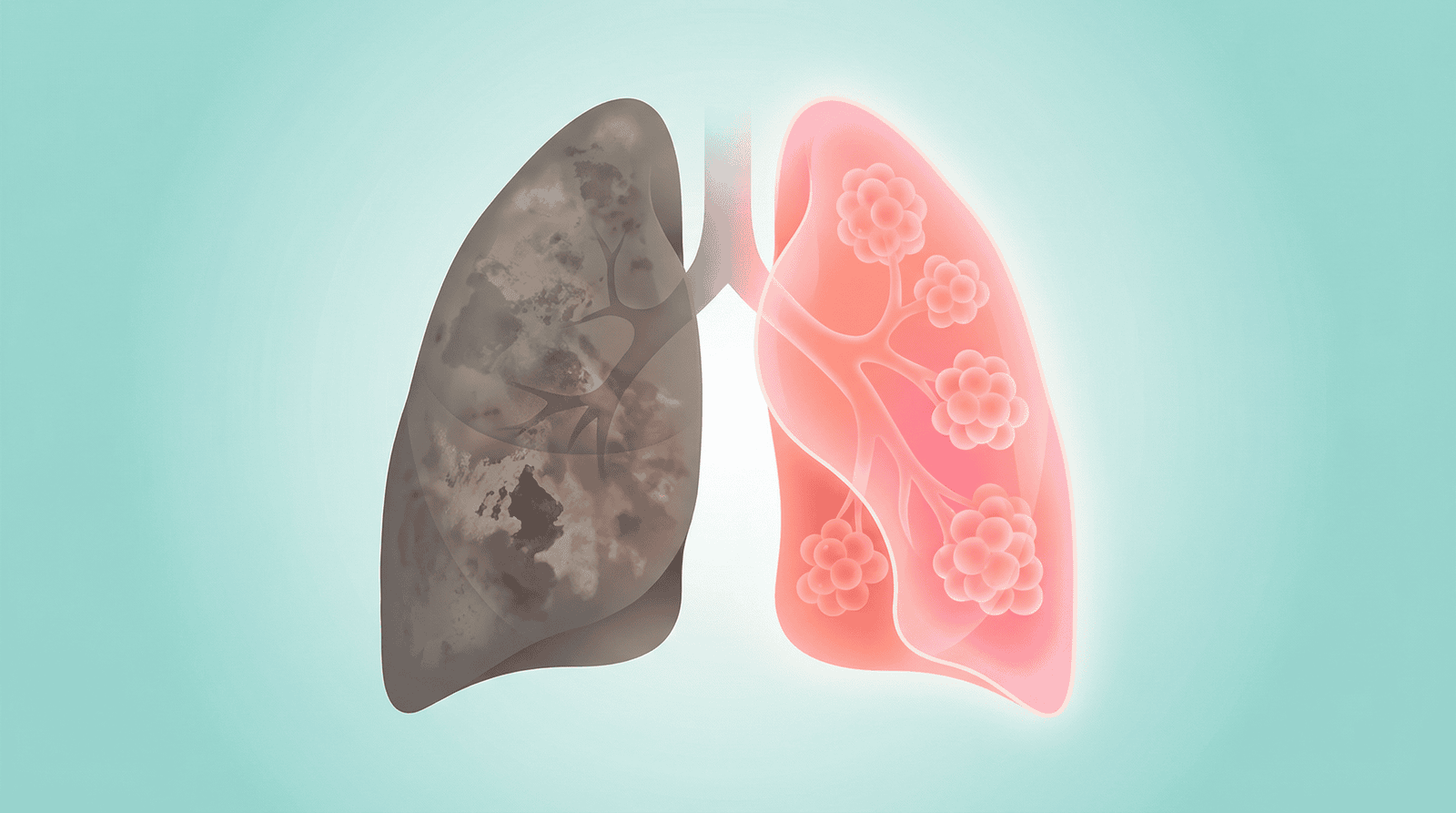
You are 58, you have smoked since you were 17, and the doctor brings it up again at the annual visit. You half-nod, half-shrug. The thought that runs in the background, the one you almost never say out loud, is some version of: the damage is already done, so what is the point now? It is one of the most common reasons long-term smokers stop trying to quit. It is also, in light of forty years of careful epidemiology, almost entirely wrong. The benefit of quitting does not vanish with age. It changes shape. Here is exactly what the evidence shows about quitting at 40, 50, 60, and 70-plus, what your body can and cannot reverse this late in the game, and why "too late" is not a number that exists on the curve.
Where the "Too Late" Feeling Comes From
The belief that quitting later in life is pointless is not random. It has identifiable sources, and naming them is the first step in seeing through them.
The first is availability bias from the worst cases. Everyone knows, or has heard of, a long-term smoker who quit and got a serious lung diagnosis within a year or two. The story sticks because it is dramatic. What gets remembered less is that the diagnosis would almost always have come anyway, often sooner and worse, if the cigarettes had continued. Quitting did not cause the disease. It revealed it, and it tilted the trajectory afterward.
The second is a misreading of "the damage is done." Some damage is done. A real fraction is not, and an even larger fraction is still being actively added every day a smoker keeps smoking. The choice at 55 is not between "fully healed body" and "damaged body." It is between "current damage" and "current damage plus another decade of accumulating damage." Those are not the same outcome, and the gap between them widens every year.
The third is a misunderstanding of how risk reduction works. People expect a binary: either you quit early enough and reset to normal, or you quit too late and stay stuck where you are. The actual curves are gradients. Every smoke-free year reduces risk further, and the reduction is largest in the first years after the last cigarette, regardless of the age at which they happen.
Once you see those three patterns, the "too late" story stops being a fact and starts being a feeling.
What the Doll and Peto Study Actually Found
The single most influential piece of evidence on this question is the British Doctors Study, which followed nearly 35,000 male physicians for 50 years and tracked smoking, quitting, and survival across their entire adult lives. Richard Doll and Richard Peto published the 50-year follow-up in 2004, and the numbers are striking.
Compared with continuing to smoke, the average gain in life expectancy from quitting was roughly:
- Quitting at 60: about 3 additional years of life.
- Quitting at 50: about 6 additional years.
- Quitting at 40: about 9 additional years.
- Quitting at 30: about 10 additional years.
Two things are worth sitting with here. First, even quitting at 60 produces a measurable, multi-year extension of life on average. That is not "too late." Second, the gains scale with how early you quit, which is the case for quitting at any age tomorrow rather than next year. The cheapest day to add years to your life is always today, including the today that arrives at 58 or 65.
Subsequent large studies in the United States, Japan, and across Europe have replicated the basic shape. The American Cancer Prevention Study II and the National Health Interview Survey follow-ups both find substantial mortality reductions for quitters in their 60s and 70s compared with continuing smokers of the same age, and the relative gains rise the longer the smoke-free period lasts. The age-60 quitter at age 75 has measurably better survival than the same-aged smoker who never stopped.
What Recovers at Any Age
Some of the benefits of quitting do not care how old you are. They happen because they are driven by simply not adding fresh damage every few hours, and the body responds within weeks to months at any age.
Cardiovascular function improves quickly. Within 24 hours of the last cigarette, carbon monoxide clears and blood oxygen rises. Within a few weeks to months, circulation improves, blood pressure drops modestly, and the acute clotting and inflammatory effects of smoking recede. Within one year, the risk of heart attack falls by roughly half compared with continuing to smoke, and it keeps falling. That curve is essentially age-independent: a 70-year-old quitter halves their excess heart attack risk on roughly the same schedule as a 40-year-old quitter. Our piece on heart recovery after quitting smoking walks through that timeline in detail.
Lung function decline slows. Smoking accelerates the natural age-related decline in lung capacity. Quitting does not restore lost lung tissue, but it returns the rate of decline close to that of a non-smoker. For an older smoker, this is one of the biggest practical benefits available, because it changes the slope of the curve and can be the difference between independent breathing in the seventies and supplemental oxygen. The mechanics are covered in how your lungs heal after quitting smoking.
Cancer risk starts dropping. Lung cancer risk falls measurably within five years and roughly halves by 10 to 15 years after quitting, regardless of the age at which the last cigarette is smoked. Risks for cancers of the mouth, throat, bladder, kidney, and pancreas also decline. The full year-by-year cancer risk timeline shows exactly when each milestone hits.
Breath, taste, and smell come back within weeks. Sensory and breath-quality changes are some of the most age-independent gifts of quitting. The 70-year-old who quits this month notices food again next month on the same schedule as anyone else.
Surgical and recovery outcomes improve. Older adults are more likely to face a surgery in the next decade, and even four to eight weeks of being smoke-free before an operation measurably lowers complications, infections, and hospital length of stay. This benefit shows up at any age.
Cognitive trajectory shifts. Active smoking accelerates cognitive aging and raises dementia risk. Quitting at any age slows that acceleration. Studies tracking former smokers find cognitive aging trajectories that bend back toward never-smoker norms within several years of quitting, even when the quit happens in the 60s.
What You Gain by Decade
The exact balance of what you gain shifts depending on when you stop, so it helps to look at it by decade rather than as one number.
Quitting in your 40s. You are still well inside the window where most of the cardiovascular and cancer risk excess can be returned to roughly non-smoker baseline over the next 10 to 20 years. The Doll-Peto data put the average life-expectancy gain at around nine years compared with continuing. Lung function decline rate normalizes, and the cumulative damage curve is not yet steep enough to lock in major disease in most quitters. This is the highest-leverage decade outside of quitting young.
Quitting in your 50s. Average life expectancy gain of around six years. Heart attack risk halves within a year, and most of the cardiovascular benefit is captured by the early 60s. Lung cancer risk reduction is substantial by 70, and you measurably shift the odds of arriving at retirement healthy and active. The "I am too old" feeling shows up most often in this decade and is least supported by the actual numbers.
Quitting in your 60s. Average life expectancy gain of around three years, and a meaningful improvement in the quality of those years that often gets ignored in the headline number. Breathing capacity, exercise tolerance, sleep, and immune function all improve within months. The risk of a major cardiac event in the next decade drops sharply. Many 60s quitters describe the change as "I got my breath back" within a single season, and that is age-independent.
Quitting at 70 and beyond. This is the age range where the "too late" belief is most aggressive and most wrong. Large cohort studies still find lower mortality, fewer cardiac events, and slower cognitive decline in quitters over 70 compared with continuing smokers of the same age. The gain is smaller in absolute years on average, but the gain in symptom and day-to-day function in the years that remain is often the largest gain of any decade. People in their 70s who quit report sharper taste, deeper sleep, fewer chest infections, and easier walks within weeks. None of that is too late. It is the difference between two different last decades.
What Doesn't Fully Reverse
Honesty matters here, because the article is more credible when it tells the whole truth and the truth is still strongly in favor of quitting.
Some damage from long, heavy smoking does not fully unwind. Established COPD does not reverse, although quitting reliably slows its progression. Structural emphysema and severe pulmonary fibrosis are largely permanent. Atherosclerotic plaques already laid down in the arteries do not disappear, although the rate of new plaque formation slows substantially. Heavy long-term smokers retain a slightly elevated lung cancer risk compared with never-smokers even decades after quitting, although the risk is dramatically lower than continuing.
The right way to read this list is not "see, the damage is done." It is "this is the floor below which quitting cannot drop the risk." That floor is still far, far better than the trajectory of continuing.
How Long Until It Starts Paying Off?
For an older smoker considering whether quitting is "worth it" given the years they expect to have left, the timeline of when benefits arrive matters as much as the size of the eventual benefit.
- Within 24 hours: Carbon monoxide clears, blood oxygen rises, the acute heart attack risk begins falling.
- Within 2 to 4 weeks: Breathing capacity improves, circulation in the limbs improves, taste and smell return, surgical risk falls.
- Within 3 to 12 months: Lung function decline rate has normalized to non-smoker pace. Heart attack risk has halved. Sleep, immune function, and exercise tolerance are measurably better.
- Within 5 to 10 years: Stroke risk approaches that of a never-smoker. Cancers of the mouth, throat, esophagus, and bladder have substantially lower incidence.
- Within 10 to 20 years: Lung cancer risk has roughly halved. Most cardiovascular risk excess is gone.
The point of this list is that almost every measurable benefit begins inside the first year. An older smoker quitting today does not need to live for 30 more years to "earn back" the effort. The body starts paying it back within days, and the largest single bend in the curve happens in the first 12 months at any age.
How Can Smoke Tracker Help You Quit Later in Life?
The challenge of quitting in your 50s, 60s, and 70s is rarely a stronger physical addiction than younger quitters face. It is the weight of decades of habit and the corrosive belief that the effort might not be worth it. The tracker is built to neutralize both.
- Health Timeline: See exactly which milestones you have already reached, hour by hour and week by week. For an older quitter, the first week's milestones (carbon monoxide clearing, blood oxygen rising, taste returning) are unusually powerful because they arrive fast, visibly, and at any age.
- Streak Counter: Decades of smoking can make the early days feel like a drop in the ocean. The streak number reframes each day as a literal addition to the lower-risk curve. By the third month it has moved measurably.
- Money Saved: A pack-a-day habit at current prices runs into the thousands per year. For older quitters, the cumulative savings in the first year often funds a meaningful trip, a piece of equipment, or a year of a hobby. The reward circuits being rebuilt in those weeks land hardest on things they can actually feel.
- Craving Log: Long-term smokers often have the deepest cue-pattern history, decades of associations between cigarettes and specific moments. Logging cravings is the fastest way to make those cues visible, which is the first step in dismantling them.
The decision to quit at 55, or 65, or 75 is not a smaller decision than quitting at 25. It might be the largest single health decision available to an older smoker, because it is the only intervention that simultaneously reduces cardiovascular risk, lung cancer risk, dementia risk, and surgical complications, and it starts working within days.
It is not too late. The body does not check your age before it starts repairing. The curve bends from the first day, at every age, and the years and the quality of years on the other side are real. Quit now.
Sources
- Doll, R., Peto, R., Boreham, J., and Sutherland, I. (2004). "Mortality in relation to smoking: 50 years' observations on male British doctors." BMJ. bmj.com
- U.S. Department of Health and Human Services. (2020). "Smoking Cessation: A Report of the Surgeon General." cdc.gov
- Jha, P., et al. (2013). "21st-century hazards of smoking and benefits of cessation in the United States." New England Journal of Medicine. pubmed.ncbi.nlm.nih.gov
- Taylor, D. H., Hasselblad, V., Henley, S. J., Thun, M. J., and Sloan, F. A. (2002). "Benefits of smoking cessation for longevity." American Journal of Public Health. pubmed.ncbi.nlm.nih.gov
- Gellert, C., Schöttker, B., and Brenner, H. (2012). "Smoking and all-cause mortality in older people: systematic review and meta-analysis." Archives of Internal Medicine. pubmed.ncbi.nlm.nih.gov
- Anthonisen, N. R., et al. (2005). "The effects of a smoking cessation intervention on 14.5-year mortality: a randomized clinical trial." Annals of Internal Medicine. pubmed.ncbi.nlm.nih.gov
- American Cancer Society. "Health Benefits of Quitting Smoking Over Time." cancer.org
- World Health Organization. "Tobacco." who.int
This article is for informational purposes only and does not constitute medical advice. Health information is based on published research from organizations such as the CDC, WHO, and American Lung Association. Always consult a healthcare professional for personalized guidance on smoking cessation.