You made it through day one without a cigarette, and by the afternoon of day two there is a dull, pressing band tightening across your forehead and behind your eyes. It is not the sharp, occasional headache you used to get. It is constant, low, and oddly heavy, and it arrived right on schedule with the irritability and the cravings. You are not getting sick, and you have not done anything wrong. The headache is one of the most predictable signals in nicotine withdrawal, and the mechanics behind it are well understood. Here is exactly what is happening inside your skull in the first week off cigarettes, how long it lasts, the caffeine mistake that quietly doubles it, and what actually helps.
What Is Actually Causing the Headache?
The withdrawal headache is not one thing. It is the sum of two physiological shifts happening at the same time, both of them caused by nicotine leaving your system.
The first is vascular. Nicotine is a vasoconstrictor. Every time you smoked, the nicotine narrowed your blood vessels, including the arteries that supply the brain and scalp. Your circulatory system spent years calibrated around that constant constriction. When you stop, the nicotine clears within hours and the vessels rebound. They dilate, blood flow to the brain increases, and the rapid change in vessel diameter and cerebral blood flow is itself a well-documented headache trigger. This is the same family of mechanism behind a caffeine-withdrawal headache, where vessels that were chronically constricted suddenly widen. The brain does not like sudden changes in its blood supply in either direction, and it reports that displeasure as pain.
The second is oxygen and carbon monoxide normalization. Cigarette smoke delivers carbon monoxide, which binds to hemoglobin roughly 200 times more readily than oxygen does. A regular smoker walks around with a meaningful fraction of their hemoglobin occupied by carbon monoxide instead of oxygen, and the body adapts to that chronically lower oxygen-carrying capacity. Within about 12 hours of your last cigarette, carbon monoxide levels fall back toward normal and blood oxygen rises. That is unambiguously good for every tissue in your body, but the brain is recalibrating to a different oxygen environment than the one it has been running on for years, and during that recalibration window headaches are common.
Layered on top of both is the withdrawal state itself. Nicotine acts on receptors throughout the central nervous system. When it is suddenly absent, the entire system runs in a temporary state of dysregulation that produces irritability, anxiety, difficulty concentrating, and muscle tension, particularly in the neck, jaw, and scalp. That tension is a textbook generator of tension-type headache. So part of what you feel in the first week is direct vascular and oxygen recalibration, and part of it is a tension headache sitting on top of a stressed, under-slept, irritable nervous system.
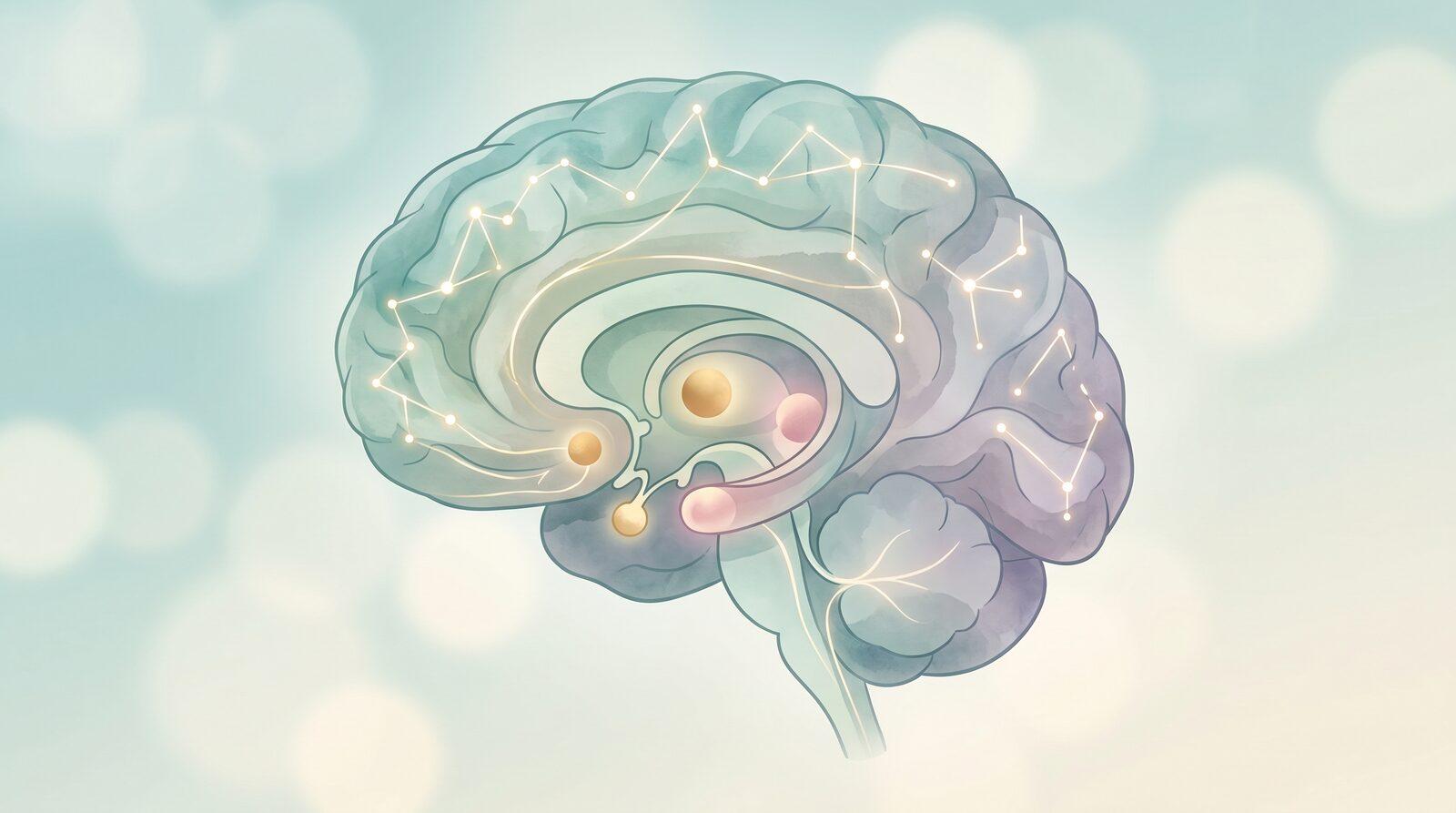
For the full picture of what the nervous system is doing during this period, our guide to your brain after quitting smoking maps the receptor and dopamine recovery that the headache is one surface symptom of.
Why the First Week Is the Worst
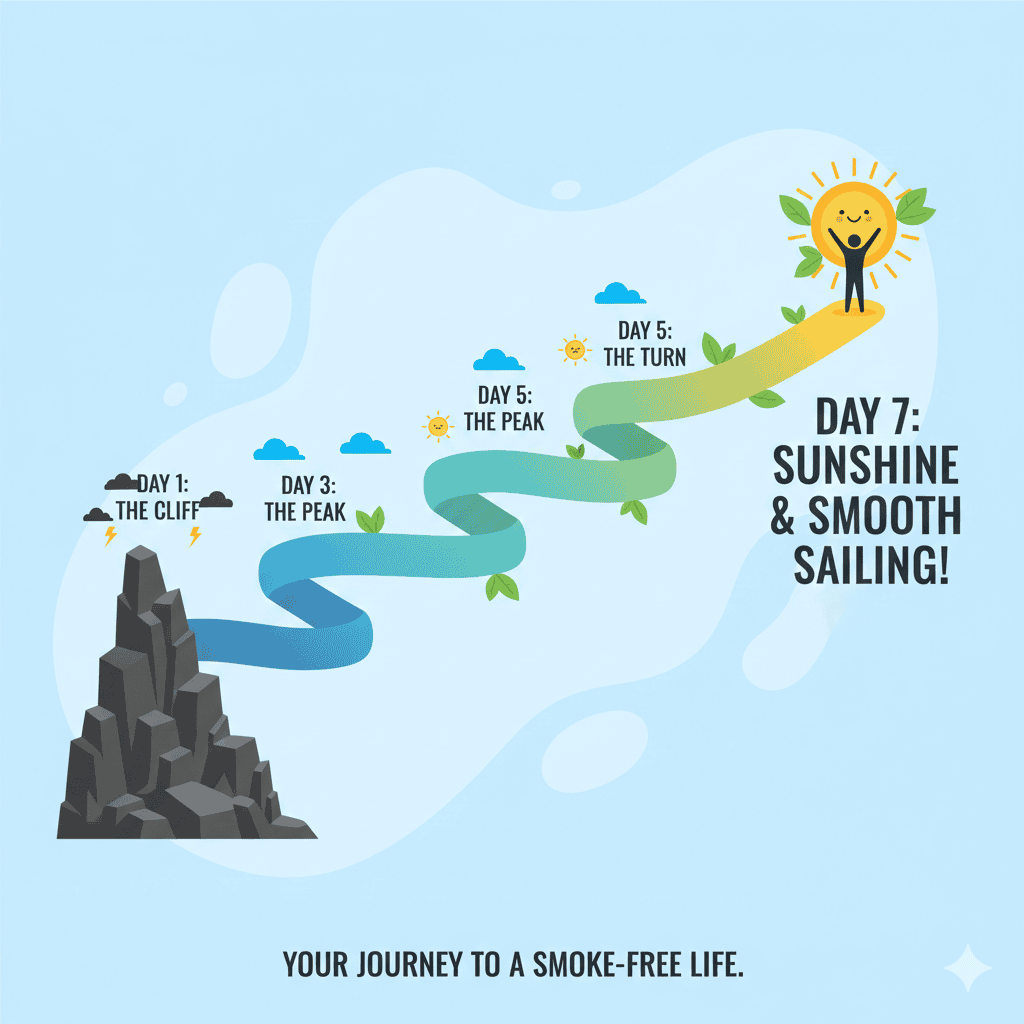
Nicotine has a short half-life, roughly two hours, which is why smokers light up repeatedly through the day. Withdrawal symptoms begin within 4 to 24 hours of the last cigarette, and the intensity of most symptoms peaks somewhere between day 2 and day 4.
The headache follows that curve closely. It is rarely the first symptom you notice. It usually builds over the first 24 to 48 hours as the vascular rebound and oxygen shift compound with rising tension and disrupted sleep. For most people the headache is at its most constant and most pressing during the first three to five days, which is the same window when cravings, irritability, and difficulty concentrating are also peaking. This clustering is not a coincidence. They share the same underlying cause: a nervous system that built itself around regular nicotine doses and is now rebuilding without them.
The good news embedded in that timeline is that the peak is early and it is brief. The system is not getting worse and worse. It is front-loading the hardest recalibration into the first few days specifically because that is when the change in nicotine level is largest.
The Full Headache Timeline After Quitting
Individual variation is significant, but the general shape is consistent across withdrawal symptom research.
Hours 4 to 12. Nicotine clears. Most people do not yet have a headache, though some notice early tightness in the neck or temples and a general sense of pressure building.
Hours 12 to 48. Onset and ramp-up. Carbon monoxide has dropped, cerebral blood flow is shifting, and the headache becomes noticeable and then constant for most quitters. It is typically a dull, bilateral, pressing or band-like pain rather than a throbbing one, consistent with its mixed vascular and tension origin.
Days 2 to 5. Peak. This is the worst window for the headache, alongside peak cravings and peak irritability. Many people at this stage assume the headache means quitting is making them ill. In the absence of red-flag features described later, it is the opposite: it is the measurable signature of nicotine leaving a system that was built around it.
Days 5 to 10. Decline. The headache becomes intermittent rather than constant, less intense, and easier to relieve with the basic measures below. Sleep usually starts improving in this window too, which removes one of the tension contributors.
Weeks 2 to 4. Resolution for most people. The vascular system has largely re-stabilized at the new, healthier baseline, oxygen delivery has normalized, and the acute withdrawal state has faded. Occasional stress or tension headaches at this stage are normal life, not withdrawal.
Beyond 4 weeks. A persistent or worsening daily headache more than a month after the last cigarette is no longer a withdrawal headache and deserves evaluation. The four-week mark is roughly the inflection point where "this is just withdrawal" stops being the default explanation.
For how this headache window fits alongside every other early symptom, our first week smoke-free guide lays out the full day-by-day landscape.
The Caffeine Trap That Makes It Worse
This is the single most common reason a withdrawal headache is more severe than it needs to be, and almost nobody is warned about it.
Smoking dramatically speeds up how fast your liver clears caffeine. The compounds in tobacco smoke induce a liver enzyme called CYP1A2, which is the primary enzyme that metabolizes caffeine. In smokers, CYP1A2 activity is roughly doubled, so caffeine is cleared about twice as fast. Smokers compensate without realizing it by drinking more coffee to get the same effect.
When you quit, that enzyme induction fades over about a week. Caffeine starts lingering in your system at roughly double the levels it used to. If you keep drinking your normal smoker's volume of coffee, you are now effectively double-dosing on a vasoactive stimulant during the exact week your blood vessels are already destabilized by nicotine withdrawal. The result is a worse headache, more jitteriness, and more anxiety, and many people misattribute all of it to "quitting being awful" when a large part of it is unintentional caffeine overload.
The practical move is to cut caffeine intake by roughly a third to a half during the first one to two weeks after quitting. Do not cut it to zero abruptly, because caffeine withdrawal causes its own vascular headache and stacking that on top of nicotine withdrawal is the worst of both worlds. The full mechanism, including why your usual coffee suddenly feels like a double, is in our dedicated piece on caffeine after quitting smoking.
What Helps and What to Avoid
The withdrawal headache is self-limiting, so the goal is not to chase it away but to take the edge off while the recalibration completes.
Hydrate deliberately. Dehydration independently triggers and worsens headaches, and the appetite and routine disruption of early quitting makes under-drinking easy. Two to three extra glasses of water a day during the first week is a genuine intervention, not a platitude.
Cut caffeine by a third to a half, not to zero. For the reason explained above, this is the highest-leverage single change available in the first two weeks.
Use over-the-counter analgesics sensibly and briefly. Ibuprofen, acetaminophen, or aspirin are all reasonable for the acute days as long as you follow the label and have no contraindication. The one thing to avoid is taking them daily for weeks, since frequent analgesic use can itself produce a rebound (medication-overuse) headache. Short course, acute days only.
Address the tension component directly. A significant share of the headache is muscular: clenched jaw, tight neck and shoulders, furrowed scalp, all amplified by withdrawal irritability. Heat on the neck and shoulders, a few minutes of slow neck and shoulder mobility, and consciously unclenching the jaw several times a day each remove a real contributor.
Slow your breathing when the pressure spikes. Slow paced breathing, around six breaths per minute for a few minutes, shifts the autonomic system out of the sympathetic, tense, vasoconstricted state and reliably eases tension headache and the anxiety that feeds it. It also doubles as a craving tool, which is useful since cravings and the headache peak together.
Protect sleep. Sleep is disrupted in early withdrawal, and poor sleep is one of the strongest headache amplifiers there is. The headache and the insomnia feed each other, so anything that improves the sleep side, consistent bedtime, no late caffeine, a dark cool room, also takes load off the headache.
Avoid alcohol in the first week. Alcohol is both a vasodilator and a dehydrator, which is precisely the wrong combination for a vascular-and-dehydration-sensitive headache, and it independently weakens quit resolve.
Avoid using nicotine to "fix" it. A single cigarette will reliably abort the withdrawal headache, because it re-constricts the vessels and restores the state your system was adapted to. That relief is exactly the trap. It resets the clock and you will repeat the entire withdrawal headache from the beginning the next time you stop. If the headache is severe, properly dosed nicotine replacement therapy under guidance smooths the curve far better than relapse, because it tapers the change rather than reversing it.
When a Headache Is Not a Withdrawal Headache
The withdrawal headache has a recognizable signature: dull, pressing or band-like, bilateral, builds over the first 48 hours, peaks in days 2 to 5, eases by week 2, and travels together with cravings and irritability. Headaches that fall outside that pattern deserve attention rather than being filed under "just quitting."
Seek medical evaluation for any of the following:
- A sudden, severe headache that peaks within seconds to a minute ("the worst headache of my life," thunderclap onset). This is a medical emergency regardless of smoking status and is never explained by withdrawal.
- Headache with neurological symptoms: weakness or numbness on one side, confusion, trouble speaking, visual loss, or difficulty with balance.
- Headache with fever, neck stiffness, or a rash.
- A headache that is steadily worsening over days to weeks rather than improving, especially if it is worse in the morning, worse when lying down, or worse with coughing or straining.
- A new headache pattern in anyone over 50, or in anyone with a significant long-term smoking history. Heavy long-term smoking is a vascular risk factor, and a genuinely new and different headache in that context is worth a conversation with a clinician rather than a wait-and-see.
- Headache after a head injury, or any headache accompanied by repeated vomiting.
None of these are typical of nicotine withdrawal. The reason to know them is not to make you anxious about an ordinary withdrawal headache, which is overwhelmingly the explanation in the first week, but so the rare exception is recognized rather than dismissed.
How Can Smoke Tracker Help You Through the Headache?
The withdrawal headache is one of the symptoms most likely to drive a day-three relapse, precisely because relief is one cigarette away and the pain is constant. The tracker is built to keep that trade visible while the worst window passes.
- Streak Counter: Days 2 to 5 are when the headache, cravings, and irritability all peak together, and they are also when the streak number matters most. Watching it hold through the hardest physiological window reframes the headache as the cost being paid down rather than a reason to stop.
- Health Timeline: Seeing that carbon monoxide has already cleared and oxygen has normalized within the first day reframes the headache as the visible side of an invisible repair, not as something going wrong.
- Craving Log: The headache and cravings spike on the same curve, so a craving entry is often really a headache entry in disguise. Logging it, then rereading it a few days later when both have eased, is one of the cleanest ways to see the timeline working.
- Money Saved: Redirect part of the first week's savings toward the things that actually help here, better hydration habits and a few decent days of sleep hygiene, both of which pay back in headache relief within days.
For the moments when the pressure spikes, the irritability climbs, and a cigarette starts to look like the obvious fix, slow paced breathing can settle the autonomic system and ease a tension headache in around 90 seconds. We built Flow Breath for exactly that kind of short, situational regulation, and it pairs particularly well with the first week of quitting, when the headache, the cravings, and the stress response are all peaking on the same schedule.
The headache in week one is not a sign that quitting is harming you. It is the sound of a circulatory system that spent years adapted to a vasoconstrictor finally being allowed to run without one, and a brain getting more oxygen than it has had in years. It is loud because the change is real, and it is brief because the change is mostly front-loaded.
The headache is the recalibration, not the damage. It peaks early, it ends within a couple of weeks, and it does not come back. Keep going.
Sources
- U.S. Department of Health and Human Services. (2020). "Smoking Cessation: A Report of the Surgeon General." ncbi.nlm.nih.gov
- Hughes, J. R. (2007). "Effects of abstinence from tobacco: valid symptoms and time course." Nicotine & Tobacco Research. pubmed.ncbi.nlm.nih.gov
- Benowitz, N. L. (2009). "Pharmacology of nicotine: addiction, smoking-induced disease, and therapeutics." Annual Review of Pharmacology and Toxicology. pubmed.ncbi.nlm.nih.gov
- Zevin, S. and Benowitz, N. L. (1999). "Drug interactions with tobacco smoking: an update." Clinical Pharmacokinetics. pubmed.ncbi.nlm.nih.gov
- Hukkanen, J., Jacob, P., and Benowitz, N. L. (2011). "Effect of nicotine on cytochrome P450 1A2 activity." British Journal of Clinical Pharmacology. pubmed.ncbi.nlm.nih.gov
- American Heart Association. "How Smoking and Nicotine Damage Your Body." heart.org
- International Headache Society. "The International Classification of Headache Disorders, 3rd edition." ichd-3.org
- NHS. "Stop smoking treatments and withdrawal symptoms." nhs.uk
- National Cancer Institute (smokefree.gov). "Managing Withdrawal." smokefree.gov
Common questions
- How long do headaches last after quitting smoking?
- Withdrawal headaches usually peak between days 1 and 3 and resolve by day 7 to 10. They come from blood vessels dilating after years of nicotine-driven constriction, plus oxygen and carbon monoxide normalizing. Headaches that persist past two weeks or worsen are not standard withdrawal.
- What causes headaches when you quit smoking?
- Two mechanisms stack. Nicotine was a vasoconstrictor; when it clears, blood vessels rebound and dilate, and the change itself triggers headache. At the same time, carbon monoxide drops and blood oxygen rises within 12 hours, and the brain recalibrates to that change. Tension headache from withdrawal restlessness piles on top.
- Why is my quit-smoking headache worse with coffee?
- Smoking sped up caffeine clearance by 50 to 70 percent. After quitting, your usual coffee now lingers about twice as long, hitting like a double dose. This worsens daytime jitters and night-time sleep, both of which feed back into headache. Cut caffeine in half for the first two weeks.
- Should I take painkillers for nicotine withdrawal headaches?
- Standard OTC painkillers like ibuprofen or paracetamol are safe and effective for short-term use. Hydrate, eat regularly to keep blood sugar steady, and cut caffeine in half. If headaches are severe, last more than two weeks, or come with neurological symptoms (vision changes, one-sided weakness, speech trouble), see a clinician.
This article is for informational purposes only and does not constitute medical advice. Health information is based on published research from organizations such as the CDC, WHO, and American Lung Association. Always consult a healthcare professional for personalized guidance on smoking cessation.