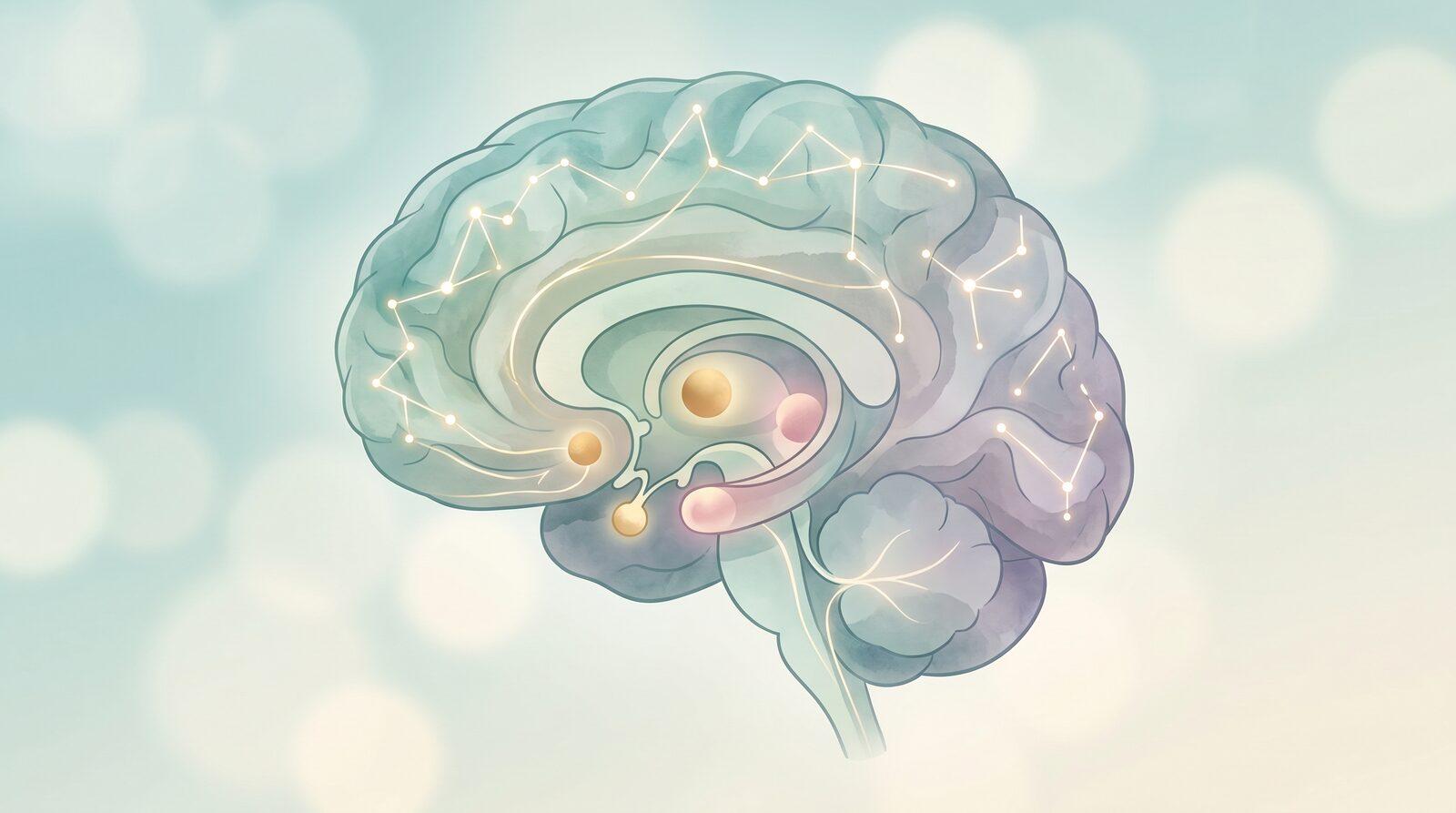
You sit down at your desk on day 11, open a tab, and forget why you opened it. You walk into the kitchen and stand there for a second, mildly annoyed, trying to remember what you came in for. You read a paragraph twice and still cannot tell anyone what it said. Difficulty concentrating is a recognized withdrawal symptom, although a persistent or worsening problem deserves assessment rather than an automatic explanation of "brain recovery." Here is what studies can actually say about the first days, the following months, and the longer view.
What Does Smoking Actually Do to Your Brain?
Smoking delivers nicotine rapidly to the brain, where it acts on nicotinic acetylcholine receptors involved in reward and attention. Repeated exposure is associated with adaptations in these systems.
Nicotine acts on acetylcholine receptors. Nicotinic receptors have several subtypes; receptors containing the beta-2 subunit are one group studied in smoking dependence. Nicotine exposure affects signaling in reward and attention networks, including dopamine pathways. In a small imaging study of 19 smokers and 20 nonsmokers, beta-2 receptor availability was higher during early abstinence than in the comparison group at one week. That study did not establish a universal receptor percentage for every long-term smoker or show that a person's reduced enjoyment comes from one receptor count alone.
Dopamine signaling can differ in people who smoke. Dopamine participates in reward and motivation, but it does not provide a simple pleasure meter. A longitudinal PET study found lower dopamine synthesis capacity in part of the striatum among 30 smokers than among 15 nonsmokers, and increases in some regions among 15 participants who remained abstinent for three months. This helps explain why researchers study reward changes during quitting.
Brain structure is associated with smoking history. In an MRI study of 504 older adults, greater lifetime smoking exposure was associated with thinner cortex, and former smokers showed an association between longer abstinence and partial recovery. These are group associations, not a scan-based timetable for one person.
Blood-flow findings need their time scale. A small prospective study of 11 people found gains in cerebral perfusion within a year after they stopped smoking. Other studies measure acute changes after a cigarette or overnight abstinence, which are not the same thing as long-term recovery.
BDNF is a research marker, not a personal recovery gauge. Brain-derived neurotrophic factor is involved in nervous-system plasticity, but blood levels do not directly measure how well your hippocampus works. A 14-day study of 49 smokers and 51 nonsmokers found altered plasma BDNF patterns and a decrease among smokers during early cessation. That finding does not support a promise that BDNF rises steadily for six months, that quitting restores hippocampal volume on a fixed schedule, or that a blood test can track your memory recovery.
When you quit, withdrawal symptoms, habits and the biological measures researchers can observe move on different time scales. That is why feeling unfocused does not tell you what a receptor scan, blood-flow scan or memory test would show.
What Happens in the First 72 Hours?
Withdrawal symptoms can begin within hours and often peak over the following days to a week, with substantial variation between people.
In the first hours: Nicotine levels fall after the last cigarette, and urges can begin as the usual nicotine exposure stops. CDC guidance describes cravings as a common withdrawal experience that can also be triggered by people, places, coffee or a feeling.
During the first day: The CDC timeline puts blood nicotine at zero by about 24 hours and carbon monoxide at a nonsmoker level after several days. Those are useful body-wide milestones, not measurements of cerebral blood flow. Some people develop headaches while quitting, but this article cannot assign a headache to one brain mechanism.
After roughly 24 hours: A lower nicotine level does not mean withdrawal is finished. Irritability, anxiety, difficulty concentrating and restlessness are recognized symptoms, but no single person has to experience all four. The receptor imaging study found differences at one week, showing why a blood-nicotine milestone and receptor adaptation should not be treated as the same event.
Over the next days: Withdrawal often feels strongest early, then eases over the following weeks, with substantial variation between people. Trouble sleeping and concentrating may occur; a fixed 48-to-72-hour peak is not a personal deadline. The Surgeon General's evidence review describes symptoms that can emerge within hours, peak over days to a week and return toward pre-quit levels over two to four weeks. For a closer look at mood, see how quitting smoking transforms mental health.
This early period is a good time to keep your quit supports close: a planned response to a craving, activity that occupies your attention, and a medicine or quit service if you use one. If mood or sleep symptoms become unmanageable, a healthcare professional can help you decide what support fits.
What Happens in the First Month?
Nicotinic receptor availability changes. Cosgrove and colleagues used repeated SPECT scans, not a home symptom score, to study beta-2 receptor availability during abstinence. In their small study, availability was significantly higher than in nonsmokers at one week, was not significantly different at four weeks, and was lower at 6 to 12 weeks than at week one in some regions. The authors concluded that elevated availability can persist for up to a month and may normalize by 6 to 12 weeks.
Reward may feel different for a while. Some people notice ordinary pleasures more as withdrawal eases; others feel flat, tired or distracted. There is no validated "week three" point at which music or a walk must feel rewarding again. The PET study of dopamine synthesis examined a small group after three months, not weekly subjective pleasure.
Loss of pleasure can occur. Anhedonia, or reduced enjoyment, has been observed during tobacco withdrawal. In a cessation-trial analysis of 1,084 participants, its average pattern rose after the quit day and then fell over the first 28 days. If low mood or loss of pleasure is intense, worsening or not improving, speak with a healthcare professional; the CDC advises asking for help if mood has not improved after a couple of weeks.
Concentration may be harder early on. The CDC lists difficulty concentrating among common withdrawal symptoms in the first days. If the fog interferes with safety, worsens, or persists, describe the symptom and its timing to a clinician rather than waiting for a supposed universal recovery date.
Blood-flow recovery has less precise evidence. A prospective perfusion study found significant improvement within a year in 11 people who quit. It did not measure a universal first-month frontal-lobe rebound or identify the cause and end date of quitting headaches. Persistent or concerning headaches warrant an assessment on their own merits.
Sleep may be disrupted and then improve. CDC guidance identifies trouble sleeping after quitting and suggests a regular sleep schedule, limiting late caffeine and asking for help when poor sleep is troublesome. A vivid dream need not be interpreted as a wish to smoke.
The CDC recommends activity and deep breaths as practical withdrawal tools.
What Happens Between 3 and 12 Months?
Two measured systems, two limited studies. In the Cosgrove imaging sample, beta-2 receptor availability at 6 to 12 weeks did not differ significantly from the nonsmoker group's measure. In a separate PET sample, dopamine synthesis capacity increased in some regions after three months of abstinence. CDC guidance also notes that cues can provoke urges later; a later craving does not identify whether its cause is "chemical" or "behavioral."
Cognition is not a one-year guarantee. Short-term withdrawal can make concentration harder, and later cognitive outcomes are studied with different tests and populations. A 24-month cessation study in older adults examined cognition and brain structure after cessation; it does not establish that everyone gains across every cognitive domain at six or twelve months. A much larger longitudinal analysis across 12 countries found that middle-aged and older adults who quit had more favorable memory and fluency trajectories than matched continuing smokers over six years.
Structural findings stretch beyond this window. The MRI study of 504 older adults linked more years since quitting with less cortical thinning after accounting for lifetime smoking, but it was a cross-sectional scan with retrospective smoking history, not a yearly scan of the same people. Its authors estimated that complete recovery in affected cortical areas could take decades at the sample's average exposure.
BDNF research remains unsettled. The 14-day plasma study observed lower blood BDNF levels during cessation among smokers, while other small studies have reported different patterns. Blood BDNF is not a direct measure of brain plasticity or learning ability. There is no basis for a six-month upward timetable or a claim that a higher BDNF result would mean you can form habits more easily.
Mood may improve after the withdrawal phase. A Cochrane review found smoking cessation associated with lower anxiety and depression symptoms than continued smoking across included studies, while rating certainty as low or very low for those outcomes. It does not promise that every quitter reaches a nonsmoker's mood level by six months. If your mood is worsening or not improving, do not wait for a milestone: CDC guidance recommends speaking with a healthcare professional.
Enjoyment has no fixed end date. In one three-month abstinence study, group measures of anhedonia and reward responsiveness improved and plateaued after about a month. That observation cannot tell an individual when food, exercise, sex or company will feel rewarding, and it does not establish that every dopamine circuit is at "full strength" by a year. If nothing feels enjoyable for a prolonged period, describe that to a clinician rather than assuming you must wait longer for a chemical switch.
For the broader body-wide picture at the one-month milestone, see 30 days smoke-free: what to expect.
What Happens at 1 to 2 Years?
The benefits of staying quit continue beyond the first year. Brain imaging, cognitive aging and stroke risk each have their own evidence base; one cannot be inferred from the timing of another.
Structural change can be slow. The cortical-thickness study is compatible with partial recovery over years, but it did not follow individual quitters through a two-year MRI schedule. It cannot promise a steadily positive trajectory for most former smokers or quantify how much gray matter one person gains by an anniversary. Normal aging and other health conditions also affect brain scans, so a personal scan needs clinical interpretation rather than a smoking milestone chart.
Stroke risk falls over years. The CDC's current benefit timeline says stroke risk decreases in the 5-to-10-year period after quitting and may approach the risk of people who never smoked with continued abstinence. It does not say everyone's stroke risk reaches a nonsmoker level exactly at five years.
Later-life cognition has a more favorable trajectory in some cohorts. In a matched longitudinal study of 9,436 middle-aged and older adults, people who quit subsequently had slower decline in memory and verbal fluency over six years than continuing smokers. The study supports a population-level association, not a guarantee of dementia prevention or a return to a never-smoker trajectory within a set number of years.
A later craving does not mean recovery failed. The studies above measure selected receptors and dopamine synthesis in small groups over weeks or months; they do not establish a two-year date at which an entire reward system has "reset." A dream or sudden urge can still be prompted by a familiar place, emotion or routine. CDC advice treats such cues as manageable triggers.
What Does Not Fully Reverse?
It is honest to acknowledge what does not bounce all the way back, especially for heavy long-term smokers.
A scan cannot promise full restoration. Longer smoking exposure was associated with greater cortical thinning in the older-adult MRI study. Longer abstinence was associated with partial recovery, potentially over many years. Personal imaging results must be assessed in the context of age and medical history.
A previous vascular event needs its own care plan. Quitting lowers future cardiovascular risk, but it does not replace treatment of blood pressure, diabetes or a prior stroke. A transient ischemic attack is a warning episode, not necessarily a permanent lesion; a completed infarct can leave lasting injury. The CDC's benefits review supports risk reduction after cessation, but does not tell us which changes in one person's brain will reverse. Follow your clinician's plan for any known vascular condition.
Existing cognitive symptoms need assessment. The cohort evidence on slower decline after quitting does not diagnose dementia, show that smoking caused a particular person's impairment, or guarantee that quitting will reverse or stabilize it. Memory, attention and language symptoms have many possible causes.
The strength and pace of the evidence vary by measure. A person with a long smoking history can benefit from quitting without needing to meet a universal brain-recovery timetable.
Why Is Brain Recovery the Hardest to Feel?
The useful answer starts with what you can observe and what only a study can measure.
Breathing, pulse and appearance are sometimes noticeable, but none is a precise measure of organ healing. Attention, mood and sleep are even more affected by the rest of life: illness, stress, medicines and daily routines can all change how you feel.
There is no sensation that directly reports receptor availability, dopamine synthesis or cortical thickness. What you can notice is whether concentration, enjoyment and sleep are easier than they were a few weeks ago.
Try a brief weekly note rather than a verdict after every day: concentration during a familiar task, sleep quality and whether ordinary activities were enjoyable. Compare several weeks, not a single score. If a symptom is worsening or disrupting work or safety, bring the notes to a healthcare professional.
How Can Smoke Tracker Help You Track Brain Recovery?
A tracker can make your quit history and the practical parts of the process easier to see.
- Health Timeline: Read researched milestones as averages and ranges, including the weeks-long receptor study and the longer-term fall in stroke risk. The timeline helps you learn what has been measured; it cannot certify that a neurological event occurred in your brain on that day.
- Streak Counter: Keep a clear record of continuous abstinence. Each day is a practical achievement, whether or not your concentration or mood follows the same smooth line. A streak is useful evidence of behavior, not a readout of receptor density.
- Craving Log: Note when an urge arrives, what was happening and what helped it pass. Cues may matter at any stage, and there is no reliable date when urges switch from "chemical" to "behavioral." Patterns in your log can still help you prepare for the next difficult setting.
- Money Saved: Put part of the savings toward something you value: a concert, a trip, a course or a piece of gear. This can make a long quit more tangible.
The first weeks after quitting can be disorienting, and many withdrawal symptoms ease over the following weeks. Small imaging studies report changes in selected receptors and dopamine measures over several months. Longer-term research links quitting with better cardiovascular health and more favorable cognitive trajectories, while brain-structure findings do not fit a neat two-year finish line. You do not need to prove a complete biological reset to benefit from a smoke-free life. Keep the supports that help you, and give a persistent or worsening symptom its own attention.
Difficulty concentrating after quitting can be temporary, but there is no universal recovery clock. Notice your own trend, keep using the supports that help, and seek care for symptoms that persist or worsen.
Sources
- Cosgrove KP et al. Beta-2 nicotinic acetylcholine receptor availability during abstinence, 2009. PubMed.
- Rademacher L et al. Effects of smoking cessation on presynaptic dopamine function, 2016. PubMed.
- Karama S et al. Cigarette smoking and thinning of the brain's cortex, 2015. PubMed.
- Rogers RL et al. Abstention from cigarette smoking improves cerebral perfusion among elderly chronic smokers, 1985. PubMed.
- Abdelkhalek K et al. BDNF plasma levels during smoking cessation, 2022. PubMed.
- CDC. Seven common withdrawal symptoms and ways to manage them.
- U.S. Surgeon General. Biology and behavioral basis for smoking-attributable disease.
- Betts JM et al. Anhedonia during tobacco withdrawal, 2025. PubMed.
- Dawkins L et al. Reward motivation across three months of abstinence, 2009. PubMed.
- Taylor GMJ et al. Smoking cessation for improving mental health, Cochrane review, 2021. PubMed.
- CDC. Benefits of quitting smoking.
- Bloomberg M et al. Cognitive decline before and after smoking cessation, 2025. PubMed.
- Almeida OP et al. 24-month effects of smoking cessation on cognition and brain structure in later life, 2011. PubMed.
- CDC. How NRT Can Help You Quit Smoking, video transcript. CDC.
This article is for informational purposes only and does not constitute medical advice. Health information is based on published research from organizations such as the CDC, WHO, and American Lung Association. Always consult a healthcare professional for personalized guidance on smoking cessation.
Edited by Ivan Terekhin, drafted with AI tools, not medically reviewed. How we write and check: Editorial policy.