You put the pack down on Monday and bought a vape on the way home. By Thursday your clothes smell like dessert instead of ash, stairs feel less stupid, and you have not had a cigarette. You also have not had a day without nicotine. Friends call it quitting. Your brain calls it a change of delivery. Both can be true at once, and the mix is exactly why this transition is so easy to misread. Here is what actually happens in your body when you stop burning tobacco and start inhaling a nicotine aerosol instead, what heals, what does not, and how to keep the switch from becoming a second habit with no exit.
What Actually Changes When Combustion Stops
The damage from smoking is not mainly the nicotine. It is the fire. A cigarette burns tobacco at several hundred degrees and sends more than 7,000 chemicals into your lungs, including carbon monoxide, tar, and at least 70 known carcinogens. A vape heats a liquid. It still delivers nicotine, plus propylene glycol, vegetable glycerin, flavor chemicals, ultrafine particles, and traces of metal from the coil. It does not deliver the combustion cloud. That difference is the entire health case for switching, and it only counts if the cigarettes actually stop. The broader harm comparison lives in our vaping vs smoking breakdown; this article is about the days and weeks after you make the change.
If the last cigarette was really the last, several clock-timed repairs still run, because they are repairs from smoke, not from nicotine:
Minutes. Heart rate and blood pressure begin to fall toward your non-smoking baseline within minutes. Nicotine from the vape will nudge them back up, but you have removed the extra jolt that carbon monoxide and smoke added on top of every cigarette.
First days. Nicotine in the blood drops to zero within about 24 hours. Carbon monoxide, the gas that was crowding oxygen off your red blood cells, falls to a non-smoker level within a few days. This is one of the first changes people feel as easier breathing or a little more stamina, and it does not require you to be nicotine-free. It requires you to be smoke-free.
Days. Taste and smell start coming back. Food gets its edges back. So does coffee, which can taste harsher than you remember, a separate trap covered in our caffeine-after-quitting note.
What does not change on that timetable is the addiction. Nicotine from a salt pod reaches the brain fast, and many devices make it easy to take in as much as a pack, or more, without the harshness that used to limit you. You have left the fire. You have not left the drug.
The First 72 Hours: A Switch Is Not a Full Quit
A full quit and a switch feel like different planets in the first three days, and that is pharmacology, not willpower.
On a full quit, nicotine withdrawal starts within hours, peaks around days 3 to 5, and is the reason week one has a reputation. Irritability, insomnia, fog, and a constant background craving are the brain noticing that the receptors smoking built are now empty.
On a switch, those receptors stay occupied. The vape covers the chemical floor, so you skip most of the crash. People often describe the first days as surprisingly easy: no pack, less smell, fewer smoking-area exile breaks, and a sense that they have already done the hard thing. Some of that ease is real. The combustion toxins are gone. Some of it is the drug still doing its job, which is the part that becomes a problem later.
You can still feel off. Throat dryness, a scratchy cough, headaches, and a wired-or-flat mood are common as you learn a new device and as your airways, no longer anesthetized by smoke, start clearing. A cough in this window is not proof the vape is wrecking your lungs on day two. It is often the same smoker's cough after quitting that full quitters get when cilia wake up. It is also not proof that everything is fine. Any chest pain, wheeze that is getting worse rather than settling, or true shortness of breath at rest is a medical problem, not a transition symptom.
The other early surprise is the cigarette craving that a vape does not touch. Nicotine is covered; the ritual is not. Morning coffee, the first drink, the end of a meal, the drive: those cues still fire, and a draw on a mango pod is a poor substitute for a specific hand-to-mouth script you ran ten thousand times. That mismatch is why dual use starts. The vape is in your pocket, the pack is 'just for those moments,' and within a week you have two products instead of one.
Weeks 2 to 8: What Heals, and What Doesn't
If you stay off cigarettes, week two through month two is when the body starts returning data.
Circulation and lung function begin to improve over the following months after the last cigarette. Walking gets cheaper. The tight-chest feeling of a long smoking day fades for many exclusive switchers. Taste and smell keep improving. Energy often lifts, partly because carbon monoxide is gone and partly because you are no longer stacking 20 small hypoxic hits a day.
Cilia recovery is slower and messier. Over the following months the airway cleaners come back online, which is why a productive cough can appear and feel like a cold. Full quitters call this smoker's flu. Switchers get a milder version of the same cleanup if combustion has actually stopped. Suppressing that cough with constant vaping, because a scratchy throat makes you reach for the device, can keep the irritation going.
What does not improve on the full-quit timetable is the brain's nicotine set point. You will not get the receptor reset of a full quit, because you are not abstinent. Cravings for cigarettes may thin out as the smoking cues weaken. Cravings for the vape will not. If anything they multiply, because the device works at a desk, in a car, in a bathroom stall, anywhere a cigarette was impossible. Two weeks vaping with no smoking is a real milestone for your lungs. It is not a milestone for dependence.
Money is mixed. Cigarettes are expensive. Disposables and pods add up quietly and can match a pack-a-day habit once grazing starts. Track both, or the 'I am saving so much' story will not survive the receipt pile.
Dual Use: The Trap That Cancels the Gains
This is the section most switch articles bury, and it is the one that decides whether your body actually changes.
Dual use means any cigarettes alongside the vape: a few after drinks, one with morning coffee, a pack on weekends. CDC is clear that dual use is not a health strategy: even a few cigarettes a day still carry real risk, and stacking a vape on top does not cancel the smoke. The pattern is not a moral failure. It is the product doing what a convenient second source of nicotine does.
The health math is unforgiving. There is no safe threshold for cigarette smoke. Carbon monoxide, tar, and the cardiovascular injury from even a small number of daily cigarettes keep accruing. Adding a vape on top raises total nicotine, which raises heart rate and dependence, without subtracting the smoke. In practical terms, dual use is continued smoking plus extra nicotine, not half a quit. The one-cigarette-after-quitting problem applies here too: the cigarette re-arms the ritual the vape was supposed to replace.
If you are dual-using two weeks in, the switch has not started. The honest move is to pick a date when the pack is gone, remove it from the house, and treat remaining cigarette-shaped cravings as cravings, not as exceptions. A 90-second round of slow paced breathing handles the spike better than 'just one'; our companion app Flow Breath is built for exactly those moments.
Will Your Lungs Heal If You Vape Instead?
Partly, if and only if cigarettes are gone.
You get the combustion-related recovery: carbon monoxide out, tar no longer depositing, cilia restarting, infection risk falling as the mucociliary escalator returns. That is not a small thing. It is the difference between ongoing smoke injury and a lung that is allowed to do its job again. Our lung-healing timeline still applies to the smoke half of the story.
You do not get a clean airway. Vape aerosol is not water vapor. It carries nicotine, fine particles, flavoring chemicals, and metals from the coil. Short-term studies show less of the acute toxicity of smoke; they do not show safety. The FDA has not approved any e-cigarette as a cessation medicine. The UK's NHS, looking at the same Cochrane evidence that nicotine e-cigarettes beat NRT for six-month quit rates, does recommend vaping as a tool to stop smoking. Both can be true: a vape can help you leave cigarettes, and it is not a lung therapy.
The useful question is not 'are my lungs healed.' It is 'am I still inhaling something I do not need.' If the answer is yes, the next step is a planned taper off the vape, not a search for a cleaner flavor.
How to Use the Switch as a Step-Down, Not a New Ceiling
A switch earns its keep only if it is temporary and complete. The evidence-backed shape looks like this.
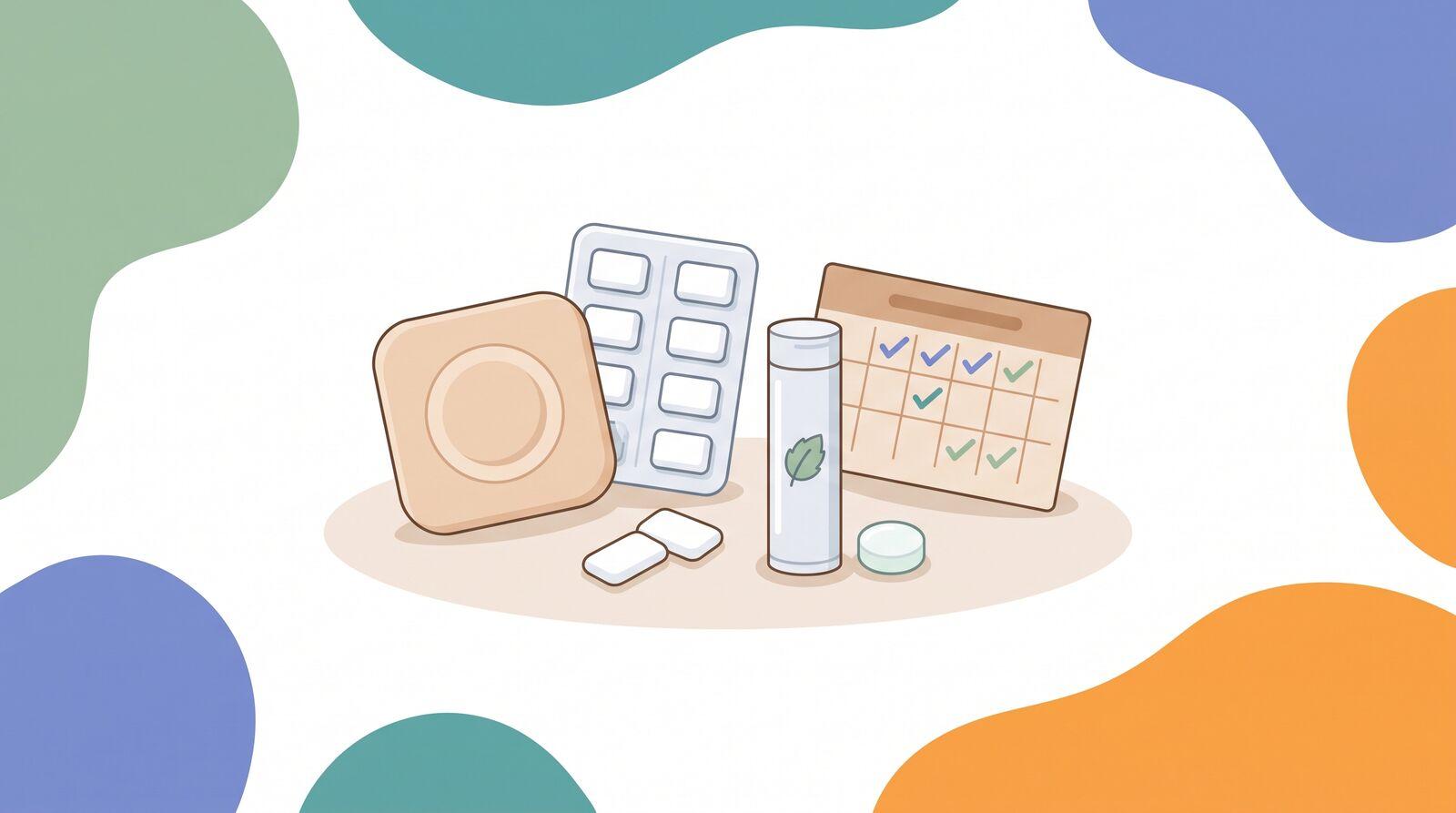
Stop cigarettes completely, first. Not 'cut down.' The health gain is binary at the cigarette layer. If you cannot stop the pack while vaping, vaping is not your cessation method. Use combination NRT or a prescription option instead, which exist specifically to taper nicotine rather than to replace one retail product with another.
Pick an end date for the vape when you pick the device. A 4-to-12-week bridge is a plan. An open-ended 'I will see how I feel' is how people are still vaping at year three. Write the date down.
Step the nicotine strength down on a calendar. If your device allows it, drop a level every one to two weeks (for example 50 mg/mL to 35, then 20, 10, 0) the same way a patch is stepped down. Flavor hopping to stay interested is the opposite of a taper.
Do not dual-use, and do not keep a 'backup' pack. The backup pack is a relapse kit. If a cigarette happens, treat it as a slip with a trigger attached, then continue the no-cigarette rule the same day. The story that the quit is already ruined is what turns a slip into a pack.
Have an exit that is not another inhaled product. When the vape end date arrives, use the quit-vaping plan: remove the device, cover remaining withdrawal with NRT if you need it, and ride out the two-week peak. The step-by-step smoking quit plan is the same architecture if you decide the vape was a detour and you want off nicotine now.
How Can Smoke Tracker Help With the Switch?
The danger of a switch is invisibility. There is no pack to empty, no ash, no smell, and it is easy to believe you have already quit while the nicotine and the remaining cigarettes both keep moving.
- Streak Counter: Count days without a cigarette, even while you vape. That is the number that tracks the actual health change. If the streak keeps resetting, you are dual-using, and the app will show it faster than memory will.
- Craving Log: Log cigarette cravings separately from vape urges. The first list is the ritual you still have to break; the second is the drug. Two weeks of entries make the dual-use moments obvious: coffee, alcohol, the commute.
- Health Timeline: The early combustion-repair milestones (carbon monoxide, circulation, the first lung-function window) only apply if the cigarette count is zero. Watching them while a pack is still in the week is a contradiction the timeline makes hard to ignore.
- Money Saved: Track what you no longer spend on cigarettes and what you now spend on pods. The difference is the real number. If it is close to zero, the financial argument for the switch has already failed.
A vape can get you off fire. It cannot do the rest of the quit for you. The body you want, the one that is not waiting on the next delivery, only shows up after nicotine has an end date too.
If you fully stop cigarettes, combustion toxins drop within hours and days, and lungs begin the same cleanup a full quit starts. Nicotine stays, dual use wipes the gain, and a vape with no exit date is a new habit, not a finish. Use the switch as a complete, time-limited bridge, then step off.
Sources
- Centers for Disease Control and Prevention. "Benefits of Quitting Smoking." cdc.gov
- Centers for Disease Control and Prevention. "Vaping and Quitting." cdc.gov
- U.S. Food and Drug Administration. "E-Cigarettes, Vapes, and other Electronic Nicotine Delivery Systems (ENDS)." fda.gov
- Lindson, N., Livingstone-Banks, J., Butler, A. R., et al. (2025). "Electronic cigarettes for smoking cessation." Cochrane Database of Systematic Reviews. cochrane.org
- NHS. "Vaping to quit smoking." nhs.uk
- Hajek, P., Phillips-Waller, A., Przulj, D., et al. (2019). "A Randomized Trial of E-Cigarettes versus Nicotine-Replacement Therapy." New England Journal of Medicine. nejm.org
- American Cancer Society. "Health Benefits of Quitting Smoking Over Time." cancer.org
- U.S. Department of Health and Human Services (2020). "Smoking Cessation: A Report of the Surgeon General." ncbi.nlm.nih.gov
- Prochaska, J. J., Vogel, E. A., Benowitz, N. (2022). "Nicotine delivery and cigarette equivalents from vaping a JUULpod." Tobacco Control. pmc.ncbi.nlm.nih.gov
Common questions
- Will my lungs heal if I quit smoking and start vaping?
- They will heal from combustion, not from inhalation. If you fully stop cigarettes, carbon monoxide drops to a non-smoker level within a few days and the tar load stops accumulating. Cilia, the tiny cleaners lining your airways, begin working again over the following weeks, which is why a cough can show up or get worse even though you have 'quit.' Lung function and circulation then improve over the following months. Vaping does not rewind that clock. It still puts an aerosol of nicotine, ultrafine particles, flavorings, and trace metals into the same airways, and long-term lung data on exclusive vaping is still thin. The honest version: exclusive switching is far better for the lungs than continuing to smoke, and far worse than being nicotine-free. Dual use, even 'just a few' cigarettes, keeps the combustion damage running and is not a healing path.
- Which is harder to quit, smoking or vaping?
- For many people, vaping. A cigarette has a built-in stop: it burns down. A vape does not. Nicotine-salt pods deliver a high dose smoothly, without the harsh throat hit that used to pace how much you could take in, so grazing all day is easy and the daily nicotine total often climbs. The chemical withdrawal is the same drug either way. The behavior is stickier because the device lives in your pocket, works indoors, and has no natural endpoint. That is why a switch can feel easier than a full quit in week one and harder to leave a year later. If the vape has become the new ceiling, the [step-by-step plan to quit vaping](/blog/how-to-quit-vaping) is the exit, not another device.
- How many vape hits equal a pack of cigarettes?
- There is no reliable conversion. Nicotine delivery depends on the device, the liquid strength, how long you draw, and how often you pick it up. A typical nicotine-salt pod is often described as containing about as much nicotine as a pack of 20 cigarettes, but that is a content comparison, not an absorbed-dose equation, and a heavy grazer can outpace a pack without noticing. Puff-count charts that claim 'X hits = one cigarette' are marketing, not pharmacology. The practical test is simpler: if you still want a cigarette, the vape is not covering the ritual; if you never put the device down, it is covering the nicotine and then some. Either pattern is information, not a reason to add cigarettes back on top.
- What happens if I vape and still smoke?
- You get the downsides of both and the benefits of neither. Dual use is common, and CDC is blunt about it: smoking even a few cigarettes a day is still dangerous, and stacking a vape on top of cigarettes is not a health strategy. Because there is no safe threshold for cigarette smoke, the carbon monoxide, tar, and cardiovascular hit from those remaining cigarettes keep landing. The vape then adds extra nicotine on top, so total dependence often rises rather than falls. People dual-use for a reason that feels rational, vape where smoking is banned, smoke the rest of the time, and the body treats that as continued smoking plus a second delivery system. The health gain of a switch only starts when the last cigarette actually stops.
- Is vaping an approved way to quit smoking?
- Not in the United States. The FDA has not approved any e-cigarette as a smoking-cessation medicine. The approved tools remain nicotine replacement (patch, gum, lozenge, inhaler, spray) and the prescription pills varenicline and bupropion. A 2025 Cochrane review found high-certainty evidence that nicotine e-cigarettes help more people stay off cigarettes at six months than NRT does, which is why the UK's NHS actively offers vaping as a quit option. Those two facts sit next to each other: e-cigarettes can work as a stop-smoking tool in trials, and US regulators still do not license them as one. If you use a vape to get off cigarettes, the evidence says it works best as a complete substitute with a plan to come off nicotine afterward, not as a permanent product and not alongside a pack.
This article is for informational purposes only and does not constitute medical advice. Health information is based on published research from organizations such as the CDC, WHO, and American Lung Association. Always consult a healthcare professional for personalized guidance on smoking cessation.