Будильник звенит. Вы открываете глаза.
Вместо ощущения отдыха, сердце стучит. Мысли несутся. В животе ком, который не отпускает, пока... ну, пока вы не выкурите первую сигарету.
Если это знакомо, вы не одни. Многие курильщики уверены, что сигарета «успокаивает» утреннюю тревогу.
Но что если именно сигареты и есть причина того, что вы проснулись на нервах?
Почему утро курильщикам даётся тяжелее всего?
Вот наука, о которой ваше тело давно пытается рассказать. Во сне вы проводите 6–8 часов без никотина. Для ежедневного курильщика это самый длинный отрезок воздержания за сутки. К утру уровень никотина в крови падает почти до нуля. Мозг, перенастроенный под постоянное поступление никотина для базовой дофаминовой передачи, начинает бить тревогу. Эта просадка запускает реакцию «бей или беги» ещё до того, как вы встанете с постели. Симптомы никотиновой отмены начинаются в первые часы после последней сигареты и достигают пика в первые дни. Утреннее окно это момент, когда потребность тела в никотине встречается с самым длинным естественным разрывом в его поступлении, и именно поэтому первый час после пробуждения самое тяжёлое время тяги за день.
Как кортизол сочетается с никотиновой отменой?
Кортизол, главный гормон стресса, имеет естественный ритм — «кортизоловый ответ на пробуждение» (CAR). У некурящих кортизол резко поднимается в первые 30–45 минут после пробуждения, помогая чувствовать бодрость. Однако клинические исследования показывают, что у курильщиков этот ответ заметно усилен по сравнению с некурящими. Когда ночная никотиновая отмена накладывается на и без того преувеличенный кортизоловый пик, результатом становятся усиленная тревога, раздражительность и беспокойство. Гипоталамо-гипофизарно-надпочечниковая ось, центральная система регуляции стресса, при хроническом потреблении никотина серьёзно расстраивается. По данным исследований, базовый уровень кортизола у курильщиков примерно на 36 процентов выше, чем у некурящих контрольных групп того же возраста. Это не «генерализованная тревога», с которой вы просыпаетесь. Это острая лекарственная отмена, наложенная на гормональный перегрев.
Как курение портит качество сна?
Цикл тревоги начинается задолго до звонка будильника. Никотин это стимулятор, и его присутствие в крови расстраивает каждую стадию сна. Клинические исследования показывают, что курильщики дольше засыпают, проводят больше времени в поверхностном сне и заметно меньше в восстановительных медленноволновой и REM-фазах. Пока никотин метаболизируется ночью, микро-отмены вызывают короткие пробуждения, которые ломают отдых, не давая полностью проснуться. Итог: вы не доходите до глубоких стадий, которые отвечают за регуляцию настроения и стрессовых гормонов. Исследования Johns Hopkins подтверждают, что плохой сон сам по себе поднимает кортизол и маркеры воспаления. Так что к утру тело курильщика лишено и никотина, и качественного отдыха, что создаёт двойной удар физиологического стресса в виде гонки мыслей, сжимающего ощущения в груди и отчаянной потребности закурить.
Какие утренние ритуалы могут заменить первую сигарету?
Очевидный ответ полностью бросить курить. Когда вы разрываете никотиновый цикл, уровень кортизола нормализуется, и утренние приступы паники часто исчезают. Но пока вы в процессе, замена ритуала важна не меньше, чем работа с химией. Выпейте полный стакан воды в первые пять минут после пробуждения: обезвоживание усиливает тревогу и замедляет выведение метаболитов. Съешьте белковый завтрак (яйца, орехи или греческий йогурт) до всего остального, потому что стабильный сахар крови предотвращает гипогликемический провал, имитирующий паническую атаку. Выйдите на 10 минут на дневной свет — лаборатория Хубермана в Стэнфорде описывает это как самый эффективный одиночный приём для перенастройки циркадианного ритма кортизола. Наконец, заведите короткую практику записей: запишите три вещи, за которые благодарны, или три задачи на день. Это переводит внимание мозга с тяги на осмысленные действия.
Какие дыхательные техники помогают при утренней тревоге?
Управляемое дыхание прямо противостоит активации симпатической нервной системы, питающей утреннюю тревогу. Самая доказанная техника это «физиологический вздох», изученный в лаборатории Эндрю Хубермана в Стэнфорде. Сделайте два вдоха носом (глубокий, затем короткий «дополняющий») и медленно выдохните ртом. Уже один-три цикла такого паттерна показали более выраженное снижение кортизола и субъективного стресса, чем медитация или «дыхание квадратом». Другой надёжный метод 4-7-8, рекомендованный доктором Эндрю Вейлем: вдох 4 секунды, задержка 7 секунд, выдох 8 секунд. Удлинённый выдох активирует блуждающий нерв и переключает тело из режима «бей или беги» в режим «отдыхай и переваривай». Практикуйте любую из техник, ещё не вставая с кровати, чтобы перехватить тревожный пик в самом источнике.
Когда уходит утренняя тревога после отказа от курения?
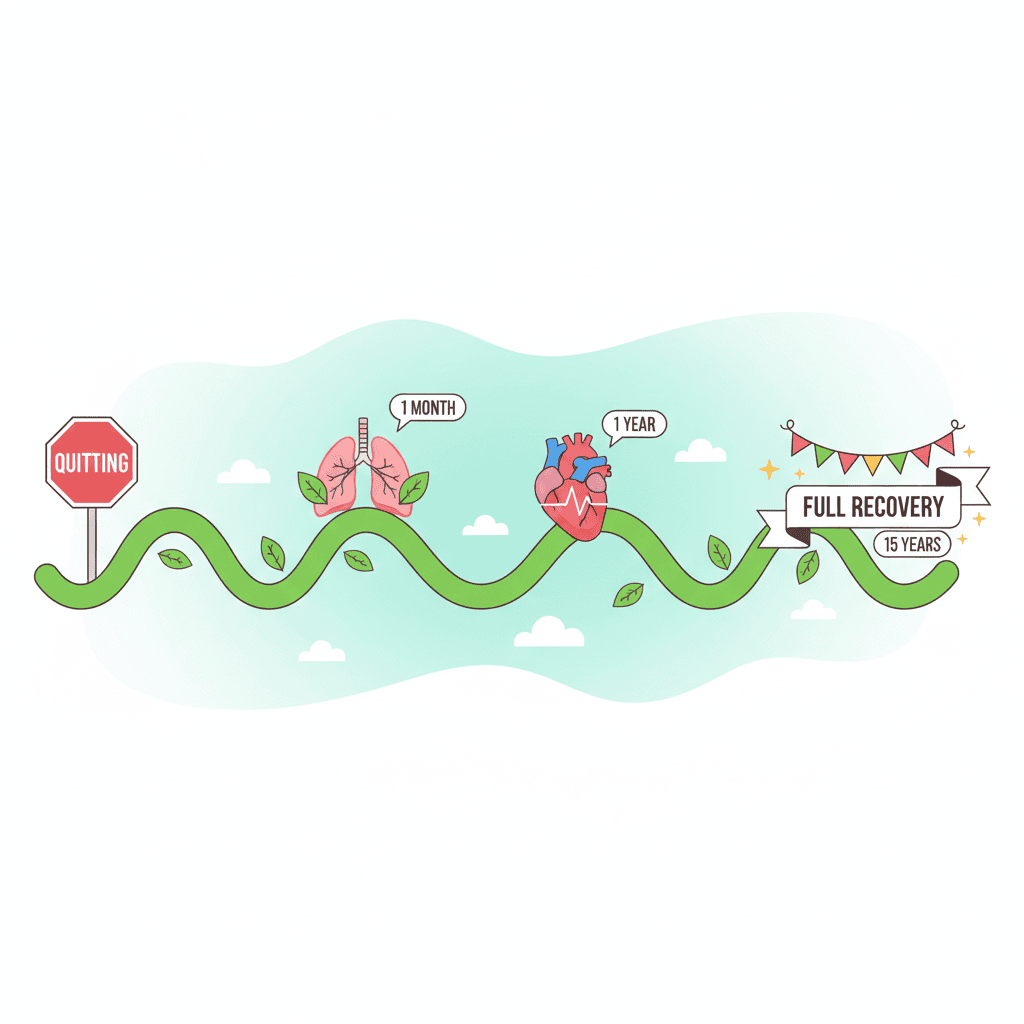
Сроки разные, но исследования обнадёживают. Самые острые симптомы никотиновой отмены, включая тревогу, раздражительность и трудности с концентрацией, достигают пика в первые три дня и начинают спадать к концу первой недели. Лонгитюдное исследование более 3000 курильщиков показало, что уровень тревоги опускается ниже исходного «до отказа» в течение шести недель и продолжает улучшаться до полугода. Утренняя тревога в особенности уходит быстрее, чем общая, потому что кортизоловый ответ на пробуждение нормализуется сразу, как только никотин перестаёт расстраивать HPA-ось. Большинство бывших курильщиков отмечают заметно более спокойные утра уже на 2–3 неделе. К третьему месяцу разница часто очень яркая: вы просыпаетесь и просто чувствуете... норму.
Что говорят исследования об утренней тяге?
Утренняя тяга это не просто привычка. Знаковое исследование показало, что курильщики, закуривающие в первые 30 минут после пробуждения, имеют значительно более высокие баллы никотиновой зависимости и сложнее бросают. Метрика «время до первой сигареты» сегодня входит в Тест Фагерстрема, клинический золотой стандарт. Исследования показывают, что «утренние закуривающие» быстрее метаболизируют никотин, то есть их тела очищаются от вещества за ночь быстрее, и отмена наступает раньше. Возникает порочный круг: чем быстрее тело перерабатывает никотин, тем сильнее утренняя тяга и тем срочнее курильщик тянется к сигарете. Понимание этой биологии снимает самообвинения. Утренняя паника не дефект характера, а предсказуемый и измеримый фармакологический ответ, который слабеет, как только вы убираете из уравнения само вещество.
Как отслеживать прогресс?
Когда вы бросите курить, вас может удивить то, что вы вовсе не «тревожный человек». Вы просто были человеком в отмене. Используйте Smoke Tracker, чтобы отмечать настроение каждое утро. Смотрите, как ваши оценки «утренней тревоги» снижаются по мере накопления дней без сигарет. Когда данные за недели видны на одном экране, это становится конкретным доказательством, что тело восстанавливается, и поддерживает мотивацию в сложные моменты. Отслеживайте качество сна вместе с тягой, чтобы заметить связь между хорошим отдыхом и более спокойными утрами. Многие пользователи говорят, что их утренние показатели настроения заметно улучшаются уже в первые две недели, что совпадает с клиническими сроками отмены. Закономерность становится очевидной: меньше сигарет, спокойнее утра. Каждый рассвет без сигарет немного дальше сдвигает мозг к его естественному равновесию.
Готовы просыпаться спокойно? Начните свой День 1 сегодня.
Источники
- National Institute on Drug Abuse. «Tobacco, Nicotine, and E-Cigarettes.» drugabuse.gov
- Centers for Disease Control and Prevention. «Benefits of Quitting Smoking Over Time.» cdc.gov
- Mayo Clinic. «Nicotine Dependence.» mayoclinic.org
- NHS. «Quit Smoking.» nhs.uk
- American Lung Association. «Benefits of Quitting.» lung.org
- National Cancer Institute. «Harms of Smoking and Benefits of Quitting.» cancer.gov
Частые вопросы
- Почему утром курильщикам особенно тревожно?
- За ночь вы проводите 6–8 часов без никотина. Это самый длинный перерыв в сутках. К утру уровень никотина падает почти до нуля, и мозг, привыкший к нему, запускает стресс-реакцию ещё до того, как вы встанете с кровати. Поэтому первый час после пробуждения это самое сильное время тяги за весь день.
- Связаны ли курение и кортизол?
- Да. У курильщиков утренний кортизол ощутимо выше, чем у некурящих. Никотиновая отмена ночью складывается с естественным утренним подъёмом кортизола, усиливая тревогу, раздражительность и беспокойство. Базовые уровни кортизола у курящих могут быть примерно на треть выше, чем у некурящих сверстников. Это не "вы тревожный человек", это фармакологический эффект.
- Когда уйдёт утренняя тревога после отказа от курения?
- Утренняя тревога обычно начинает заметно ослабевать на 2–3 неделе без сигарет и в значительной мере уходит к 4–6 неделям. Самые тяжёлые симптомы отмены проходят к концу первой недели. К трём месяцам большинство бывших курильщиков описывают утро словом «нормальное»: давление в груди и гонка мыслей при пробуждении просто исчезают.
- Что сделать утром вместо первой сигареты?
- В первые 5 минут после пробуждения выпейте полный стакан воды. Завтракайте белком (яйца, орехи, греческий йогурт), чтобы стабилизировать сахар крови. Постойте 10 минут на дневном свету для перенастройки кортизола. Сделайте 1–3 цикла «физиологического вздоха» (два вдоха носом, длинный выдох ртом) ещё до того, как встанете.
Данная статья носит исключительно информационный характер и не является медицинской рекомендацией. Информация о здоровье основана на опубликованных исследованиях таких организаций, как CDC, WHO и American Lung Association. Для получения индивидуальных рекомендаций по отказу от курения всегда обращайтесь к врачу.