아무도 이 부분은 미리 알려주지 않습니다. 마침내 담배를 끊고 갈망과 짜증에 대비하고 있는데, 그 대신 3일째 되는 날 아침, 따가운 목과 줄줄 흐르는 콧물, 묵직한 가슴, 그리고 영락없이 독감에 걸리는 듯한 느낌으로 잠에서 깹니다. 타이밍이 거의 잔인하게 느껴집니다. 건강을 위해 할 수 있는 가장 좋은 일을 했는데, 몸은 오히려 벌을 주는 것처럼 보이니까요.
여기에는 이름이 있습니다: 스모커 플루, 우리말로는 금연 몸살이라고 부를 수 있는 현상입니다. 금연 후 첫 몇 주에서 가장 흔하면서도 가장 이야기되지 않는 부분 중 하나이며, 이를 오해한 사람들은 정확히 잘못된 이유로 담배로 되돌아갑니다. 이 글에서는 스모커 플루가 실제로 무엇인지, 왜 생기는지, 얼마나 지속되는지, 진짜 감염과 어떻게 구분하는지, 그리고 금연을 포기하지 않고 이 시기를 통과하는 방법을 설명합니다.
스모커 플루란 무엇인가
스모커 플루는 의학적 진단명이 아니며 독감도 아닙니다. 마지막 담배 후 첫 1~4주에 많은 사람이 겪는 감기 및 몸살 유사 증상의 묶음을 부르는 비공식 명칭입니다: 목 아픔, 기침, 코막힘, 재채기, 두통, 피로, 그리고 영락없이 아픈 것처럼 느껴지는 처지고 쑤시는 상태.
핵심 사실은 바이러스가 전혀 관여하지 않는다는 것입니다. 무언가에 감염된 것이 아니고, 남에게 옮길 수도 없습니다. 지금 느끼는 것은 마지막 담배를 비벼 끄는 순간 동시에 시작되는 두 과정의 충돌입니다: 뇌가 재조정되는 니코틴 금단, 그리고 기도가 청소 시스템을 다시 켜는 물리적 치유.
이것은 속설도 아닙니다. 금연 첫 몇 주의 사람들을 추적한 연구자들은, 계속 흡연하는 사람들에 비해 금연자에게서 감기 증상과 구내염이 측정 가능한 수준으로 늘어난다는 것을 기록했습니다. 이 패턴은 실재하고, 흔하며, 무엇보다 일시적입니다.
지금 한가운데를 지나고 있다면, 가장 유용한 관점 전환은 이것입니다: 스모커 플루는 금연이 당신을 해치고 있다는 신호가 아닙니다. 회복의 어수선한 초기 단계가 안에서 어떻게 느껴지는지를 보여주는 것일 뿐입니다. 건물이 올라가기 직전까지, 공사장이 빈 땅보다 더 엉망으로 보이는 것과 같습니다.
금연하면 왜 아픈가
스모커 플루를 움직이는 엔진은 두 개이며, 어떤 증상이 어디에서 오는지 알면 도움이 됩니다.
첫 번째 엔진은 니코틴 금단입니다. 오랜 흡연은 뇌가 니코틴을 정상 작동의 기본 재료로 취급하도록 가르쳐, 도파민 시스템과 스트레스 반응, 수면 구조에 니코틴을 배선해 두었습니다. 그것을 제거해도 뇌는 하룻밤에 공장 초기화 상태로 돌아가지 않습니다. 몇 주에 걸쳐 재조정되며, 그 사이 당신은 빈자리를 느낍니다. 피로, 두통, 짜증, 집중력 저하, 뒤척이는 잠, 그리고 납작하고 무겁고 어딘가 좋지 않은 느낌이 스모커 플루의 금단 쪽 절반입니다. 금단 증상 일별 타임라인에서 이 전체 곡선을 자세히 그려 보여줍니다.
두 번째 엔진은 깨어나는 기도이며, 대부분의 사람이 전혀 예상하지 못하는 절반입니다. 기관지 내벽은 섬모라는 미세한 털 모양 구조로 덮여 있어, 점액과 타르와 이물질을 폐 밖으로 쓸어 올립니다. 담배 연기는 섬모를 마비시키고 파괴하며, 그래서 흡연자의 폐에는 섬모가 원래 치웠을 것들이 조용히 쌓입니다. 금연 후 며칠 안에 섬모는 회복을 시작하고, 몇 주 안에 본격적으로 업무에 복귀합니다. 첫 임무는 밀린 청소입니다: 이제 올라와야 하는 수년치 타르와 점액. 그 결과가 기침, 가래, 가슴 답답함, 그리고 갑자기 흐르기 시작하는 콧물입니다. 금연 후에 나타나는 흡연자 기침이 바로 이 과정이며, 스모커 플루의 코막힘과 목 자극은 그 가까운 사촌입니다.
세 번째 요인이 그 위에 얹힙니다: 재조정되는 면역계입니다. 흡연은 면역 기능을 억제하고 왜곡하며, 금연은 면역이 정상 작동으로 돌아오게 합니다. 그 전환기 동안, 더 이상 연기에 잠겨 있지 않은 입과 목과 기도의 조직은 치유 중이라 유난히 예민합니다. 구내염, 따가운 목, 자극받은 부비동이 우연이 아니라 실제로 기록된 금연 증상으로 연구에 등장하는 이유가 이것입니다. 금연이 가져오는 면역 회복은 가장 큰 장기적 이득 중 하나지만, 그 첫 몇 주는 껄끄럽게 느껴질 수 있습니다.
셋을 합치면 역설은 사라집니다. 흡연은 당신을 건강하게 지켜준 적이 없습니다. 청소 인력을 마비시키고, 경보 시스템을 죽이고, 약물로 뇌 화학을 떠받치고 있었을 뿐입니다. 금연은 그 세 목발을 한꺼번에 치우고, 수리가 진행되는 몇 주 동안 당신은 몸의 진짜 상태를 느끼게 됩니다.
스모커 플루 증상: 무엇이 정상인가
전형적인 그림에는 다음 중 몇 가지가 섞여 있습니다. 전부 겪는 사람은 거의 없으며, 심한 정도는 얼마나 오래, 얼마나 많이 피웠는지에 따라 크게 다릅니다.
- 따갑거나 아픈 목, 보통 아침에 가장 심함
- 기침, 처음에는 마른기침이었다가 폐가 점액을 밀어 올리기 시작하면 가래 기침으로
- 코막힘, 콧물, 재채기
- 가슴 답답함이나 묵직함, 기도가 청소되고 적응하는 과정
- 피로와 낮은 에너지, 첫 2주에는 때로 극심함
- 두통, 보통 둔하고 앞이마 쪽, 첫 며칠에 흔함
- 구내염이나 입안 통증, 잘 기록된, 의외로 흔한 금연 증상
- 오한, 식은땀, 열이 나는 듯한 느낌, 실제 체온 상승은 없음
- 몸살과 전반적인 처짐, 영락없이 뭔가 걸리는 듯한 그 느낌
- 짜증, 안절부절, 얕은 잠, 이 모든 것에 엮여 있는 금단의 실
목록만큼 중요한 것이 두 가지 부재입니다. 스모커 플루는 진짜 발열을 일으키지 않고, 심한 호흡곤란도 일으키지 않습니다. 이 둘을 기억해 두세요. 아래에서 다시 다룰 구분선입니다.
같은 시기에 잠까지 무너졌다면 그것도 우연이 아닙니다. 첫 몇 주의 불면은 같은 재조정의 일부이며, 다른 모든 증상이 얼마나 아프게 느껴지는지를 증폭시킵니다.
스모커 플루는 얼마나 지속될까
곡선이 예측 가능하다는 것은 진심으로 좋은 소식입니다: 끝나는 날짜를 정해 둘 수 있으니까요.
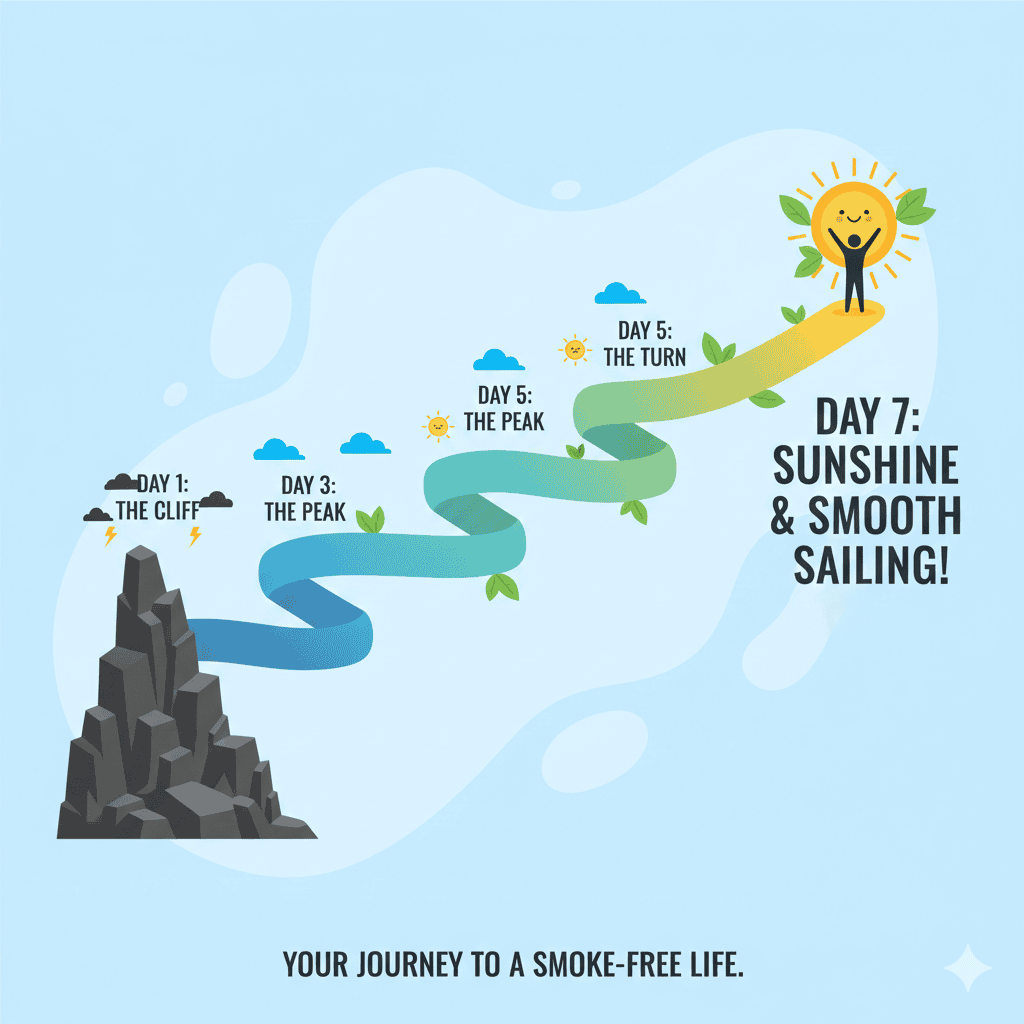
1~3일차: 시작. 니코틴은 약 72시간 안에 몸에서 빠져나가고 금단은 절정을 향해 올라갑니다. 목이 칼칼해지고 머리가 아프고 에너지가 떨어집니다. 섬모가 다시 깨어나기 시작합니다.
3~7일차: 절정. 보통 가장 힘든 구간으로, 몸살 유사 그림이 완성됩니다: 코막힘, 기침, 피로, 몸살, 그리고 아프다는 강한 주관적 느낌. 갈망의 절정과 겹치기 때문에 금연 첫 주의 악명이 여기서 나옵니다.
2~4주차: 옅어짐. 금단 증상이 급격히 완화되고 에너지가 돌아오기 시작하며, 코막힘이 풀리고 아픈 느낌이 걷힙니다. 대부분의 사람은 4주차 말이면 거의 정상으로, 또는 정상보다 나은 상태로 느낍니다.
4주 이후: 꼬리. 기침은 금단이 아니라 폐 청소에 묶여 있기 때문에 다른 모든 것보다 오래 남을 수 있습니다. 오랜 기간 많이 피운 사람은 폐가 치유 타임라인을 밟는 동안 두세 달 이어질 수도 있습니다. 이 단계에서 서서히 좋아지는 기침은 정상이며, 나머지는 이미 사라져 있어야 합니다.
지켜봐야 할 것은 방향입니다. 스모커 플루는 하루하루는 흔들려도 주 단위로는 좋아지는 쪽으로 움직입니다. 2~3주차 이후에도 나빠지는 쪽으로 움직이는 증상은 각본을 벗어난 것입니다.
스모커 플루인가, 진짜 감염인가
금연이 면역을 부여하는 것은 아니라서, 금연 첫 달에 실제로 감기에 걸리는 사람도 많습니다. 네 가지만 확인하면 둘을 구분하는 것은 대개 어렵지 않습니다.
발열이 가장 선명한 기준선입니다. 니코틴 금단은 오한과 식은땀, 열이 나는 듯한 느낌을 만들 수 있지만 심부 체온을 올리지는 않습니다. 체온계가 약 38°C(100.4°F) 이상을 가리키면 진짜 감염입니다. 헷갈리면 재 보세요. 30초면 끝나고 답이 나옵니다.
시점. 스모커 플루는 금연 후 첫 3일 안에 시작되어 첫 주가 끝날 무렵이면 뚜렷합니다. 이미 좋아지기 시작한 3~4주차에 난데없이 처음 나타나는 몸살 유사 증상은 진짜 감기일 가능성이 높습니다.
궤적. 스모커 플루는 일찍 절정을 찍고 천천히 갈리듯 좋아집니다. 감염은 더 빨리 오고 더 세게 치며, 진짜 독감이라면 당신을 그대로 눕혀 버립니다: 갑작스러운 고열, 심한 몸살, 일어서는 것조차 큰일인 탈진. 멀쩡하다가 하루 만에 만신창이가 되었다면 그것은 금단이 아닙니다.
주변 사람. 주위 사람들이 아프다면 뻔한 설명을 존중하세요.
완벽할 필요는 없습니다. 실용적인 규칙은 간단합니다: 발열이 없고 천천히 좋아지는 추세라면 금연의 일부로 대해도 됩니다. 진짜 발열이 있거나 급격히 나빠진다면 병으로 대하고, 평소처럼 진료를 받되 최근에 금연했다는 사실을 알리세요.
어떻게 견뎌낼까
스모커 플루의 절반은 반드시 일어나야 하는 복구 작업이라 건너뛸 수 없습니다. 하지만 그 몇 주를 훨씬 수월하게 만들 수는 있고, 이 목록의 모든 항목은 금연 자체도 지켜 줍니다.
물을 끊임없이 마시세요. 수분은 섬모가 실어 나르는 점액을 묽게 해 기침을 더 효율적으로, 코막힘을 더 느슨하게 만들고, 금단 두통의 날을 무디게 합니다. 물병을 손 닿는 곳에 두고 필요하다고 느끼는 것보다 자주 다시 채우세요.
쉬는 것을 허락하세요. 그 피로는 진짜입니다. 몸은 줄어든 화학 예산으로 대규모 리모델링을 진행하고 있습니다. 잘 수 있을 때 자고, 2주 동안은 목표를 낮추고, 휴식을 게으름이 아니라 치료의 일부로 대하세요. 피곤함이 금연을 지배하고 있다면 따로 살펴볼 가치가 있습니다.
목은 달래되, 기침은 일하게 두세요. 따뜻한 음료, 꿀, 목캔디, 습한 공기는 모두 따가운 목과 자극받은 기도를 진정시킵니다. 다만 가래를 동반한 기침을 완전히 틀어막고 싶은 충동은 참으세요. 그 기침은 폐에서 타르를 실어 나르는 화물 엘리베이터입니다. 잠을 방해할 때만 억제하세요.
매일 걸으세요. 20~30분간 빠르게 걸으면 치유 중인 폐에 혈액이 돌고, 코막힘이 풀리며, 납덩이 같은 에너지가 올라오고, 탄탄한 연구가 뒷받침하는 보너스로 급성 갈망까지 무뎌집니다. 첫 달에 할 수 있는 가장 지렛대 효과가 큰 단 하나의 습관입니다.
의도적으로 호흡하세요. 느리고 깊은 호흡은 스모커 플루 동안 두 가지 일을 동시에 합니다: 스스로를 청소하느라 바쁜 기도를 부드럽게 확장하고 환기시키며, 금단의 곤두선 불안한 날을 낮춰 줍니다. 분당 여섯 번 정도의 느린 호흡을 몇 분만 해도 갈망의 급습이나 스트레스 파도를 가장 빠르게 가라앉힐 수 있습니다. 자매 앱 Flow Breath는 바로 이런 짧은 가이드 리셋을 위해 만들어졌으며, 첫 2주의 험한 구간과 자연스럽게 짝을 이룹니다.
니코틴 대체요법을 고려하세요. 패치, 껌, 사탕형 제제는 치유 중인 기도에 연기를 다시 넣지 않으면서 스모커 플루의 금단 쪽 절반인 피로, 두통, 짜증을 부드럽게 해 줍니다. 금연 성공률을 대략 두 배로 올리며, 사용하는 것은 반칙이 아닙니다. NRT 완전 가이드에서 각 제형을 올바르게 쓰는 법을 다룹니다.
회복 중인 사람처럼 드세요. 과일, 채소, 충분한 단백질은 복구 작업에 원자재를 공급하고, 비타민 C가 풍부한 음식은 면역 재조정을 돕습니다. 첫 몇 주에 무엇을 먹는지가 그 몇 주의 체감을 조용히 좌우합니다.
하지 말아야 할 것 하나: 멈추게 하려고 담배를 피우지 마세요. 담배 한 대는 스모커 플루를 낫게 하지 못합니다. 섬모를 다시 마비시키고 청소를 멈추며, 나중에 같은 몇 주를 다시 치러야 하도록 시계를 되돌릴 뿐입니다. 가장 빠른 출구는 통과하는 것입니다.
언제 병원에 가야 할까
스모커 플루는 양성이지만, 금연 후 한 달간 몸에서 일어나는 모든 일을 덮는 만능 설명이 되어서는 안 됩니다. 다음 중 하나라도 나타나면 지체 없이 진료를 받으세요:
- 약 38°C(100.4°F) 이상의 진짜 발열
- 정상적인 금연 과정에 속하지 않는 숨참, 쌕쌕거림, 호흡곤란
- 가벼운 답답함을 넘는 가슴 통증, 특히 퍼지거나 식은땀, 메스꺼움을 동반할 때
- 가래에 희미하게 비치는 정도를 넘는 객혈, 이는 언제나 검사가 필요합니다
- 완화되기는커녕 2~3주 후에도 악화되는 증상, 또는 3개월이 지나도 여전히 기세가 강한 기침
- 심하게 아픈 느낌, 갑작스러운 쓰러질 듯한 탈진, 혼란, 또는 단순히 처지는 수준을 훨씬 넘는 전반적 상태
의사들은 스모커 플루라는 딱지 뒤에 숨은 진짜 감염을 놓치느니, 최근 금연자의 헛걸음 진료를 훨씬 반깁니다. 가서 최근에 끊었다고 말하고, 판단은 맡기세요.
Smoke Tracker는 이 과정을 어떻게 도와줄까요?
스모커 플루가 교묘한 재발 방아쇠인 이유는 딱 하나입니다: 기대했던 보상을 뒤집기 때문입니다. 더 건강해지려고 끊었는데 일시적으로 더 아프고, 중독은 재빨리 자기 해석을 내밉니다. 몸이 결국 담배를 필요로 한다는 해석 말입니다. 트래커는 가짜 이야기가 가장 시끄러운 동안 진짜 이야기를 눈앞에 붙잡아 두기 위해 존재합니다.
- 건강 타임라인: 일산화탄소 배출 완료, 혈액순환 개선, 섬모 재생 같은 회복 이정표가 하나씩 지나가는 것을 보면, 모든 기침이 병이 아니라 진행의 증거로 다시 보입니다. 증상과 이정표는 같은 사건을 정직하게 서술한 것일 뿐입니다.
- 연속 기록 카운터: 스모커 플루의 최악 구간은 3~10일차, 정확히 연속 기록이 어리고 연약할 때 옵니다. 가장 험한 날들을 지나며 숫자가 올라가는 것을 보면, 그 날들은 당신에게 불리한 것이 아니라 유리하게 일하는 투자로 바뀝니다.
- 갈망 도구 모음: 담배 한 대가 이 기분을 고쳐 줄 거라는 생각은 첫 2주에서 가장 위험한 아이디어입니다. 그 생각이 찾아올 때, 도구 모음은 행동에 옮기는 대신 쓸 수 있는 구체적인 2분짜리 대안을 건네줍니다.
- 절약한 돈: 첫 몇 주간 아낀 돈을 정말로 도움이 되는 것들, 가습기, 좋은 차와 꿀, 따뜻한 담요 쪽으로 돌리고, 지금 실제로 하고 있는 맞바꿈이 무엇인지 앱이 보여주게 하세요.
스모커 플루는 이름부터 잘못 지어졌고 널리 오해받지만, 완전히 정상적인 금연의 한 챕터입니다. 그 어떤 것도 몸이 무너지고 있다는 뜻이 아니며, 모든 것이 흡연이 억누르던 것을 몸이 마침내 자유롭게 복구하고 있다는 뜻입니다. 기침은 청소입니다. 피로는 재조정입니다. 따가운 목은 몇 년 만에 처음으로 트인 공기 속에서 치유되는 조직입니다.
금연 후에 아픈 것은 경고 신호가 아니라 수리하는 소리입니다. 첫 주에 절정을 찍고 한 달 안에 옅어지며, 힘든 하루하루는 몸이 다시 세우는 데 쓰는 날입니다. 쉬고, 마시고, 걷고, 계속 나아가세요.
참고 자료
- Ussher, M., West, R., et al. (2003). "Increase in common cold symptoms and mouth ulcers following smoking cessation." Tobacco Control. pubmed.ncbi.nlm.nih.gov
- Hughes, J. R. (2007). "Effects of abstinence from tobacco: valid symptoms and time course." Nicotine & Tobacco Research. pubmed.ncbi.nlm.nih.gov
- U.S. Department of Health and Human Services. (2020). "Smoking Cessation: A Report of the Surgeon General." ncbi.nlm.nih.gov
- Centers for Disease Control and Prevention. "7 Common Withdrawal Symptoms." cdc.gov
- National Cancer Institute (smokefree.gov). "Managing Withdrawal." smokefree.gov
- American Cancer Society. "Nicotine Withdrawal and Quitting Smoking." cancer.org
- Benowitz, N. L. (2010). "Nicotine addiction." New England Journal of Medicine. pubmed.ncbi.nlm.nih.gov
자주 묻는 질문
- 스모커 플루(금연 몸살)란 무엇인가요?
- 스모커 플루는 금연 후 첫 1~4주에 흔히 나타나는 몸살 유사 증상을 부르는 비공식 명칭입니다: 목 아픔, 기침, 코막힘, 재채기, 두통, 피로, 그리고 때로는 구내염까지 포함됩니다. 이름과 달리 독감이 아니며 바이러스도 관여하지 않습니다. 두 가지가 동시에 이를 만들어 냅니다. 니코틴 금단은 피곤함, 두통, 짜증, 멍하고 처지는 느낌을 만들고, 기도의 물리적 치유는 호흡기 증상을 만듭니다: 흡연이 마비시켰던 섬모가 되살아나 폐에서 타르와 점액을 치우기 시작하는데, 그것이 곧 기침과 코막힘입니다. 다시 말해, 지금 느끼는 아픔은 대부분 몸이 다시 켜지는 소리입니다. 연구자들도 이 패턴을 공식적으로 기록했습니다: 금연 첫 몇 주의 사람들을 추적한 연구에서, 계속 흡연하는 사람들에 비해 감기 증상과 구내염이 측정 가능한 수준으로 늘어난다는 것이 확인되었습니다.
- 스모커 플루는 얼마나 오래 지속되나요?
- 대부분의 사람에게 스모커 플루는 예측 가능한 곡선을 따릅니다. 증상은 마지막 담배 후 24~72시간 안에 시작되어 첫 주에 절정을 찍고, 2주차 말이면 눈에 띄게 좋아집니다. 4주차가 되면 대다수의 금연자에게 몸살 유사 단계는 끝납니다. 예외는 기침입니다: 금단이 아니라 기도가 스스로를 물리적으로 청소하는 과정에서 나오는 것이기 때문에 몇 주 더 이어질 수 있고, 수십 년간 많이 피운 사람은 몇 달까지 가기도 합니다. 그 남은 기침은 문제가 있다는 신호가 아니라 폐가 치울 것이 많았다는 뜻입니다. 방향이 좋아지는 쪽이라면 모두 정상입니다. 2~3주가 지나도 계속 나빠지는 증상이나, 어느 시점이든 진짜 발열은 스모커 플루의 범위를 벗어나므로 진료를 받아볼 필요가 있습니다.
- 흡연할 때는 멀쩡했는데 왜 금연하니 아픈가요?
- 몸이 니코틴과 담배 연기에 완전히 적응해 있었고, 금연하면 그 두 적응이 한꺼번에 풀리기 때문입니다. 니코틴은 정상적인 도파민 기능이 규칙적인 공급에 의존하도록 뇌 화학을 재배선해 두었습니다. 그것을 제거하면 뇌가 재조정되는 동안 피로, 두통, 수면 악화, 가라앉는 기분이라는 금단 묶음이 찾아옵니다. 한편 담배 연기는 기도를 덮은 섬모를 마비시켰는데, 그 덕에 흡연자의 폐가 원래라면 만들어 냈을 기침과 점액 배출까지 편리하게 억눌려 있었습니다. 금연은 그 마취를 걷어냅니다: 섬모는 며칠에서 몇 주 안에 다시 자라고 활동을 재개해, 쌓여 있던 타르를 곧바로 쓸어내기 시작합니다. 그것이 기침, 가래, 코막힘입니다. 흡연이 당신을 건강하게 지켜준 것이 아니라, 경보를 꺼 두고 청소를 멈춰 두었던 것입니다. 몇 주간 더 아프게 느껴지는 것이 바로 안에서 진행되는 복구 작업의 느낌입니다.
- 금연이 열을 나게 할 수 있나요?
- 아니요, 진짜 발열은 아닙니다. 니코틴 금단은 열이 나는 듯한 느낌을 줄 수 있습니다: 오한, 식은땀, 화끈거림, 전반적으로 쑤시는 느낌이 모두 보고되며, 독감 초기와 그럴듯하게 비슷할 수 있습니다. 하지만 금단은 심부 체온을 올리지 않습니다. 체온계가 실제 발열, 대략 38°C(100.4°F) 이상을 가리킨다면, 그것은 스모커 플루가 아니라 금연 시기와 우연히 겹친 진짜 감염입니다. 이 구분은 양쪽 모두에 중요합니다: 진짜 병을 금단으로 치부하는 것을 막아 주고, 금연이 몸을 위험하게 망가뜨렸다고 걱정하는 것도 막아 줍니다. 헷갈리면 재 보세요. 금연 첫 몇 주에 정상 체온과 감기 유사 증상이 함께 있다면 스모커 플루일 가능성이 매우 높고, 필요한 것은 휴식과 수분과 인내뿐입니다.
- 스모커 플루는 어떻게 없애나요?
- 치유 과정에서 나오는 것이라 완전히 건너뛸 수는 없지만, 훨씬 수월하게 만들 수는 있습니다. 기도가 밀어내는 점액을 묽게 하고 금단 두통을 누그러뜨리도록 평소보다 물을 더 많이 마시세요. 첫 몇 주는 에너지가 정말로 부족한 시기이니 몸이 원하는 만큼 자세요. 따뜻한 음료, 꿀, 목캔디로 목을 달래되 기침은 억누르기보다 하게 두세요. 기침은 유용한 일을 하고 있습니다. 빠른 걷기 같은 가벼운 매일의 운동은 혈액순환을 돕고 기도를 열어 주며, 동시에 갈망을 측정 가능한 수준으로 줄여 줍니다. 니코틴 대체요법은 금단 쪽의 그림, 즉 피로, 두통, 짜증을 부드럽게 해 주지만 기도 청소를 멈추지는 못합니다. 무엇보다 증상을 경고가 아니라 카운트다운으로 대하세요: 첫 주에 절정을 찍고 2~4주에 걸쳐 옅어지며, 힘든 하루하루가 몸이 스스로를 복구하는 데 쓰는 날입니다.
이 글은 정보 제공 목적으로만 작성되었으며, 의학적 조언을 구성하지 않습니다. 건강 정보는 CDC, WHO, American Lung Association 등의 기관에서 발표한 연구를 기반으로 합니다. 금연에 대한 개인 맞춤 지침은 반드시 의료 전문가와 상담하시기 바랍니다.