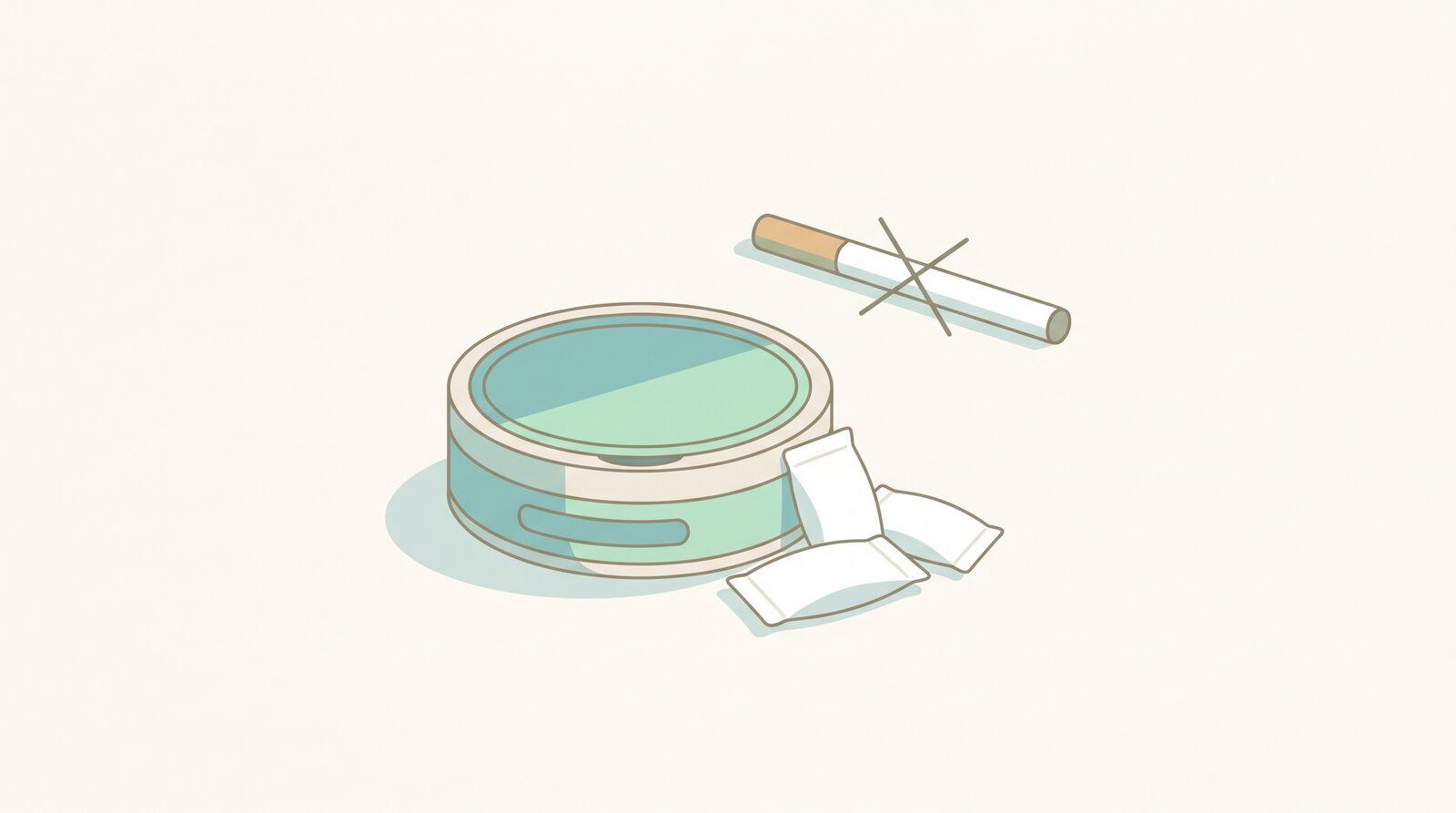
The tin sits beside your keyboard. You take a pouch before a call, another on the drive home, and one after dinner without deciding whether you actually want it. Perhaps Zyn helped you leave cigarettes behind. Perhaps you started with pouches. Either way, you now want a day that does not revolve around the next one.
A useful quit plan names what you will change, when you will stop, and what you will do when an urge interrupts your day. The steps below help you write that plan. They apply to adult users of Zyn and other nicotine pouches, with treatment choices discussed with a healthcare professional when needed.
Start With Your Actual Pouch Routine
Before choosing a method, write down what you currently use. Include the brand, labeled strength per pouch, approximate daily count, and whether you also smoke or vape. Then note the situations in which you reach for a tin.
Keep the record simple. A phone note with four columns is enough: time, strength, situation, and whether the pouch felt planned or automatic. Include an ordinary workday and time away from work if those routines differ. You can also start quitting immediately; collecting a perfect baseline is not a prerequisite.
Look for the decisions your record can help you make. Is the first pouch tied to waking up or arriving at your desk? Do you use more when you work late? Is a spare tin in the car making every journey a pouch break? These details give you specific routines to address.
The milligrams on the label are nicotine content, not a measurement of what your body absorbs. Research reviewed by Germany's Federal Institute for Risk Assessment shows that nicotine delivery varies between pouch products. Do not use a count-times-strength calculation to prescribe yourself an equivalent patch or gum dose. Bring the packaging and your usage record to a pharmacist instead. BfR risk assessment
Choose a Stopping Date or a Planned Reduction
You can organize your attempt around a clear stopping date or reduce your use before that date. Neither choice needs to become a test of toughness.
If You Want to Quit Cold Turkey
Choose the date and prepare for the situations you will face that day. Decide what will replace the tin at your desk, what you will do on the commute, and who you can contact if you start reconsidering. Remove spare supplies when you stop.
Write your reason somewhere easy to find. Make it personal and concrete: fewer interruptions at work, less spending, or no longer planning errands around buying pouches. You do not need a dramatic reason for wanting to stop.
If You Prefer to Reduce First
Make the reduction observable. Record your count, leave longer gaps between uses, and consider a lower-strength product rather than using the same amount indefinitely. Truth Initiative recommends lower strengths and practicing short periods without a usual pouch as ways to prepare for quitting. Truth Initiative's pouch-quitting guidance
Add an endpoint and a review date to your plan. At the review, check what actually happened: did use fall, stay the same, or move into different parts of the day? If the plan is not changing your use, revise it with support rather than repeatedly moving the finish line.
There is no universal Zyn taper established by the sources reviewed here. A neat schedule found online is not automatically a tested treatment. If reducing leaves you repeatedly returning to your old pattern, that is useful information for a cessation professional.
Prepare for Withdrawal Without Treating a Timeline as a Deadline
Nicotine withdrawal can involve cravings, irritability, restlessness, poor concentration, sleep disruption, increased appetite, and low mood. The National Cancer Institute describes symptoms as usually peaking in the first three days, being hardest during the first week, and becoming less intense over the first month. Some people have symptoms for longer. This is general nicotine-withdrawal guidance, not a pouch-specific prediction. NCI withdrawal guidance
Use that information to make room in your schedule. If possible, avoid placing your most demanding optional commitments immediately after your quit date. Prepare ordinary meals, make time for rest, and let someone close to you know what you are doing.
Our nicotine withdrawal timeline explains the broader pattern. For the difference between an individual urge and recurring triggers, see how long nicotine cravings last.
Do not assume severe or worsening symptoms are simply withdrawal. Seek professional help for persistent low mood or symptoms that interfere substantially with daily life, and urgent help for thoughts of self-harm.
Replace the Situations That Trigger a Pouch
Choose a response for your two most frequent situations first. You can add more once you know which parts of the day need attention.
Here are practical ways to organize those replacements:
- At your desk: clear the tin's usual spot and put your written quit plan there. Before a long call, have water within reach so you are not searching through the drawer that held your pouches.
- During a commute: remove tins from the car and bag before leaving. Decide on your response before driving, when you can give the plan your full attention.
- After a meal: arrange a specific next activity, such as clearing the table or taking a short walk. Avoid leaving an empty interval that you have already decided will be difficult.
- Around friends who use pouches: prepare one sentence: “I'm stopping, so please don't offer me one.” You do not owe anyone a debate about your decision.
For the oral habit, sugar-free gum or a mint can be a simple alternative. EX Program also suggests extending the interval before a pouch and practicing letting an urge pass. These are skills you can rehearse before your stopping date. EX Program's quitting guide
When a replacement does not help, record the situation and change the response. Perhaps you need company during a break rather than another item to chew. Your plan should become more specific as you learn what is difficult.
Get Support and Discuss Treatment Options
You can arrange help before your first attempt. Bring your usage record to a pharmacist or clinician and ask: “I want to stop nicotine pouches. What would you recommend for withdrawal, and how should we review the plan?” Mention other nicotine products, medicines, and relevant health conditions.
The evidence needs a distinction. A 2025 Cochrane review found that counseling and varenicline probably help people stop smokeless tobacco, while nicotine replacement therapy may help. That review does not establish the same results for tobacco-leaf-free Zyn pouches. Cochrane review
In the United States, nicotine replacement medicines are approved for smoking cessation. Whether to use them for pouch cessation, and at what dose, is a separate treatment discussion. Follow the selected product's instructions and professional advice rather than choosing combinations or doses yourself from a pouch-strength calculation. FDA cessation-product guidance
For behavioral support, US readers can also explore EX Program, which provides guidance for people stopping pouches. Elsewhere, ask a local tobacco-cessation service whether it supports nicotine-pouch users.
Handle a Slip and Keep Cigarettes Out of the Plan
If you use a pouch after stopping, record what happened and return to your plan. Name the situation, decide what needs changing, and contact your support person if you need help. There is no need to wait until Monday to act on what you learned.
For former smokers, keep your two dates separate: the last cigarette and the last pouch. If you have remained cigarette-free, stopping pouches does not erase that record. Returning to cigarettes would introduce smoke exposure again. The FDA notes that switching completely away from cigarettes to pouches may reduce exposure to many harmful chemicals, even though pouches still carry risks. FDA nicotine-pouch information
Our guide to pouches as a cigarette substitute covers that different decision. If stopping pouches brings back the urge to smoke, make protecting your cigarette-free progress part of the conversation with your clinician.
Smoke Tracker can help former smokers keep their smoke-free days visible and access its craving toolkit. Keep a separate note for pouch use; cigarette-related health milestones should not be read as a Zyn recovery schedule.
Start with a short written plan: your stopping date, your two hardest situations, your chosen responses, and the person or service you will contact. Put it where the tin used to be, and review it against what actually happens.
This article is for general educational purposes and is not medical advice. Consult a qualified healthcare professional about treatment for nicotine dependence, especially if you are pregnant, breastfeeding, under 18, or have a significant health condition.
Sources
- German Federal Institute for Risk Assessment. Health risk assessment of nicotine pouches.
- Truth Initiative. What to know about quitting Zyn.
- National Cancer Institute. Tips for Coping with Nicotine Withdrawal and Triggers.
- EX Program. How to Quit Zyn and Other Nicotine Pouches.
- Cochrane. What are the best ways to help people to stop using smokeless tobacco?.
- U.S. Food and Drug Administration. Want to Quit Smoking? FDA-Approved and FDA-Cleared Cessation Products Can Help.
- U.S. Food and Drug Administration. Other Tobacco Products.
Common questions
- Is it better to quit Zyn cold turkey or gradually?
- There is no single pouch-specific schedule established as best by the sources reviewed here. Stopping on a chosen date gives you a clear boundary; planned reduction gives you opportunities to change routines before stopping. Whichever you choose, include support and an endpoint rather than relying on a vague intention to use less.
- How long does Zyn withdrawal last?
- General nicotine-withdrawal guidance describes symptoms as usually strongest in the first week and easing over the first month, with substantial individual variation. This is a guide to what you may experience, not a validated Zyn-specific recovery calendar.
- Can I use nicotine gum to help quit pouches?
- Ask a pharmacist or clinician whether nicotine replacement therapy is appropriate for you and how to use it. Do not convert pouch strength directly into a gum or patch dose. In the United States, these medicines are approved for smoking cessation; treatment decisions for pouch users require a separate discussion.
- Does quitting pouches mean restarting my smoke-free counter?
- If you have remained cigarette-free, your last cigarette date has not changed. Record your last pouch date separately so that stopping nicotine does not erase your record of stopping smoking.
This article is for informational purposes only and does not constitute medical advice. Health information is based on published research from organizations such as the CDC, WHO, and American Lung Association. Always consult a healthcare professional for personalized guidance on smoking cessation.