Many people quit smoking to protect their lungs and heart, but there is a hidden, life-changing benefit that often catches new non-smokers by surprise: dramatically improved sleep quality. If you are a smoker who wakes up feeling exhausted or struggles to stay asleep, cigarettes might be the disguised culprit. Here is a deep look at the science behind how quitting smoking transforms the way you rest, recover, and recharge.
Why Is Nicotine Considered a Sleep Disruptor?
Despite the popular image of a "relaxing" cigarette, nicotine is a potent central nervous system stimulant. Nicotine elevates heart rate by 10 to 20 beats per minute and raises blood pressure within seconds of inhalation. Smoking before bed, or even in the early evening, keeps the brain locked in a heightened state of alertness. This makes it significantly harder to fall asleep and compresses the time you spend in deeply restorative sleep stages. Nicotine's stimulant properties rival those of caffeine, yet many smokers never connect their nightly restlessness to their tobacco habit. Cortisol and adrenaline levels also spike after each cigarette, further priming the body for wakefulness rather than rest. Recognizing nicotine as a stimulant is the first critical step toward understanding why quitting leads to such profound and lasting improvements in nightly rest.
How Does Nicotine's Half-Life Affect Your Nighttime Rest?
Nicotine has a relatively short half-life of roughly two hours, according to pharmacokinetic research. This means blood nicotine levels drop sharply during the night after your last cigarette. As levels fall, the body enters a mild withdrawal state that can trigger "micro-awakenings," brief disruptions you may not even remember in the morning. These episodes fragment your sleep architecture even when you believe you slept through the night uninterrupted. The cycle is self-reinforcing: poor sleep leads to daytime fatigue, which leads to more smoking for alertness, which leads to worse sleep the following night. This withdrawal-driven fragmentation is one key reason smokers report higher rates of daytime drowsiness compared to non-smokers. Understanding the pharmacokinetics of nicotine helps explain why even a single evening cigarette can undermine an entire night of rest. Breaking this cycle is one of the most immediate and tangible rewards of quitting.
What Happens to REM and Slow-Wave Sleep When You Smoke?
Sleep consists of several stages, with REM (Rapid Eye Movement) sleep and slow-wave sleep being the most critical for cognitive function and physical repair. Research suggests that smokers spend significantly less time in both REM and slow-wave sleep compared to non-smokers. Nicotine suppresses REM sleep in particular, which is essential for memory consolidation, emotional regulation, and learning. Slow-wave sleep, the deepest phase during which the body repairs tissues and strengthens the immune system, is also noticeably shortened in active smokers. These reductions accumulate over years of smoking, contributing to chronic cognitive fog and weakened physical recovery. Polysomnography studies confirm that smokers cycle through sleep stages more rapidly, spending less total time in each restorative phase. When you quit, your brain gradually reclaims these vital sleep stages, restoring the full restorative architecture your body has been missing.
Does Smoking Increase the Risk of Sleep Apnea?
Yes, and the connection is stronger than many people realize. Current smokers are 2.5 times more likely to develop obstructive sleep apnea (OSA) than non-smokers. Cigarette smoke causes chronic inflammation and swelling in the upper airway tissues, narrowing the passages that must stay open during sleep. This airway narrowing raises the likelihood of repeated breathing interruptions throughout the night, each one pulling you out of deep sleep and triggering a stress response. Snoring also worsens as inflamed tissues vibrate more readily. Smoking-related airway inflammation can persist for weeks after quitting but does gradually resolve as the tissues heal. Former smokers see measurable reductions in apnea severity within the first few months of cessation. Quitting not only reduces your sleep apnea risk but also improves blood oxygen saturation during sleep, supporting better cardiovascular health overnight.
Why Does Sleep Get Worse Before It Gets Better After Quitting?
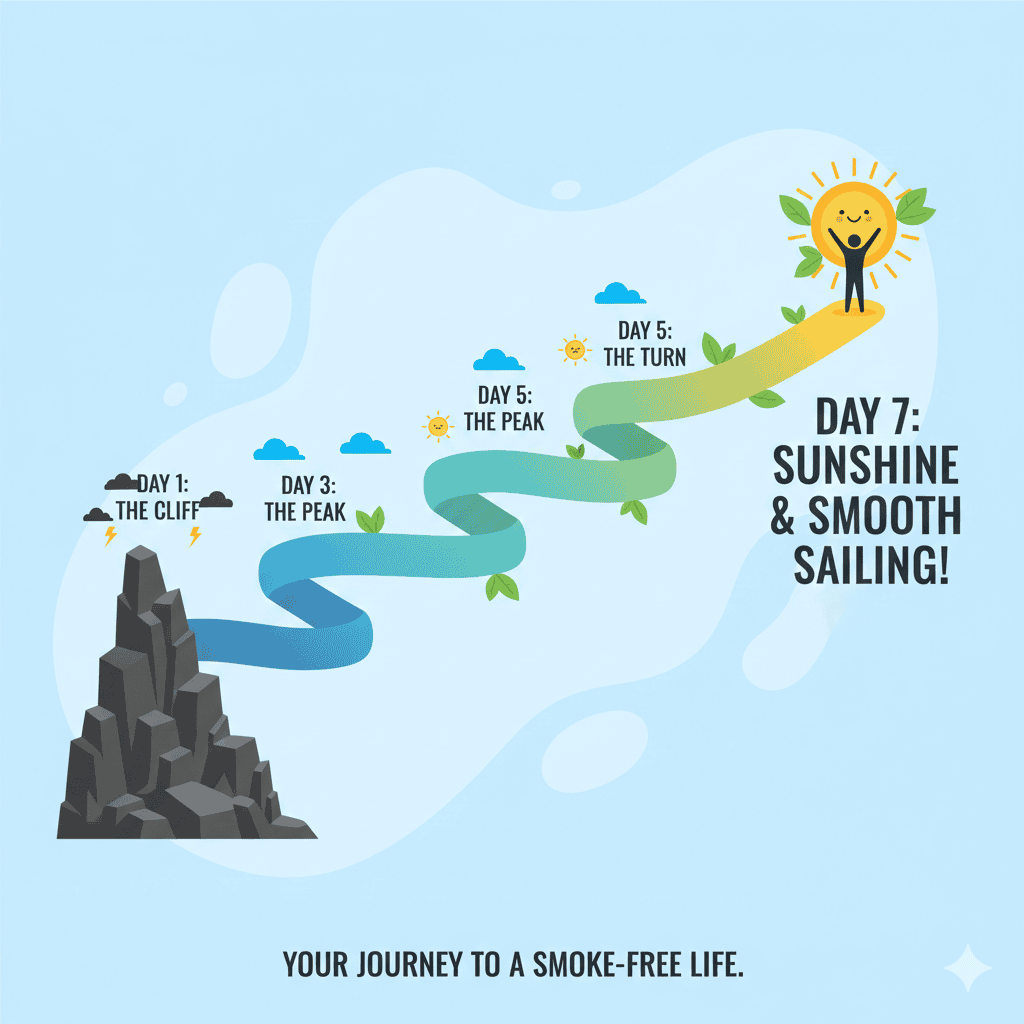
One of the most discouraging aspects of quitting is the initial sleep disruption that many people experience during the first one to two weeks. The reason is straightforward: your brain's neurochemistry is recalibrating after months or years of constant nicotine exposure. The brain's nicotinic acetylcholine receptors, which have been chronically overstimulated by nicotine, need time to downregulate and return to baseline sensitivity. During this adjustment period, temporary insomnia, vivid dreams, and nighttime restlessness are common withdrawal symptoms. Research suggests that these sleep disturbances typically peak around days three to five and resolve substantially by week three. This phase is not a sign of lasting damage or that quitting was a mistake. It is a sign that your brain is actively healing, rebuilding its natural ability to regulate sleep cycles without chemical interference.
What Does the Sleep Recovery Timeline Look Like?
Understanding the recovery timeline can help you stay motivated through the initial rough patch and set realistic expectations. During days one through seven, expect the most significant sleep disruption as nicotine clears your system and your brain chemistry adjusts. Insomnia and fragmented sleep are common during this window, but they are temporary. By weeks two through four, most quitters notice that deep sleep begins to return with increasing consistency. Vivid dreaming may continue as REM sleep rebounds, a phenomenon sleep researchers call "REM rebound," which is actually a positive signal that your brain is recovering suppressed sleep stages. By month two and beyond, your sleep architecture closely resembles that of a never-smoker. You will likely find yourself waking up feeling genuinely refreshed, needing less caffeine during the day, and experiencing more stable energy levels from morning to evening. The transformation is both remarkable and lasting.
What Sleep Hygiene Tips Help Quitters the Most?
Managing sleep during the first weeks of quitting requires deliberate strategy. Cut your caffeine intake in half: without nicotine, your body metabolizes caffeine up to 50% more slowly, so a cup of coffee that once cleared in four hours might now linger for eight. Establish a wind-down routine by replacing your evening cigarette with a calming ritual such as reading, stretching, or drinking chamomile tea. Get morning sunlight within 30 minutes of waking to reset your circadian rhythm, as recommended by the Sleep Foundation. Exercise regularly, but not too late: moderate physical activity improves sleep quality, though exercising within three hours of bedtime can have the opposite effect. Avoid alcohol as a sleep aid, since it fragments sleep architecture even further. Finally, keep your bedroom cool, dark, and reserved exclusively for sleep.
Should Quitters Consider Melatonin for Sleep Support?
Melatonin supplements are widely available and may offer short-term relief for quitters struggling with insomnia, but they deserve a cautious approach. Melatonin can help regulate the sleep-wake cycle, particularly for people whose circadian rhythm has been disrupted, as is common in smokers. A low dose of 0.5 to 3 milligrams taken 30 to 60 minutes before bedtime is generally considered safe for short-term use. However, melatonin is not a sedative; it signals to your brain that it is time to sleep rather than forcing sleep to occur. Consulting a healthcare provider before starting melatonin is recommended, especially if you are using nicotine replacement therapy, as drug interactions can occur. For most quitters, good sleep hygiene practices will be sufficient, and melatonin should be viewed as a temporary bridge rather than a long-term solution.
What Is the Bottom Line for Smokers Struggling with Sleep?
Quitting smoking is not just about adding years to your life; it is about adding quality to every single day. By breaking free from the cycle of stimulant-induced sleep disruption and nighttime withdrawal, you allow your body to truly rest, recover, and recharge the way nature intended. The initial adjustment phase is real, but it is also brief compared to the years of improved sleep that follow. Stay strong through the first few weeks, lean on proven sleep hygiene strategies, and remember that every night of disrupted sleep during withdrawal is a night closer to the deep, restorative rest your body has been missing. Talk to your doctor if sleep problems persist beyond the first month, as underlying conditions may need separate attention. The science is clear and consistent: better sleep is one of the fastest and most rewarding benefits of becoming smoke-free.
Sources
- American Heart Association. "Why Quit Smoking?" heart.org
- National Institute on Drug Abuse. "Tobacco, Nicotine, and E-Cigarettes." drugabuse.gov
- American Academy of Sleep Medicine. aasm.org
- Mayo Clinic. "Nicotine Dependence." mayoclinic.org
- Centers for Disease Control and Prevention. "Benefits of Quitting Smoking Over Time." cdc.gov
- NHS. "Quit Smoking." nhs.uk
This article is for informational purposes only and does not constitute medical advice. Health information is based on published research from organizations such as the CDC, WHO, and American Lung Association. Always consult a healthcare professional for personalized guidance on smoking cessation.