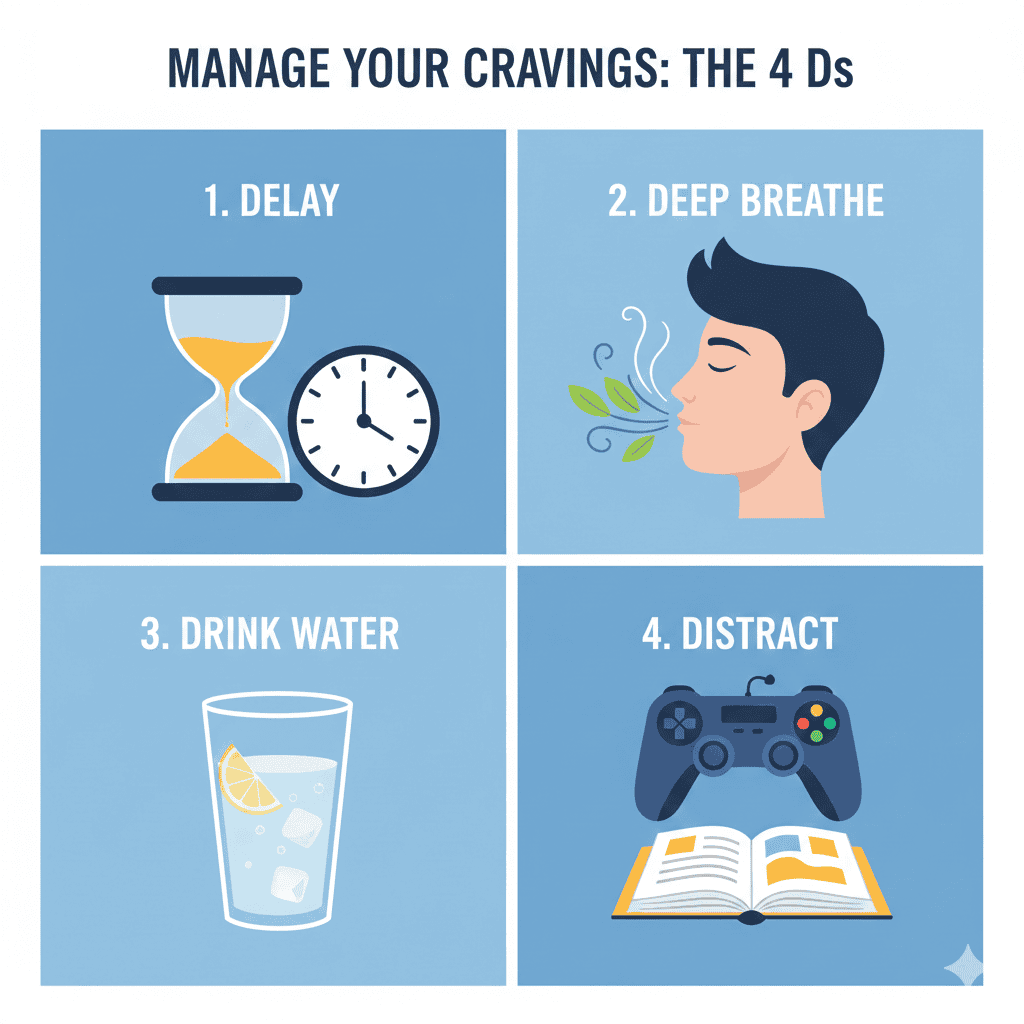
Social situations can be one of the hardest tests for someone who recently quit smoking. Gatherings, workplace routines, and nights out all carry deeply ingrained cues that can trigger cravings. The good news: with the right strategies and a bit of preparation, you can navigate every social scenario smoke-free and come out feeling stronger on the other side.
Why Does Social Pressure to Smoke Feel So Intense?
The urge to smoke in social settings is not simply about willpower. Research shows that social cues activate the same dopamine pathways as nicotine itself, meaning your brain treats the sight of a friend lighting up almost like a dose of the substance. Psychologists call this "cue-induced craving," and it explains why a person who feels no desire to smoke at home can suddenly feel a powerful pull at a barbecue or bar. The phenomenon is amplified by conformity bias: humans are wired to mirror the behavior of the group around them. Research has found that smoking behavior spreads through social networks in clusters, and quitting does too. Understanding these mechanisms turns the vague feeling of "I should just have one" into something you can name, anticipate, and override.
What Are the Best Scripts for Declining a Cigarette?
Having rehearsed phrases ready is more effective than improvising under pressure. Cognitive-behavioral therapists recommend short, definitive statements that close the conversation rather than open a debate. Try these: "No thanks, I don't smoke," "I'm good, I've quit," or simply "Not for me." Notice the phrasing: "I don't smoke" frames the decision as part of your identity, while "I'm trying to quit" invites follow-up questions and undermining comments like "one won't hurt." If someone persists, a calm redirect works well: "I appreciate it, but let's talk about something else." Practicing these responses out loud before the event is highly effective, because verbal rehearsal strengthens the neural pathway you will rely on in the moment. You do not owe anyone an explanation, a health lecture, or an apology. A brief, friendly refusal is all that is required.
How Can You Handle Smoking Breaks at Work?
Workplace smoking breaks create a unique challenge because they are tied to routine, stress relief, and social bonding all at once. Research has found that non-smokers perceived smokers as having more break-time social capital, which made quitting feel isolating. The solution is to replace the ritual, not eliminate it. When your colleagues head outside, take your own fresh-air break: walk to a different spot, stretch, or listen to a short podcast. You still get the mental reset without the cigarette. If the smoking area is where workplace conversations happen, suggest a coffee walk with a colleague instead. Over time, you may find that other non-smokers or ex-smokers join you, forming a new micro-community. If your workplace offers an Employee Assistance Program, consider using its counseling resources during the transition period, as even a few sessions can significantly lower relapse risk.
Does Alcohol Really Make Relapse More Likely?
Yes, and the data is striking. Research shows that alcohol consumption is the single strongest situational predictor of smoking relapse, outranking stress, negative mood, and being around other smokers. Alcohol lowers inhibitory control in the prefrontal cortex, making it harder to resist impulses your sober self would easily dismiss. For the first four to six weeks after quitting, many cessation experts recommend either avoiding alcohol entirely or limiting intake to one or two drinks per occasion. Practical strategies include alternating each alcoholic drink with water, arriving at events with your own non-alcoholic beverage, and setting a firm departure time before the evening starts. If you do choose to drink, tell a trusted friend about your quit status so they can offer gentle accountability. The goal is not to avoid fun; it is to protect your early progress until your new non-smoking identity feels stable.
How Do You Rebuild Your Social Identity After Quitting?
Smoking is rarely just a habit; for many people, it is part of how they see themselves. The "cool rebel," the "stressed creative," the "social butterfly with a cigarette in hand," these identities took years to form, and letting go of them can feel like losing a piece of yourself. Psychologist James Prochaska, co-creator of the Transtheoretical Model of behavior change, notes that lasting change requires integrating the new behavior into one's self-concept. Start by noticing the positives of your new identity: you can taste food more vividly, you have more energy, and your clothes no longer carry smoke. Tell people "I'm a non-smoker" rather than "I used to smoke." Join communities, either online or in person, where being smoke-free is the norm. Track milestones in an app like Smoke Tracker to reinforce the narrative of progress. Over weeks and months, the non-smoker identity becomes the default, and the old one fades.
What Does Research Say About Social Support and Quit Success?
The evidence is clear: quitting with social support dramatically improves outcomes. A Cochrane systematic review of 15 randomized trials found that people who received structured social support during a quit attempt were 10 to 25 percent more likely to remain abstinent at six months compared to those who quit alone. Support can take many forms. A quit buddy who checks in by text, a family member who agrees not to smoke in shared spaces, or an online forum where you can vent about cravings all count. The key ingredient is accountability without judgment. Let the people closest to you know what helps: encouragement after a tough day, distraction during a craving, or simply not offering you a cigarette. Research also shows that group-based cessation programs outperform self-help materials by a wide margin. You do not have to do this alone, and asking for help is a strength.
How Can You Prepare Before Any Social Event?
Preparation is the single most reliable predictor of success in high-risk social situations. Before any gathering, run through a short mental checklist. Will smokers be present? What will you say if offered a cigarette? How long do you plan to stay, and what is your exit strategy if cravings become overwhelming? Visualizing the event in advance is a powerful technique: picture yourself declining a cigarette calmly, enjoying conversation without smoke, and leaving feeling proud. Bring a support item such as gum, a flavored toothpick, or a stress ball. Identify a non-smoking ally at the event and let them know your situation. Positioning also matters: stay near food tables or indoor areas rather than lingering near designated smoking zones. Each event you navigate successfully builds confidence, and confidence compounds. Track your wins in your Smoke Tracker app so you can look back and see just how far you have come.
How Should You Respond When Others Smoke Around You?
Watching someone light a cigarette can trigger a craving even weeks after you quit, but it does not have to derail you. First, recognize that the craving is temporary: most peak within three to five minutes and then subside. You are allowed to step away without explanation. A simple "I'll be right back" or moving to a different part of the room is perfectly acceptable. Second, resist the impulse to lecture other smokers. Moralizing rarely helps and often strains relationships. Focus on your own progress, not their choices. Third, reframe the moment: instead of thinking "I wish I could have one," try "I'm glad I don't need one." This small cognitive shift, called reappraisal, has been shown in fMRI studies to reduce craving-related brain activity in the ventral striatum. Every time you watch someone smoke and choose not to join, you are strengthening a new neural habit.
What Should You Celebrate, and Why Does It Matter?
Every social situation you handle without smoking is a genuine victory, and acknowledging it matters. Behavioral research consistently shows that positive reinforcement accelerates habit formation. After a successful event, log it in your app, tell a friend, or reward yourself with something enjoyable: a favorite meal, a new book, or an extra hour of a hobby you love. Do not dismiss small wins. The first Friday night out without a cigarette, the first work happy hour, the first family reunion: these milestones are evidence that your identity is changing. Over time, what once required intense effort becomes effortless. You will reach a point where someone lights up next to you and you feel nothing at all. Until then, treat each smoke-free social outing as proof that you are building a life that does not revolve around nicotine.
Sources
- American Cancer Society. "Health Benefits of Quitting Smoking Over Time." cancer.org
- American Lung Association. "Benefits of Quitting." lung.org
- National Cancer Institute. "Harms of Smoking and Benefits of Quitting." cancer.gov
- Centers for Disease Control and Prevention. "Benefits of Quitting Smoking Over Time." cdc.gov
- Cochrane Library. "Smoking Cessation Reviews." cochranelibrary.com
This article is for informational purposes only and does not constitute medical advice. Health information is based on published research from organizations such as the CDC, WHO, and American Lung Association. Always consult a healthcare professional for personalized guidance on smoking cessation.