Nobody throws a party at 90 days. Day one gets the resolve, the first week gets the war stories, and one year gets the anniversary post. Three months sits in between, quiet and unmarked, and most people passing it barely notice, because by then not smoking has stopped feeling like an achievement and started feeling like a Tuesday.
That is exactly what makes it worth understanding. The 90-day mark is not a sentimental milestone, it is a structural one. It is the point where the last of the physical changes finish, where the statistics on staying quit take their single biggest jump, and where the nature of the job in front of you changes completely. Here is what has actually happened by three months, and what the next stretch asks of you.
Why 90 Days Is the Milestone That Actually Matters
Most quit-smoking timelines are built around what your body is repairing. The 90-day mark is better understood through a different lens: how likely you are to still be smoke-free a year from now.
A population-based analysis of continuous abstinence looked at people at various stages of a quit and tracked who was still abstinent later. Among those whose quit had lasted one to under three months, about 25 percent went on to stay abstinent. Among those whose quit had lasted three to under six months, that figure was 52 percent. And among those at six to twelve months, it was 59.2 percent.
Read that sequence carefully, because the interesting part is not any single number. Your odds roughly double across the three-month line, and then the curve flattens almost immediately. The gain from month three to month six is enormous. The gain from month six to month twelve is marginal. Whatever separates a quit that lasts from a quit that does not, most of it has already happened by the time you reach 90 days.
That is the empirical case for treating this date seriously even though nothing about it feels dramatic. You have just walked through the steepest part of the curve. Our 30-day milestone guide covers the previous rung, and the difference between the two is worth noticing: day 30 is about surviving, day 90 is about durability.
What Finished Healing in Your Brain at 3 Months
Here is the finding that makes 90 days a genuine biological boundary rather than a round number on a calendar.
Years of smoking caused your brain to build extra nicotinic acetylcholine receptors, the docking sites nicotine binds to. That upregulation is the physical substrate of dependence: more receptors meant more nicotine was needed just to feel normal. The obvious question is how long they take to go back down, and brain imaging research using SPECT scanning answered it directly. Receptor availability in people who had quit remained elevated above non-smoker levels through roughly the first month of abstinence, and normalized to non-smoker levels somewhere between six and twelve weeks.
Three months is where that process completes. It is the reason day 30 can still feel like effort while day 90 often does not: at one month you were running on a brain that still had a smoker's receptor profile, and at three months you are not. The researchers themselves noted that this prolonged normalization timeline lines up with how long craving, withdrawal, and relapse risk actually persist in practice, which is a rare case of the neurology and the lived experience agreeing precisely.
What this does not mean is that your brain has forgotten smoking. Receptor density and associative memory are two different systems, and only one of them has reset. Our piece on how the brain recovers after quitting covers the structural side in more depth, and the distinction between the two is the whole subject of the next section.
Your Lungs, Heart, and Body at the 90-Day Mark
The two-week to three-month window is the recognized period for circulation and lung function improvement, and by 90 days you are at the far end of it.
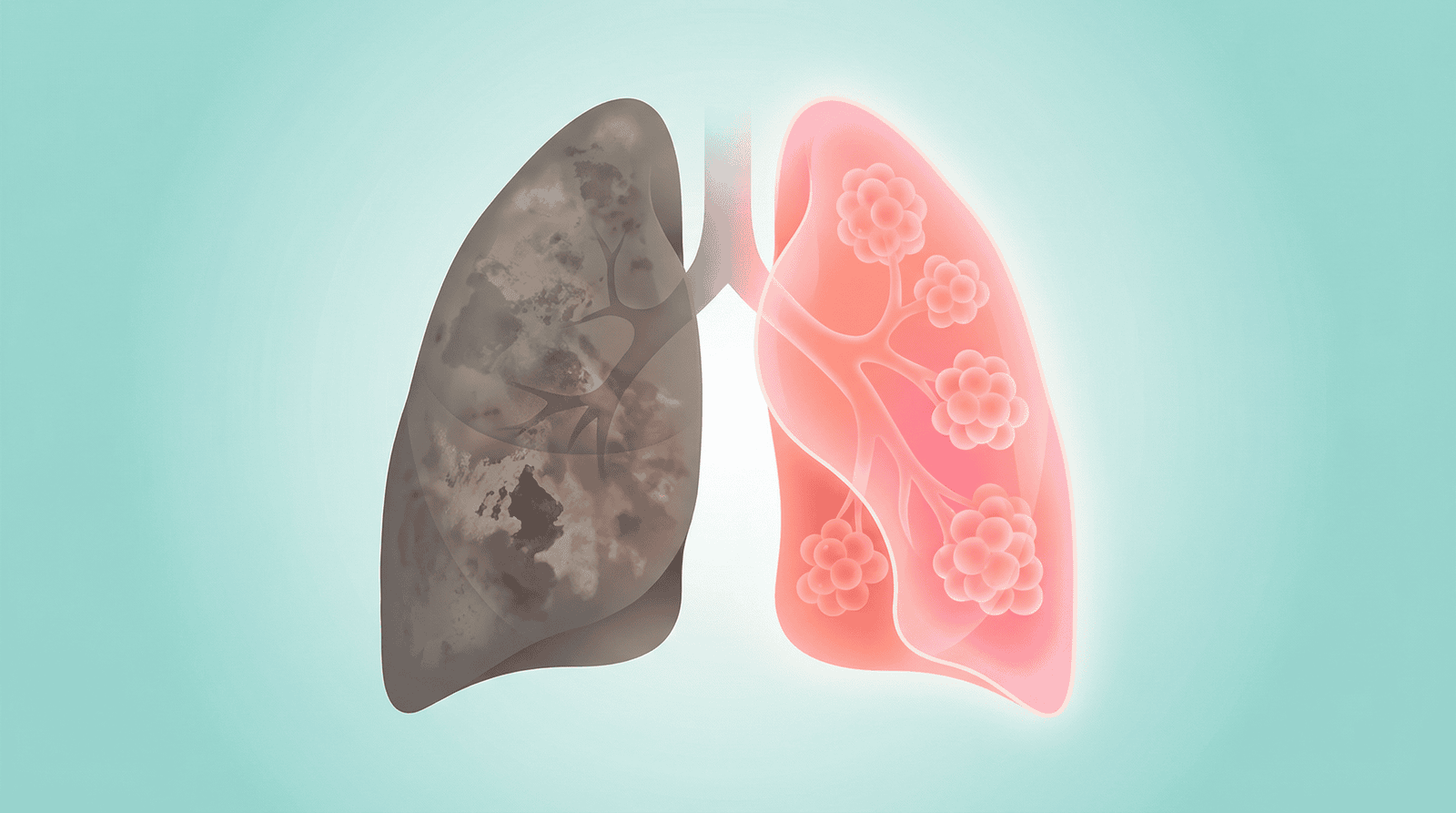
Lungs. The cilia, the microscopic hairs that sweep mucus and debris out of your airways, were flattened by smoking and began regrowing within the first weeks. By three months they are doing their job properly again. The practical consequence is that the quitter's cough, which peaks somewhere around weeks two to four as the backlog gets cleared, has usually settled by now. Cessation-clinic follow-ups have documented measurable improvement in forced expiratory volume at the three-month point, with the largest gains in people under 60. If you climb stairs or walk uphill regularly, this is the window where you tend to notice you are not stopping halfway. Our guide to how lungs heal after quitting maps the full arc, including what keeps improving for years.
Heart and circulation. Resting heart rate and blood pressure settled early. What has been happening more slowly is the recovery of blood vessel function, which is why hands and feet stay warmer, minor wounds close faster, and exercise capacity keeps creeping up. Coronary heart disease risk falls toward roughly half that of a continuing smoker by the one-year mark, and 90 days is partway along that line rather than at the end of it. The related changes in blood pressure are covered separately.
Senses, sleep, and energy. Taste, smell, and sleep architecture recovered during the first weeks. The notable thing at three months is that they no longer feel like improvements, they feel like normal. That transition is easy to miss and worth pausing on, because it is evidence of how completely the baseline has moved. If you want to remember what changed, our post on taste and smell recovery is a decent measuring stick against your first week.
What Cravings Look Like at 3 Months
The frequency has collapsed. The peak intensity has not, and that catches people off guard.
Early cravings are chemical: your brain is short of something it had been running on and complains constantly. Those are over. What remains is associative, built from thousands of repetitions pairing cigarettes with coffee, alcohol, stress, driving, phone calls, and the end of a meal. Because association is cue-driven rather than continuous, cravings at 90 days arrive in a completely different pattern: days of nothing at all, then a sudden, specific, surprisingly strong urge triggered by a situation you have not been in since you quit.
This is the single most misread experience of the three-month stage. An ambush craving after weeks of quiet feels like evidence that the quit is not working, or that something is wrong with you specifically. It is neither. It is a cue firing an old circuit, it is shorter than the cravings you handled in week one, and it typically passes within a few minutes.
Two things make those minutes easier. The first is having a physical response ready rather than deciding in the moment: slow paced breathing at around six breaths a minute takes the edge off an acute spike within roughly 90 seconds by working on your nervous system instead of on your reasoning, which is useful precisely when your reasoning is the thing under attack. Our companion app Flow Breath is built for exactly these short situational moments. The second is knowing which situations are still loaded for you, which is a tracking question more than a willpower one. Our guide to how long nicotine cravings last sets expectations for the months ahead.
The Traps That Show Up at 90 Days
Each stage of a quit has its own characteristic failure mode. The three-month version is not weakness, it is confidence.
The competence test. The most common relapse thought at this stage is not "I need a cigarette." It is "I could have one and be fine." Three months of evidence that you are not controlled by nicotine makes it feel like a reasonable experiment rather than a risk. It is not. Your receptors have just finished normalizing, which makes them freshly responsive, and a single cigarette reinstates the association you spent 90 days weakening. Our piece on what one cigarette actually does covers why this specific thought converts to full relapse so reliably.
Alcohol, now that you are relaxed about it. At three weeks you would have avoided a long night out or planned carefully around it. At three months you probably do not think about it. Alcohol remains the strongest single cross-trigger for smoking, it degrades exactly the impulse control this situation requires, and it tends to co-occur with other smokers. See why alcohol triggers cravings before the next occasion rather than after it.
The milestone vacuum. The first 90 days come with built-in structure: countable days, visible symptoms improving, a clear enemy. Past that, there is no obvious next target, and motivation that was organized around getting through something has nothing left to get through. This is a real and underrated risk. Set an explicit next marker, six months or one year, and know what you are aiming at.
Forgetting why. Distance is a strange thing. Three months out, the cough, the morning breathlessness, and the low-grade cost of smoking are no longer vivid, and cigarettes stop being associated with how bad you felt and start being associated with nothing much at all. Keeping the original reason visible is a maintenance task, not a one-time decision.
What to Do at the 90-Day Mark
Bank the evidence while it is legible. You now have three months of proof that you function, socialize, work, and handle stress without cigarettes. That evidence is most useful during a future bad week, and it is much harder to reconstruct from memory than you expect. This is what tracked data is genuinely good for.
Decide about NRT deliberately. If you have been using patches, gum, or lozenges, three months is the standard point at which most programs taper or finish. Do it as a plan rather than by drifting, and see our NRT guide for how to step down without triggering a fresh withdrawal.
Spend the money on something you can point at. A pack-a-day smoker has now saved roughly $700 at US prices, and well over $1,000 in the UK or Australia. Converting that into one specific object or trip does more for durability than letting it dissolve into the current account, because it turns an abstract streak into a thing you own. Our savings breakdown has the country-by-country math.
Have a plan for the slip that probably will not happen. Around three quarters of quit attempts relapse before six months, and the ones that recover fastest are the ones where the response was decided in advance. Our guide on what to do after a slip exists for exactly this.
How Can Smoke Tracker Help Past 90 Days?
The first three months are driven by symptoms you can feel. Everything after is driven by evidence you have to deliberately keep in view, which is where tracking stops being a novelty and starts being the actual mechanism.
- Streak Counter: Past 90 days the number is no longer a countdown through discomfort, it is an asset with real weight. A three-figure streak is materially harder to spend on a single cigarette than a two-figure one.
- Health Timeline: The recovery you can feel is finished; the recovery that matters most now, cardiovascular and cancer risk, unfolds silently over years. The timeline keeps invisible progress visible during the stretch where nothing announces itself.
- Craving Log: By three months only a handful of triggers still fire. Knowing exactly which ones lets you spend your remaining attention on the two or three situations that actually carry risk instead of staying vaguely vigilant about everything.
- Money Saved: A running total that has crossed into the hundreds converts an abstract habit change into a concrete result, and gives the milestone vacuum something to point at.
Ninety days is the moment the quit stops being something you are doing and becomes something you have done. The chemistry is settled, the receptor count matches a non-smoker's, and the odds have swung decisively in your favor. What is left is a memory system that still occasionally suggests a cigarette, and a set of situations that still occasionally agree with it. Both fade, as long as you keep giving them nothing.
At 3 months your brain's nicotine receptors have returned to non-smoker levels and your odds of staying quit have roughly doubled. The physical work is done. The remaining risk is not withdrawal, it is confidence, alcohol, and forgetting why you started.
Sources
- Cosgrove, K. P., Batis, J., Bois, F., et al. (2009). "Beta2-nicotinic acetylcholine receptor availability during acute and prolonged abstinence from tobacco smoking." Archives of General Psychiatry. pubmed.ncbi.nlm.nih.gov
- Gilpin, E. A., Pierce, J. P., Farkas, A. J. (1997). "Duration of smoking abstinence and success in quitting." Journal of the National Cancer Institute. academic.oup.com
- Hughes, J. R., Keely, J., Naud, S. (2004). "Shape of the relapse curve and long-term abstinence among untreated smokers." Addiction. pubmed.ncbi.nlm.nih.gov
- Centers for Disease Control and Prevention. "Benefits of Quitting Smoking Over Time." cdc.gov
- American Cancer Society. "Health Benefits of Quitting Smoking Over Time." cancer.org
- American Lung Association. "Benefits of Quitting." lung.org
- Benowitz, N. L. (2010). "Nicotine addiction." New England Journal of Medicine. pubmed.ncbi.nlm.nih.gov
- National Institute on Drug Abuse. "Tobacco, Nicotine, and E-Cigarettes." nida.nih.gov
Common questions
- What happens at 3 months smoke-free?
- Three months is where the neurological side of quitting finishes. The upregulated nicotinic acetylcholine receptors that years of smoking created remain elevated through roughly the first month of abstinence and normalize to non-smoker levels at around six to twelve weeks, which means that by 90 days your brain's receptor profile is genuinely no longer that of a smoker. Physically, the two-week to three-month window is the recognized period for circulation and lung function improvement, and measurable gains in forced expiratory volume have been documented at three months in cessation-clinic follow-ups. The cilia lining your airways, paralyzed flat by smoking, are now working properly and the quitter's cough that peaked in weeks two to four has usually settled. Sleep, taste, smell, and energy are past the recovery phase and simply feel normal, which is its own milestone: the improvements have stopped announcing themselves and become your baseline. What remains is behavioral rather than chemical, and that is exactly what the next few months are for.
- Do cravings stop after 3 months?
- They change character rather than stopping. Through the first weeks, cravings are driven by physical dependence: your brain is short of a chemical it had been running on and it says so constantly. By 90 days, that chemical debt is settled, and what is left is associative memory, thousands of repetitions pairing cigarettes with coffee, drinks, stress, driving, phone calls, and the end of a meal. So the frequency drops sharply while the peak intensity of an individual craving can still be surprisingly high. Most people at three months describe going days without a thought about smoking, then getting ambushed by a strong, specific urge in a situation they have not encountered since quitting. This is normal and it is not a sign of failure or of an incomplete quit. These urges are shorter than early withdrawal cravings, usually passing within a few minutes, and every one you sit through weakens the association a little further. Expect them to keep appearing occasionally for months, at declining frequency, especially around alcohol and acute stress.
- Can I have one cigarette after 3 months smoke-free?
- No, and 90 days is one of the most common points at which people talk themselves into trying. The reasoning feels sound from the inside: the hard part is over, the addiction is beaten, one cigarette is a test you can now pass. The neurology disagrees. Your receptor density has just finished normalizing, which makes those receptors more responsive to nicotine, not less, and a single cigarette delivers a full dose straight into a freshly reset reward system. It also reinstates the exact association you spent three months weakening, and it teaches your brain that the rule has exceptions. Prospective research consistently finds that smoking even one cigarette during a quit attempt is among the strongest predictors of returning to regular smoking. The three-month version of this thought is more dangerous than the three-week version precisely because it arrives with evidence of success attached to it. The safest answer at 90 days is identical to the answer on day one: zero.
- How much has my risk of relapse dropped at 90 days?
- Substantially, and this is the strongest practical argument for treating the 90-day mark as a real milestone. A population-based analysis of continuous abstinence found that people whose quit had lasted one to under three months went on to remain abstinent about 25 percent of the time, while those whose quit had lasted three to under six months remained abstinent 52 percent of the time. The figure for six to twelve months was 59.2 percent, only a modest further improvement. The shape of that curve matters more than any single number: your odds roughly double across the three-month line and then largely plateau, which means the stretch you have just completed was doing more work than the stretch ahead of it. It does not mean the risk is gone. Around three quarters of people who attempt to quit relapse before reaching six months, and the months after 90 days are where overconfidence, alcohol, and major stress do most of the damage.
- Why do I still think about smoking after 3 months?
- Because addiction memory outlasts physical dependence by a long margin, and that is a design feature of how brains store rewards rather than a defect in your quit. The chemistry resolved somewhere in the first three months. The learning did not: smoking was paired with specific contexts thousands of times, and those pairings are stored durably enough that a familiar cue can still fire the old circuit years later. There is also a simpler reason that gets overlooked. Cigarettes structured a lot of your day, marking transitions between tasks, providing an exit from social situations, and filling small gaps. Removing them leaves those gaps genuinely empty, and the mind reaches for the thing that used to fill them. Occasional thoughts about smoking at three, six, or twelve months are normal and reported by most long-term ex-smokers. What matters is that a thought is not an urge and an urge is not an action. Their frequency keeps declining as long as you keep not acting on them.
This article is for informational purposes only and does not constitute medical advice. Health information is based on published research from organizations such as the CDC, WHO, and American Lung Association. Always consult a healthcare professional for personalized guidance on smoking cessation.