Three months smoke-free and the scale has moved in the wrong direction. Clothes feel tighter, the waistband especially, and a thought arrives that you would rather not have: at least when I smoked, I was thinner. This is the point where many quit attempts wobble, so it is worth handling carefully.
The weight is real and it can be lost. What matters is how you go about it. A hard diet in the middle of an early quit sets two demanding changes against the same limited supply of willpower, and the cigarette tends to win. A gradual plan that starts once the quit feels stable gets both results.
This article covers why the weight arrived, what a realistic loss looks like, and a practical sequence that protects the quit while you work on it. If you are still in the first weeks and want to limit gain rather than reverse it, our weight gain after quitting guide covers prevention.
Why the weight came on
Nicotine does three things that affect weight. It raises resting energy expenditure by a small amount, roughly a few percent, so you burned slightly more calories at rest as a smoker. It suppresses appetite. And the ritual of smoking occupied hands and mouth for several minutes many times a day.
Remove nicotine and all three reverse at once. Daily calorie burn drops a little, hunger rises, and the moments that used to be filled by a cigarette are easily filled by food. A review of tobacco cessation and weight puts the average gain at around 4 to 5 kg in the first year, with most of it in the first three months. Some people gain much less; a minority gain considerably more.
There is also taste. Smell and taste recover within weeks of quitting, and food genuinely becomes more rewarding. Our taste and smell recovery article covers that change. It is a benefit, and it is also a reason portions quietly grow.
None of this is a character flaw, and none of it is permanent. The appetite surge is largest early and settles over the following months. The metabolic change is small enough to be offset by a modest increase in activity.
First, decide whether now is the right time
The quit comes first. In the first two to four weeks, cravings, irritability, and disrupted sleep are already using your reserves. Adding a strict calorie target on top raises the chance that a bad day ends with a cigarette rather than a skipped snack.
That does not mean doing nothing. Walking more, drinking water instead of sugary drinks, and choosing lower-calorie snacks are all compatible with an early quit and blunt the gain. What you are postponing is the structured deficit and the daily weigh-ins.
A reasonable marker: when cravings are occasional rather than hourly and you are no longer negotiating with yourself several times a day, the quit is stable enough to add a second goal. For many people that is somewhere around the one-month point, but the signal is how the quit feels, not the calendar.
If you are using nicotine replacement or medication, you can start the weight plan while still on it. Stopping those products early to "speed things up" is not a weight strategy and it raises relapse risk.
A realistic target
Aim to lose roughly 0.25 to 0.5 kg per week. That translates to a daily calorie deficit of about 300 to 500 kcal, which is achievable through food changes and activity without the hunger that makes a quit fragile.
At that pace, 5 kg takes about three to five months. It feels slow. It is also the pace at which weight tends to stay off, and it leaves enough energy for the quit. Crash approaches lose weight faster and lose it again faster, often with a relapse attached.
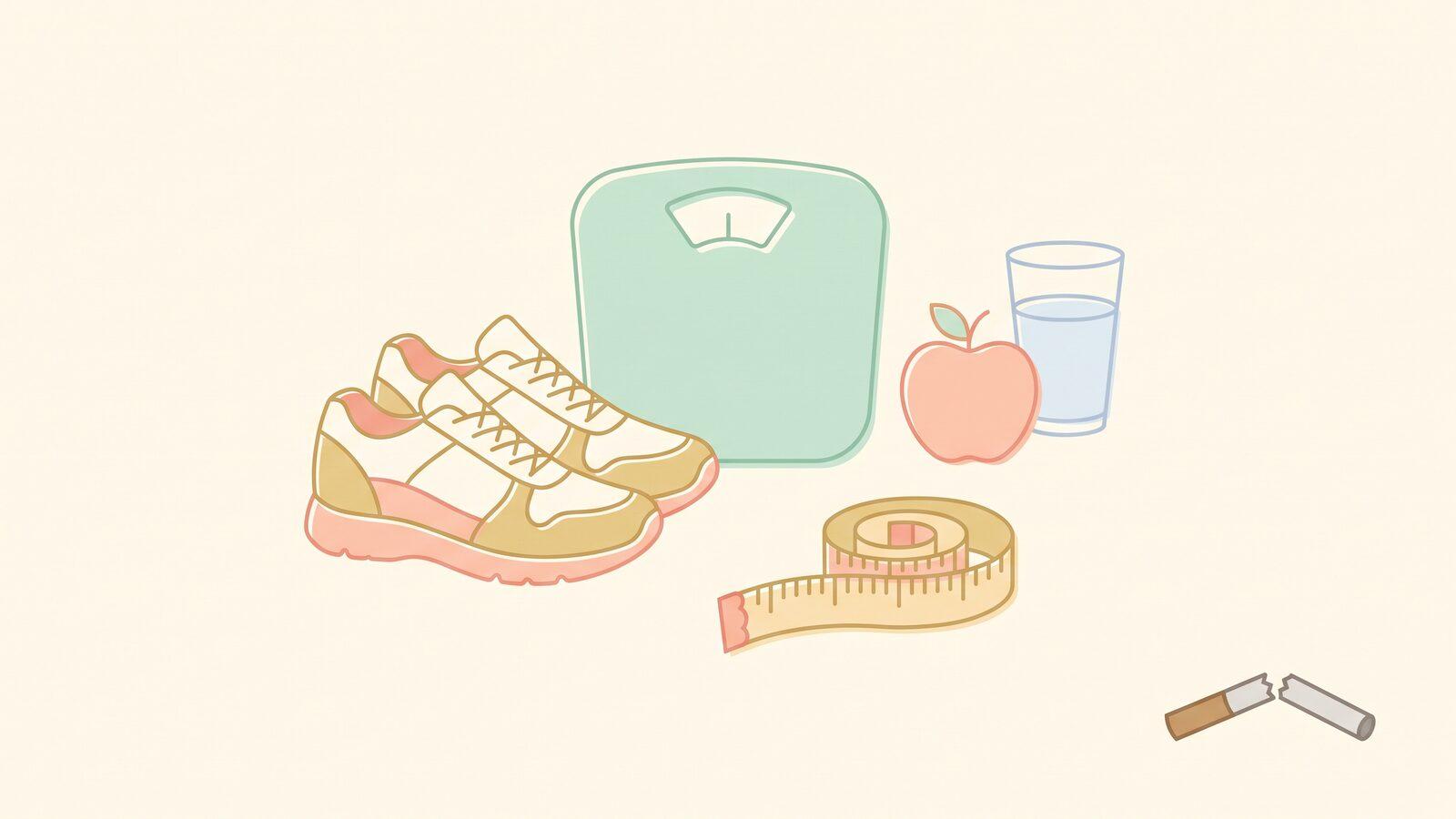
Weigh yourself once a week at the same time, or use a waist measurement, rather than daily. Day-to-day changes are mostly water and will exaggerate both progress and setbacks.
What to change in food
Protein at each meal. Protein is more filling per calorie than refined carbohydrate, which matters when appetite is running high. Eggs, yogurt, beans, fish, chicken, or tofu at breakfast and lunch reduces the afternoon hunt for snacks.
Fibre and volume. Vegetables, fruit, oats, and legumes add bulk for few calories. Half a plate of vegetables at dinner is a simple rule that does not require counting.
Cut liquid calories first. Sugary soft drinks, juice, milky coffees, and alcohol add hundreds of calories without filling you up. Swapping them for water, sparkling water, tea, or black coffee is often the single largest change available. Alcohol also weakens resolve around smoking, which our alcohol and cigarettes article explains.
Plan the substitute snack. Many ex-smokers eat because the hand-to-mouth habit needs something to do. Sugar-free gum, raw vegetables, a piece of fruit, or a nicotine lozenge if you are using one, cover the moment at far lower cost than biscuits. Our what to eat when quitting guide has more options.
Keep meals regular. Skipping meals to "save" calories tends to produce a large evening intake and a craving spike. Three meals and one or two planned snacks is more stable than grazing.
What to change in activity
Activity does two jobs here. It offsets the small drop in metabolism, and it reduces cravings in the short term. A brisk ten-minute walk measurably lowers the urge to smoke for a period afterwards, which makes it useful as a craving tool as well as a calorie one.
Start with walking. Thirty minutes most days, or several ten-minute walks, is enough to matter and does not require fitness you may not have yet. Lung function improves over the early months of quitting, and exercise that felt impossible as a smoker becomes possible. Our exercise and quitting guide covers how to progress safely.
Add two short strength sessions a week when you can. Muscle raises resting energy use slightly, improves how the weight is distributed, and gives you a measurable goal that is not the scale. Bodyweight movements at home are enough to start.
Avoid tying the plan to a target that requires perfect attendance. The aim is a consistent, moderate level of movement that survives busy weeks, not a programme that collapses on the first missed session.
Belly fat specifically
Weight gained after quitting is often noticed at the waist. Part of that is where many people store fat in general, and part reflects that smoking is associated with less subcutaneous fat, so the change is visible.
There is no exercise that removes fat from one area. Waist measurements fall as overall weight falls, and strength work improves the shape of the change, but "belly fat after quitting" is treated with the same plan as any other weight: a moderate deficit, protein, and movement, given enough time.
Bloating in the first weeks is a separate, temporary issue related to digestion adjusting to the absence of nicotine. Our bloating and gas after quitting article explains why it usually settles on its own.
Keep the quit and the weight plan connected
The two goals reinforce each other when tracked together. Every smoke-free day protects lung and heart recovery that no weight change can match; the health benefit of quitting outweighs the risk of a moderate weight gain by a wide margin. Weight loss then improves how you feel about the quit and removes one of the more common reasons people relapse.
Use Smoke Tracker to keep the smoke-free streak visible while you work on the weight, and note cravings that arrive around meals or snacks. Seeing that a craving at 3 pm is a hunger signal rather than a nicotine signal changes what you do about it.
If a bad day happens and you eat more than planned, that is a data point, not a relapse. The relapse to avoid is the cigarette, and a large dinner does not require one.
When to get it checked
See a clinician if weight keeps rising despite several weeks of the changes above, if you are losing weight without trying, or if the gain comes with symptoms such as marked fatigue, swelling, breathlessness, or changes in thirst and urination. Thyroid problems, medication effects, and other conditions can present as weight change and are worth ruling out.
Also ask for help if food has become a compulsion rather than an appetite, or if concern about weight is pushing you toward smoking again. Both are common and both have better answers than a cigarette.
Weight gained after quitting smoking is expected, modest for most people, and reversible with a gradual plan started once the quit feels stable. Protect the quit first, cut liquid calories, add protein and walking, and aim for a slow, steady loss rather than a diet that competes with your smoke-free streak.
Sources
- MedlinePlus: Weight gain after quitting smoking, what to do
- Smokefree.gov: Manage weight gain after quitting
- Bush et al., 2016: The effect of tobacco cessation on weight gain, obesity and diabetes risk
- NHS Better Health: What could happen when you quit smoking
This article is general information and does not replace medical advice.
Common questions
- How much weight do people gain after quitting smoking?
- Reviews put the average at roughly 4 to 5 kg over the first year, with a wide range. Some people gain little or nothing, a minority gain more than 10 kg. Most of the gain happens in the first three months, then slows.
- Does your metabolism slow down when you quit smoking?
- Slightly. Nicotine raises resting energy expenditure by a small amount, so removing it lowers daily calorie burn modestly. Increased appetite and snacking usually contribute more to weight gain than the metabolic change itself.
- When should I start trying to lose weight after quitting?
- Once the quit feels stable, typically after the first month. Restricting food hard in the first weeks can raise the risk of relapse. Small changes like walking and swapping snacks are fine from day one; a structured calorie deficit is better slightly later.
- Why am I losing weight after quitting smoking instead of gaining?
- Some people lose weight because quitting came with other changes such as less alcohol, more exercise, or a different diet. Unintended weight loss without those changes, especially with fatigue, cough, or other symptoms, should be assessed by a clinician.
- Will the weight come off on its own?
- Usually not by itself. The appetite increase settles over months, which slows further gain, but weight already gained tends to stay unless intake or activity changes. A gradual, sustainable plan is more reliable than waiting.
This article is for informational purposes only and does not constitute medical advice. Health information is based on published research from organizations such as the CDC, WHO, and American Lung Association. Always consult a healthcare professional for personalized guidance on smoking cessation.